€ 145


Still questions? Contact us
Ketamine necklace | sterling silver
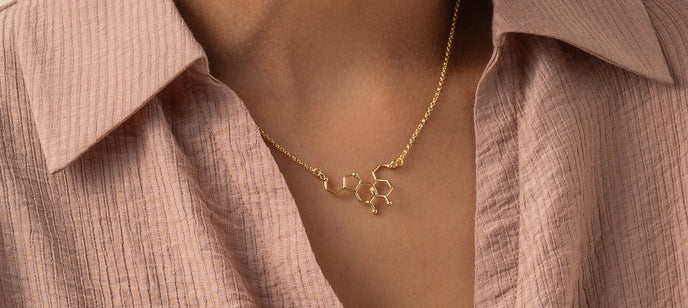
Two friends, two pendants: one owns the ketamine propofol necklace, and the other bought this ketamine necklace in sterling silver to match it. Ketamine has been part of anaesthesia for more than half a century. Another buyer gave one to a best friend, who still hadn't taken it off when the review was written.
Who It's For
- a best friend, as a dainty necklace for every day
- yourself, to go with a friend's ketamine propofol necklace
- a colleague in anaesthesia or emergency medicine
- a vet or veterinary nurse
How Ketamine Works
Ketamine was given to patients for almost twenty years before its main target was found. A study published in 1983, in cats and rats, found that ketamine and phencyclidine, the drug it was derived from, selectively blocked nerve cells' response to NMDA, a chemical that switches on one class of glutamate receptor. That receptor, named after NMDA, is a channel through the cell membrane. Ketamine blocks it partly by slipping into the pore while the channel is open, and much of it stays trapped there after the channel closes. It acts on other receptors too, and how all of this adds up to anaesthesia is still being worked out.
Explore Related Anaesthesia Jewelry
- ketamine necklace | gold vermeil
- ketamine propofol necklace H | silver
- ketamine propofol necklace V | silver
- propofol necklace | silver
FAQ
How big is the pendant, and how does it sit?
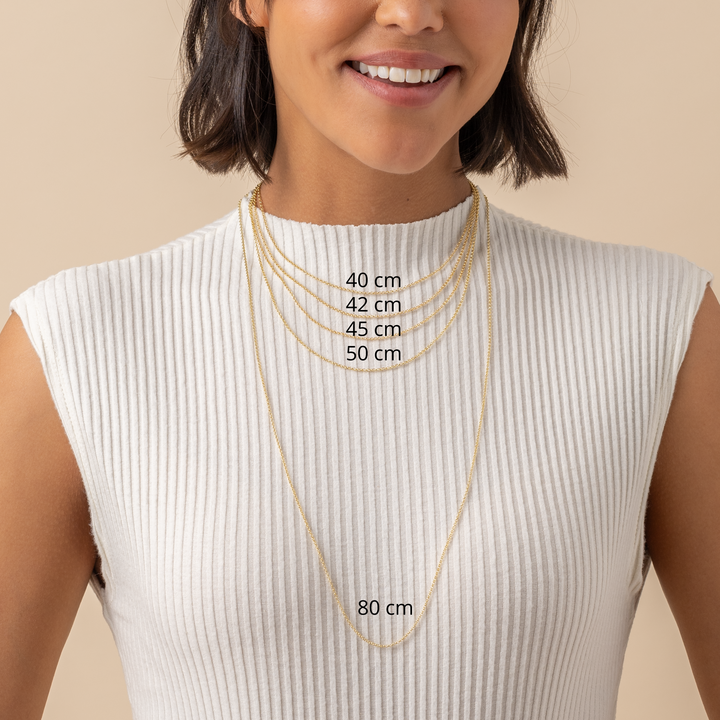
The pendant measures 27 mm (about 1.1 inches), just over 1 mm more than the width of a 2-euro coin (25.75 mm). It hangs upright from a small loop at the top and sits below the collarbone on a 45 cm (17.7 inch) sterling silver chain with a lobster clasp and a 5 cm (2 inch) extender. Extra chains of 40, 42, 45 or 50 cm with a 5 cm extender, or 80 cm, are sold on this page for layering. Our sterling silver is 925, nickel-free and hypoallergenic.
Is there a gold version, or one with propofol?
Yes. The same 27 mm pendant comes in 18K gold vermeil, on a 45 cm gold vermeil chain with extender. Choose the finish she already wears: the design is the same in both. Ketamine and propofol also come joined in one 38 mm pendant, horizontal or vertical, in either finish, and propofol has its own 22 mm necklace in silver and gold vermeil.
Will it arrive in time, and what if it isn't right?
DHL Express delivers free in 1-5 business days worldwide, and we pay the import duties and taxes, so nothing is due at the door. It arrives in a ready-to-gift jewelry box and festive envelope. If it isn't right, our 30-day “Love It or Return It” policy applies.
Who made ketamine, and who named it a dissociative anaesthetic?
Calvin Stevens, an organic chemist consulting for Parke-Davis, made it in 1962, as the company looked for a shorter-acting relative of phencyclidine, a drug known for delirium on waking. His compound, then called CI-581, was first given to a person on 3 August 1964, by Edward Domino and the anaesthetist Guenter Corssen of the University of Michigan. Their volunteers felt disconnected from their surroundings. Domino's wife, Toni, suggested a name for that state, and ketamine is still called a dissociative anaesthetic today.
Molecules
Delve into the hidden elegance of science with our meticulously crafted jewelry, inspired by the intricate structures of chemical molecules. Each piece serves as a tactile tribute to the building blocks of life and matter, capturing the allure of atoms and bonds in precious metals. A harmonious fusion of art and science, these creations are more than mere accessories; they're a celebration of the enigmatic beauty that underpins our universe.
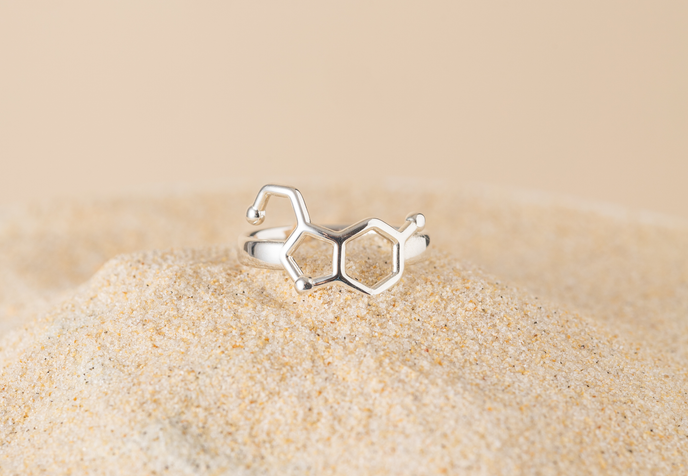
Find your perfect fit: measure an Existing Ring
Finding out your ring size at home is a simple process and can help you shop for jewelry online with confidence.
Necklace length guide