€ 210


Still questions? Contact us
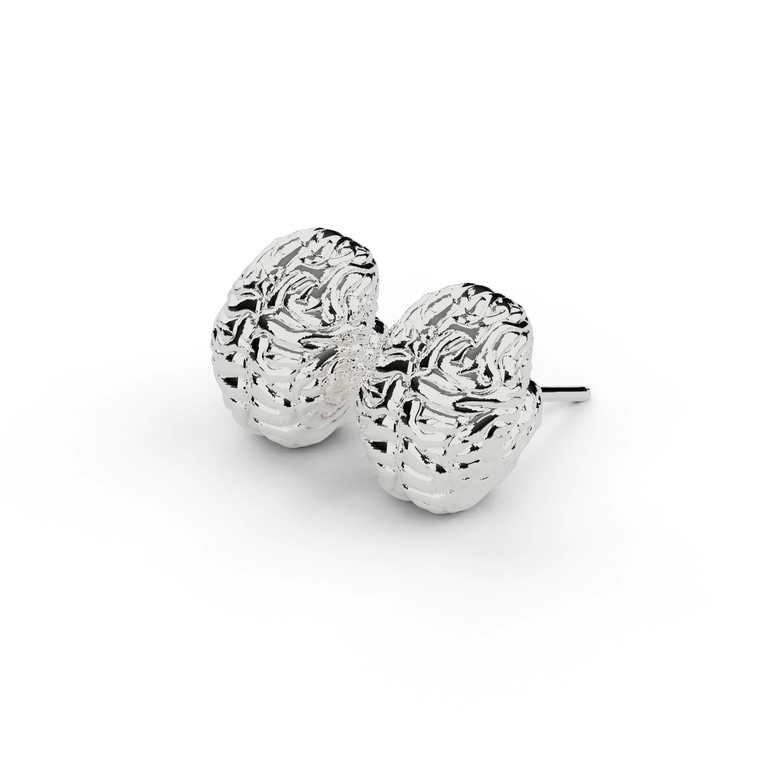
Brain studs | sterling silver
The brain is the working assumption underneath every neuroscience experiment. Whatever the protein, the cell, or the circuit, the question being asked is always how it contributes to what the brain does. The earring stud is the smallest version of that assumption you can wear.
The Anatomy of the Brain
The cerebral cortex is the folded outermost layer of the brain and the seat of higher cognition: perception, language, motor planning, decision-making. Folding lets roughly 1,500 cm² of cortical sheet fit inside a skull only a third of that surface area. The deep grooves are sulci, the raised ridges between them are gyri. The central sulcus separates the primary motor cortex (precentral gyrus) anteriorly from the primary somatosensory cortex (postcentral gyrus) posteriorly, a boundary neurosurgeons treat with particular care when operating near the motor strip. The four classical lobes (frontal, parietal, temporal, occipital) are still the working cartography most clinicians use to localise function.
Who Will Recognise It
Researchers and clinicians whose daily work is the brain:
- neuroscientists, neurologists, neurosurgeons, and psychiatrists
- cognitive and behavioural scientists, psychologists, and clinical neuropsychologists
- medical students through their first neuroanatomy block
- science educators teaching the cortex weekly
- anyone whose professional life or personal history runs through the nervous system
Frequently picked as a graduation gift after a doctorate in neuroscience, or as the everyday earring for a working clinician.
Explore Related Neuroscience Jewelry
- Brain necklace | silver
- Brain necklace | gold vermeil
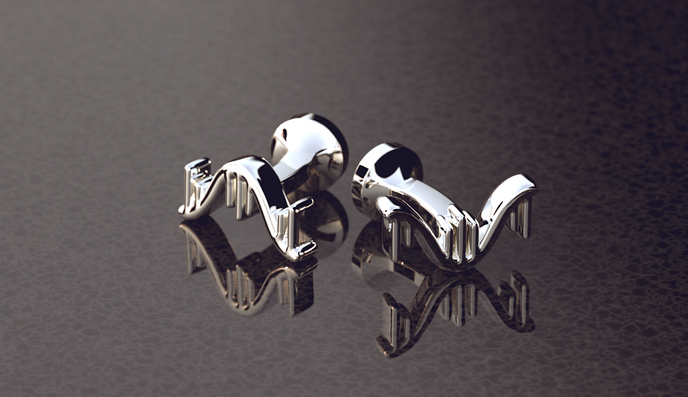
- Brain cufflinks | silver
- Limbic system necklace | silver
FAQ
Will a neuroscientist actually wear brain earrings to work?
Most do. The brain is the centre of their daily reasoning, and a piece that names the organ directly rather than reaching for a generic medical symbol reads as well-chosen. The stud format also fits the working dress code in most academic and clinical settings, where larger jewelry often does not.
Why does the cerebral cortex have so many folds?
Because folding is how a large neuronal sheet fits inside a small skull. The cortex is roughly two to four millimetres thick across most of its area, which means the total cortical sheet would have to be about 1,500 cm² to hold the number of neurons present. A brain that volume cannot fit through the birth canal as a sphere of that surface area. Folding solves the geometry problem: the same cortex packed into the actual skull's volume by being convoluted rather than smooth. Other primates and most mammals show the same trick at their own scale.
What's the size, material, and earring back?
12 by 9 mm pendants in 925 sterling silver, nickel-free. Ear nuts with a sterling silver core. Ships free worldwide via DHL Express in 1-5 business days, with all import duties prepaid. Comes in a ready-to-gift jewelry box with the 30-day “Love It or Return It” policy.
Is there a gold version?
Not currently. The brain studs are silver only. The catalog has gold versions of the brain necklace and the cufflinks, but the stud format is single-material for now.

Neuroscience
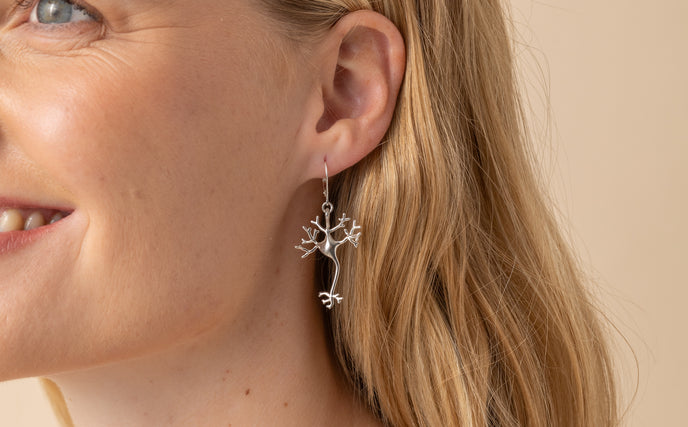
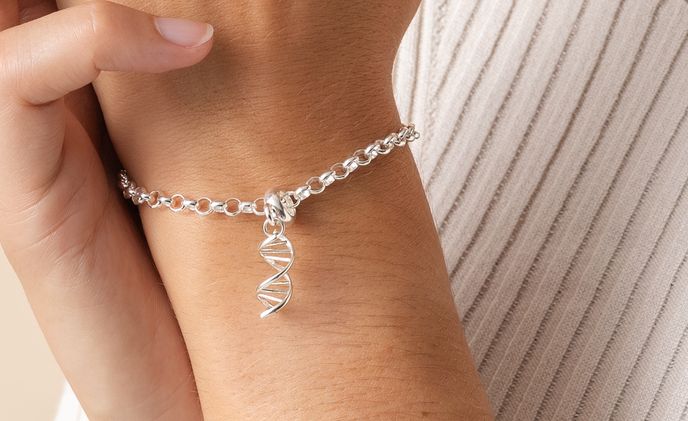
Dive into the intricacies of the human mind with our neuroscience-inspired jewelry collection. Each piece is a tactile ode to the neural networks that shape our thoughts, memories, and consciousness. Crafted with meticulous attention to detail, our designs mirror the dendritic branches and synaptic connections that form the basis of mental activity. With these elegant pieces, wear the enigma of cognition close to your skin, offering a subtle yet profound exploration of what it means to be sentient.
Find your perfect fit
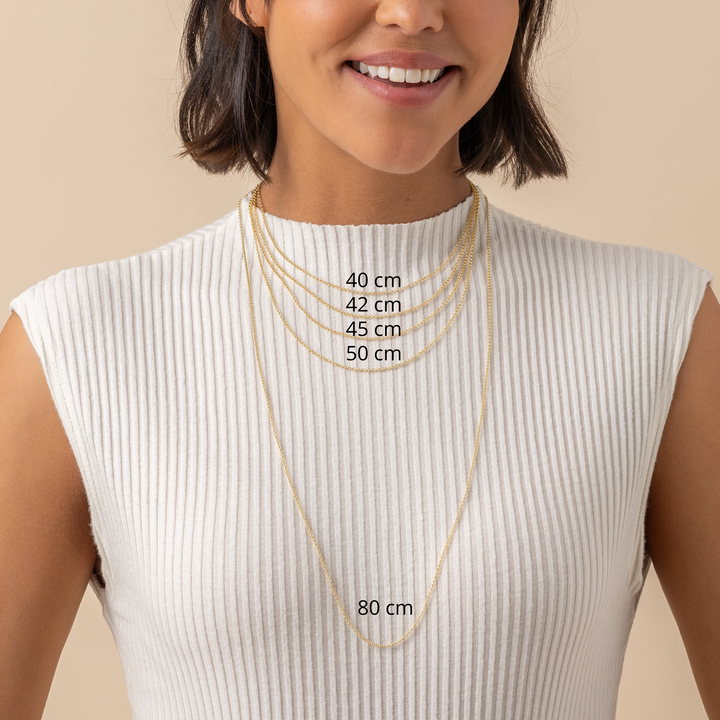
Necklace length guide