€ 175


Still questions? Contact us
cassiopeia necklace | 18k gold vermeil
A cassiopeia necklace for stargazers, astronomers, and anyone who can find a constellation in a dark sky without an app. The W-shaped pattern that anchors the northern sky and rotates endlessly around the pole star, captured in 18k gold vermeil.
The Story Behind Cassiopeia
Cassiopeia is one of the 88 modern constellations, recognisable by its five bright stars in a distinct W (or M, depending on the season). It sits opposite Ursa Major across the celestial pole, which makes it circumpolar from most of the northern hemisphere: it never sets and rotates around Polaris through the year. The constellation is named for the vain queen of Aethiopia in Greek mythology, mother of Andromeda. Its brightest star, Schedar, is an orange giant about 228 light-years away, and the cluster M52 sits at the edge of the W. Cassiopeia A, a supernova remnant inside the constellation, is the brightest radio source in the sky outside the solar system.
A Meaningful Gift for Science Lovers
For people who find their way by stars, study the sky for a living, or just look up more than most.
- amateur and professional astronomers
- astrophysicists and cosmology researchers
- anyone born in the autumn months when Cassiopeia sits high overhead
- partners who first found the W together
For the stargazer who knows which way the W tilts in November.
Explore Related Astronomy Jewelry
- Cassiopeia necklace | silver
- Orion necklace L | gold vermeil
- Ursa Major necklace | gold vermeil
- Saturn necklace | gold vermeil
FAQ
Is this a meaningful gift for an amateur astronomer?
Yes. Cassiopeia is one of the first constellations most northern observers learn to find, so it tends to carry personal weight: the night someone first saw the W, a child's first telescope, a viewing trip to a dark-sky reserve. A solid choice for a birthday, a graduation, or a thank-you to someone who taught you to look up.
Why is Cassiopeia drawn as a W?
Five bright stars (Schedar, Caph, Gamma Cas, Ruchbah, and Segin) form a zigzag that looks like a W when the constellation rises in autumn and an M when it sets in spring. The shape is so distinctive that Cassiopeia is one of the easiest constellations to identify from light-polluted skies, which is why it shows up so often in early astronomy lessons.
What are the materials and chain details?
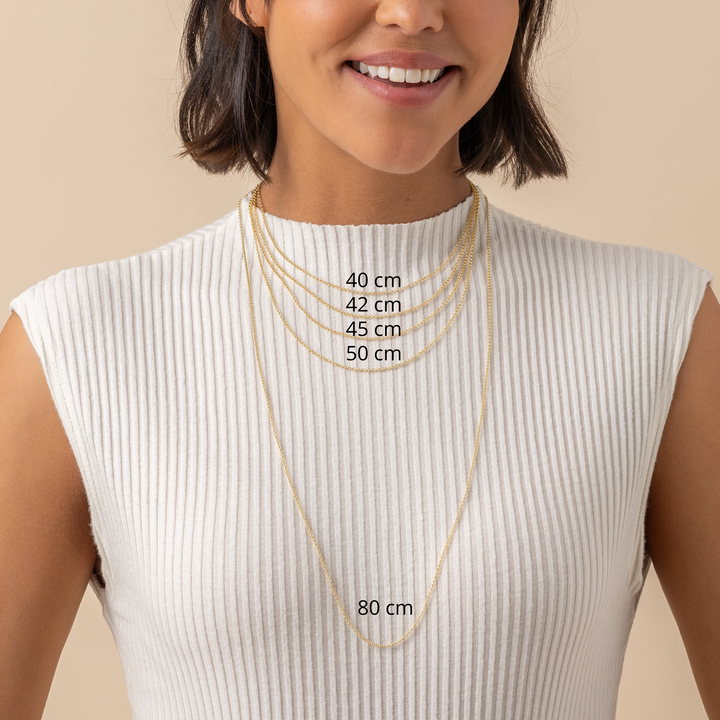
The pendant is 32 mm wide, with a 925 sterling silver core and a 2.5 micron 18K gold layer over it. The chain is 45 cm gold vermeil with a 5 cm extender, lobster clasp. Vermeil is the most durable form of gold layering by definition, requiring at least 2.5 microns of gold over solid silver. Ships free worldwide via DHL Express within 1-5 business days, with import duties and taxes covered.
Is there a silver version?
Yes, the same constellation is available in sterling silver if a cooler tone is preferred. Both versions ship in a ready-to-gift jewelry box and are covered by the 30-day Love It or Return It policy.

Math & Physics
Unlock the elegance of the abstract with our math and physics-inspired jewelry collection. These carefully crafted pieces mirror the profound equations and natural laws that shape our understanding of the universe. Experience the allure of fractals, the rhythmic beauty of pi, and the celestial wonder of astral formations—each piece serves as a wearable homage to the artistry inherent in scientific inquiry.
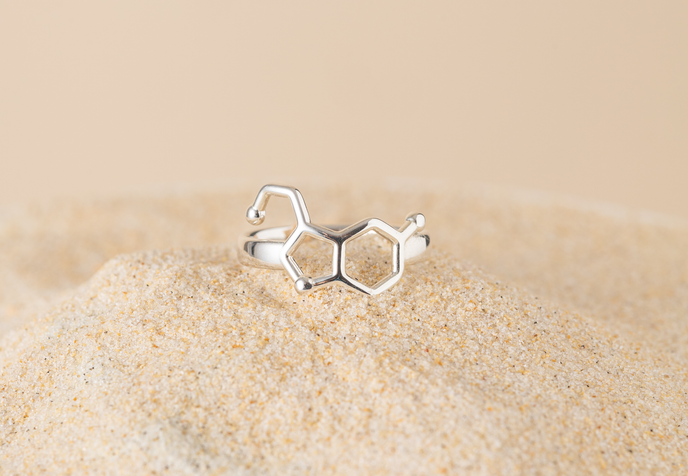
Find your perfect fit: measure an Existing Ring
Finding out your ring size at home is a simple process and can help you shop for jewelry online with confidence.
Necklace length guide