€ 145


Still questions? Contact us
Cassiopeia necklace | sterling silver
Five bright stars in a W on the autumn-and-winter northern sky. Cassiopeia is one of the easiest constellations to find by eye, and the most common backup pointer to Polaris when the Big Dipper is too low on the horizon. Worn here as a 32 mm sterling silver pendant.
The Science Behind Cassiopeia
Cassiopeia is a circumpolar constellation in the northern hemisphere, always above the horizon at latitudes above roughly 34 degrees north. Its five main stars form a distinctive W or M shape depending on the time of year, making it one of the easiest constellations to identify on first sight. The constellation sits in the plane of the Milky Way, giving it a rich background of star clusters and nebulae. Cassiopeia A, a supernova remnant about 11,000 light years away, is the strongest radio source in the sky outside the solar system. The supernova that created it occurred around 1680, though no confirmed naked-eye observation of the explosion was recorded. It is now a key target for X-ray and radio astronomy.
A Quiet Symbol For
- astronomers, radio astronomers, and astrophysicists
- amateur stargazers who use Cassiopeia to find Polaris
- educators teaching naked-eye astronomy
- anyone who has spent a winter night learning the northern sky from the W down
Explore Related Math and Physics Jewelry
- Cassiopeia necklace | gold vermeil
- Cassiopeia studs | silver
- Ursa Major necklace | silver
- Ursa Minor necklace | silver
- Orion necklace | silver
FAQ
Why Cassiopeia rather than the Big Dipper?
The Big Dipper sits low in the northern sky during winter and can drop below the horizon. Cassiopeia is on the opposite side of Polaris and rises high in winter exactly when the Dipper is lowest. Together the two constellations cover all four seasons as Polaris pointers, but Cassiopeia takes over the work in autumn and winter. The W is also a more compact shape, easier to spot in the seven-star sky most amateur astronomers learn first.
What is Cassiopeia A and why does it matter?
Cassiopeia A is the expanding remnant of a supernova that exploded in our galaxy about 340 years ago, roughly 11,000 light years away. It is the strongest radio source in the sky outside the solar system, which makes it one of the most heavily studied objects in radio and X-ray astronomy. The supernova itself was never confirmed by naked-eye observation, despite its proximity, possibly because of intervening dust. The remnant has been studied with every major X-ray telescope since the 1960s.
What size is the pendant and what is the return policy?
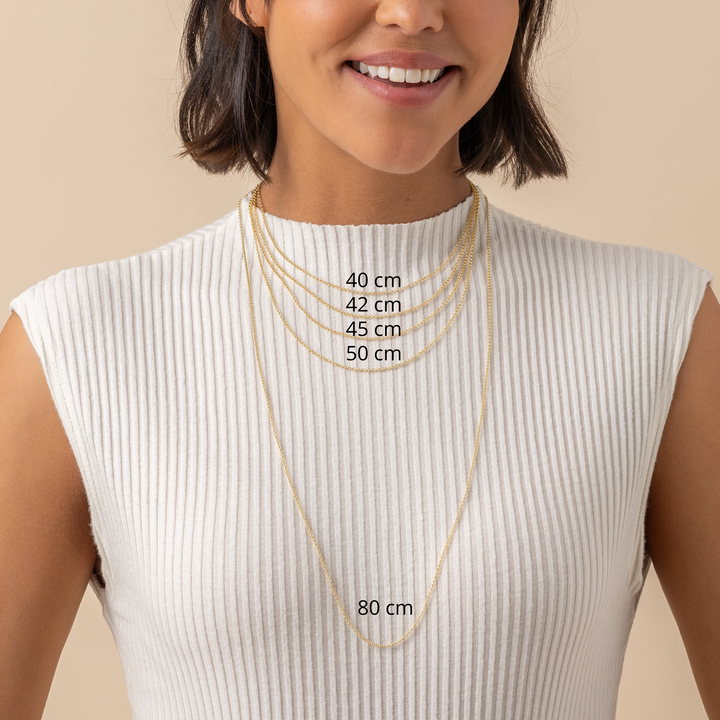
925 sterling silver, 32 mm pendant on a 45 cm sterling silver chain with a 5 cm extender. Nickel-free and hypoallergenic. Free worldwide DHL Express in 1-5 business days, with all import duties and taxes covered. 30-day “Love It or Return It” returns.
Is there a gold version or matching studs?
Both. The same 32 mm Cassiopeia pendant is available in 18K gold vermeil at the same chain length. Matching Cassiopeia studs also exist in sterling silver.

Math & Physics
Unlock the elegance of the abstract with our math and physics-inspired jewelry collection. These carefully crafted pieces mirror the profound equations and natural laws that shape our understanding of the universe. Experience the allure of fractals, the rhythmic beauty of pi, and the celestial wonder of astral formations—each piece serves as a wearable homage to the artistry inherent in scientific inquiry.




Find your perfect fit: measure an Existing Ring
Finding out your ring size at home is a simple process and can help you shop for jewelry online with confidence.
Necklace length guide