€ 160


Still questions? Contact us
Cassiopeia studs | sterling silver
Cassiopeia is the W in the autumn-and-winter northern sky. Five bright stars at distances ranging from 54 to 440 light-years, projected onto a flat shape that looks like a single asterism but is in three dimensions a sparse cluster spread across hundreds of parsecs of space.
The Science of Cassiopeia
The five main stars of Cassiopeia are Schedar, Caph, Gamma Cassiopeiae, Ruchbah, and Segin, at distances ranging from roughly 54 to 440 light-years. The W shape is a chance projection. In three dimensions the stars are unrelated and at different evolutionary stages. Gamma Cassiopeiae, the central star, is a rapidly rotating Be-class star surrounded by a circumstellar disc and is one of the brightest known X-ray binaries. The constellation is circumpolar from much of the Northern Hemisphere, which is why it is visible year-round and why ancient navigators used it as a reference point opposite Ursa Major.
Who Will Recognise It
The audience clusters around astronomy and night-sky observation:
- astronomers and astrophysicists working on stellar populations
- amateur astronomers who hop to Cassiopeia from Polaris
- anyone who learned the autumn sky as a child
- astronomy educators teaching circumpolar constellations
- people who like the W more than the dipper
Explore Related Math & Physics Jewelry
- Cassiopeia necklace | silver
- Cassiopeia necklace | gold vermeil
- Ursa major necklace | silver
- Orion necklace L | silver
FAQ
Are these specific enough for an astronomer?
Yes. The five-star W is one of the most recognisable Northern-Hemisphere constellations and is taught alongside Ursa Major in any introductory astronomy course. Amateur astronomers and astrophysicists alike read it on sight. The studs work as a quiet daily-wear option for someone who already wears the constellation in their head.
Why is Cassiopeia visible year-round in the north?
Because it sits close enough to the celestial north pole to never set from most of the Northern Hemisphere. Constellations within roughly 30 degrees of the pole are circumpolar, meaning they rotate around Polaris but stay above the horizon all year. Cassiopeia is one of the most prominent circumpolar constellations and was used by ancient navigators as a reference opposite Ursa Major when one or the other was clearer.
What is the size, material, and earring type?
17 mm by 17 mm studs in 925 sterling silver, nickel-free, with sterling silver ear nut posts. No chain. Ships free worldwide via DHL Express in 1-5 business days, with all import duties prepaid. Come in a ready-to-gift jewelry box with the 30-day “Love It or Return It” policy.
Is there a matching necklace?
Yes. The Cassiopeia necklace is available in both silver and gold vermeil, both showing the same five-star W shape. The studs and necklace pair well as a duo for someone who wants the same constellation across two formats.

Math & Physics
Unlock the elegance of the abstract with our math and physics-inspired jewelry collection. These carefully crafted pieces mirror the profound equations and natural laws that shape our understanding of the universe. Experience the allure of fractals, the rhythmic beauty of pi, and the celestial wonder of astral formations—each piece serves as a wearable homage to the artistry inherent in scientific inquiry.
Find your perfect fit

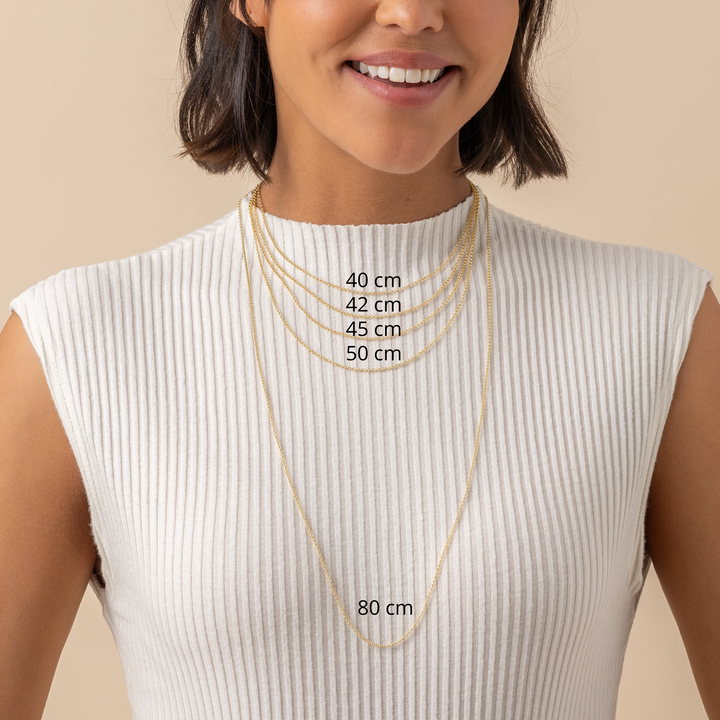
Necklace length guide