€ 205


Still questions? Contact us
CubeSat necklace | sterling silver
If you've spent time designing or building small satellites, you already know why a 10-centimetre cube has the power to change how we access space. The standardised form factor that put orbital research within reach of universities and startups.
The Science of the CubeSat
The CubeSat standard was developed in 1999 by Jordi Puig-Suari (Cal Poly) and Bob Twiggs (Stanford) as a way to give students hands-on satellite development experience. The basic unit (1U) is a 10x10x10 centimetre cube weighing no more than 1.33 kg. Satellites are built in multiples: 2U, 3U, 6U, 12U. The standardised form factor and interface design dramatically reduce launch costs. Since the first CubeSats launched in 2003, thousands have been deployed for Earth observation, climate monitoring, technology demonstration, and communications. In 2018, NASA's MarCO CubeSats became the first to reach interplanetary space, flying past Mars and demonstrating that small satellites could conduct planetary science missions.
Who Reaches For This
- aerospace engineers and satellite scientists
- students who have built or launched a CubeSat
- anyone at the intersection of engineering and space exploration
- those who believe space research should be accessible
A piece for people working to lower the cost and barriers to space access.
Explore Related Physics and Space Jewelry
- Telescope necklace | silver
- Saturn necklace | silver
- Orion necklace L | silver
- Ursa Major necklace | silver
FAQ
Who would genuinely value a CubeSat pendant?
Aerospace engineers, satellite scientists, students who have built or launched a CubeSat, and anyone working to democratise access to space. The cubic form is instantly recognizable to specialists and symbolises the revolution in low-cost satellite deployment.
What makes the CubeSat format so important?
Before CubeSats, launching a satellite required enormous institutional resources and expertise. The standardised cube design and open interface specifications allowed universities, startup companies, and citizen scientists to build and launch satellites affordably. This accessibility has driven an explosion in space research and Earth observation applications that would have been impossible otherwise.
What are the material, size, and chain?
18 mm sterling silver pendant on a 45 cm sterling silver chain with 5 cm extender. 925 polished sterling silver, nickel-free and hypoallergenic. Ships free worldwide via DHL Express in 1-5 business days. Comes in a ready-to-gift jewelry box with the 30-day “Love It or Return It” policy.
Is this available in gold?
Yes. The same design is available in 18k gold vermeil. The pendant size and chain length remain the same across materials.

Math & Physics
Unlock the elegance of the abstract with our math and physics-inspired jewelry collection. These carefully crafted pieces mirror the profound equations and natural laws that shape our understanding of the universe. Experience the allure of fractals, the rhythmic beauty of pi, and the celestial wonder of astral formations—each piece serves as a wearable homage to the artistry inherent in scientific inquiry.
Find your perfect fit: measure an Existing Ring
Finding out your ring size at home is a simple process and can help you shop for jewelry online with confidence.
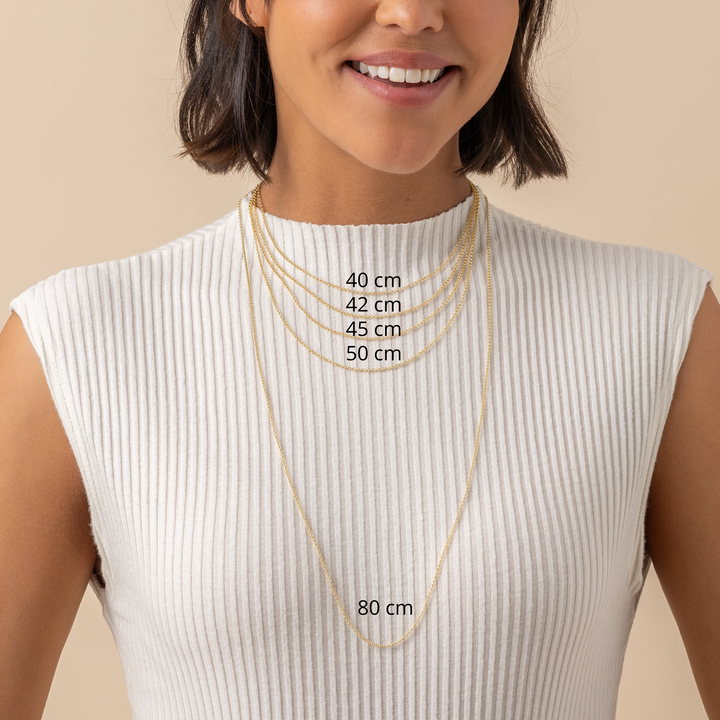
Necklace length guide