
€ 155


Still questions? Contact us
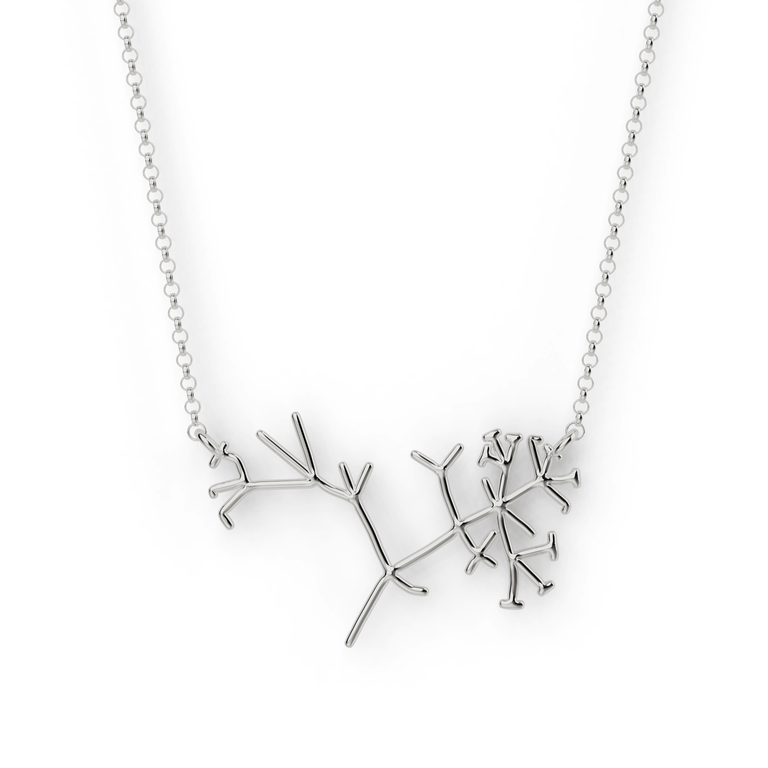
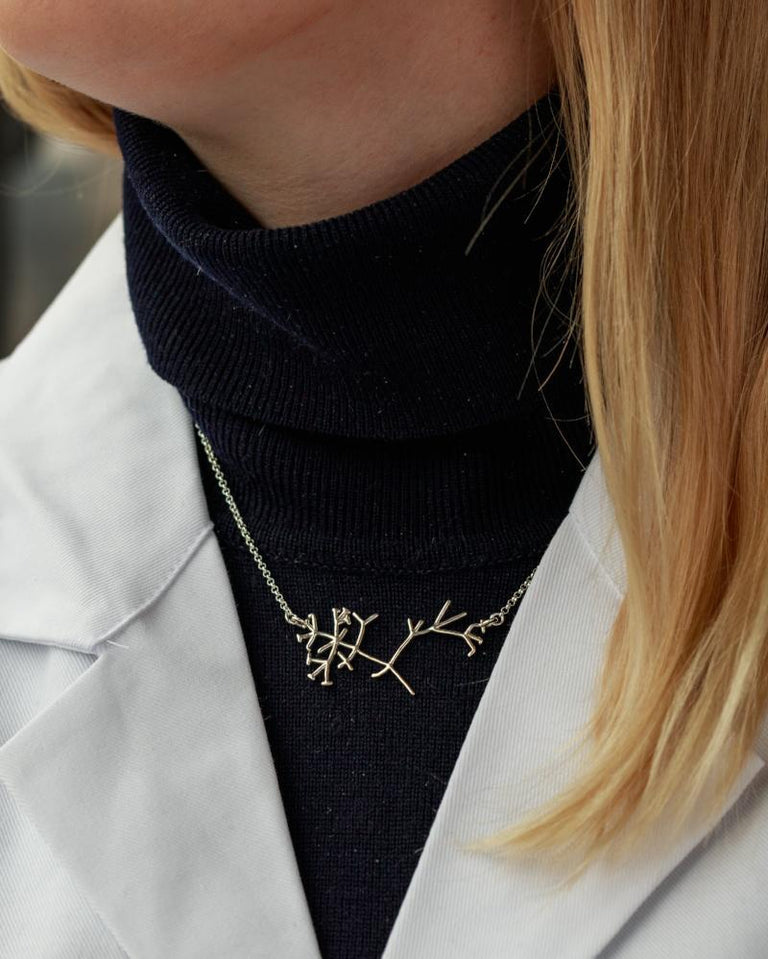
Darwin's phylogenetic tree necklace | sterling silver
In 1837 Charles Darwin sketched the first phylogenetic tree on a notebook page and labelled it “I think.” It was the first time anyone had drawn common descent. The sketch sat in private notebooks for over twenty years before On the Origin of Species made the underlying argument public.
The Science of Phylogenetic Trees
A phylogenetic tree is a hypothesis about evolutionary relationships, drawn as a branching diagram in which terminal tips are extant species and internal nodes are common ancestors. Darwin's 1837 sketch made the argument visually before he made it textually: lineages branch, some persist, some go extinct, all share descent from a common ancestor. Modern phylogenetics replaces morphological intuition with molecular data, comparing DNA or protein sequences to estimate divergence times and topology. Maximum likelihood and Bayesian inference methods now dominate, with bootstrap support values quantifying confidence at each node. The tree of life has been redrawn many times since 1837, most dramatically when Carl Woese's ribosomal RNA work (1977 onwards, formalised in 1990) reorganised it into three domains: Bacteria, Archaea, Eukarya. Darwin's original sketch is the moment the entire conceptual edifice begins.
Who Will Recognise It
The audience clusters around evolution and history of biology:
- evolutionary biologists and molecular phylogeneticists
- bioinformaticians working with sequence alignments and tree-building software
- readers of Darwin biographies and history of science
- biology educators teaching evolution at any level
- naturalists, field biologists, and museum curators
Explore Related Genetics Jewelry
- Darwin's phylogenetic tree necklace | gold vermeil
- Phylogenetic tree necklace | silver
- DNA necklace V | silver
- DNA necklace H | silver
FAQ
Why does this work as a gift for a biologist?
Because the 1837 sketch is the visual origin of how the entire field still thinks. Every modern phylogenetic tree, every molecular clock, every cladogram traces back to that one notebook page. For an evolutionary biologist or anyone trained in modern phylogenetics, the reference is immediate. For someone who works in cancer biology, microbiology, or ecology, the tree of life sits in the background of almost every paper they read. The sketch carries a quiet historical weight in the background.
Where does the “I think” come from?
From Darwin's Notebook B, page 36, written in 1837 in the months after the Beagle voyage ended. Above a small branching diagram with letters at the tips, Darwin wrote “I think” followed by the sketch. The two words sit at the top of the page like a hesitant claim. The notebook is now held at Cambridge University Library and is one of the most reproduced manuscript pages in the history of science. The hesitation reads better in retrospect than it did at the time.
What is the size, material, and chain?
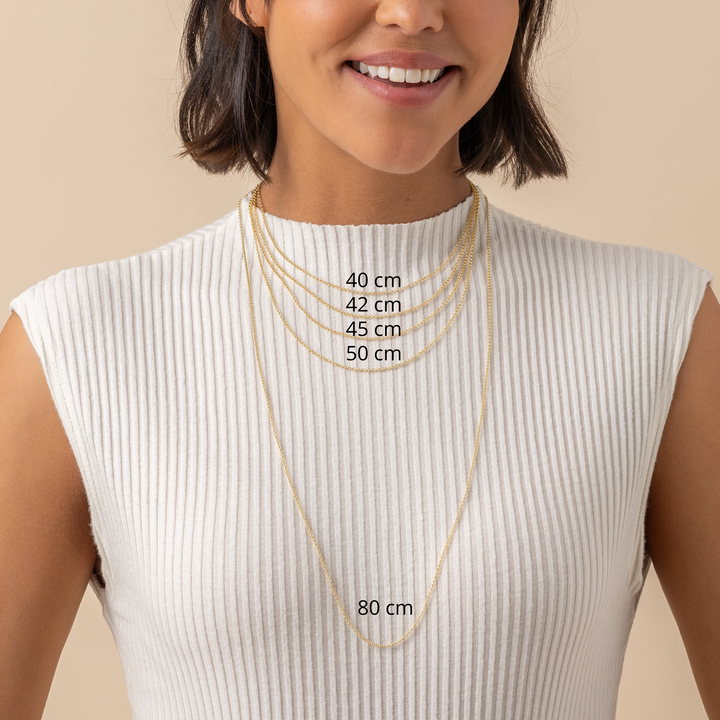
41 mm pendant in 925 sterling silver, nickel-free. 45 cm sterling silver chain with a 5 cm extender. Ships free worldwide via DHL Express in 1-5 business days, with all import duties prepaid. Comes in a ready-to-gift jewelry box with the 30-day “Love It or Return It” policy.
Is there a gold version?
Yes. The Darwin's phylogenetic tree necklace in 18k gold vermeil is already in the catalog at the same 41 mm size on a gold vermeil chain. Same design, same size. Material is the only difference. Often picked as the silver-and-gold pairing for a partnered evolutionary biology lab.

Other
In a world where art and science often exist in separate realms, our "Curiosities" collection serves as a harmonious confluence. Drawing inspiration from an eclectic range of scientific phenomena not covered elsewhere. Each piece is meticulously crafted to evoke a sense of wonder. It's jewelry that doesn't just adorn; it educates and fascinates, sparking conversations about the lesser-explored but equally awe-inspiring facets of our universe.
Find your perfect fit: measure an Existing Ring
Finding out your ring size at home is a simple process and can help you shop for jewelry online with confidence.
Necklace length guide