€ 170


Still questions? Contact us
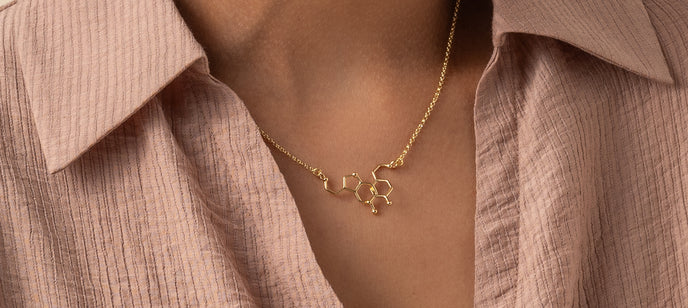
glucose necklace | 18k gold vermeil
The brain consumes 120 grams of glucose per day. Every thought, every movement, every neuron firing runs on the oxidation of this six-carbon sugar. Blood glucose is held within millimolar precision by insulin and glucagon. Lose that regulation and the body fails. Restore it and the body recovers.
The Science Behind Glucose
Glucose is a six-carbon aldose monosaccharide. In glycolysis, ten enzymatic steps convert glucose to pyruvate, yielding 30 to 32 ATP per molecule through the citric acid cycle and oxidative phosphorylation. The stereochemistry of glucose (the specific arrangement of its hydroxyl groups) distinguishes it from galactose and fructose, which share the same molecular formula but entirely different properties. Blood glucose is tightly regulated by insulin, which promotes uptake and storage, and glucagon, which promotes release from glycogen. Diabetes mellitus is fundamentally a disorder of this regulation: insufficient insulin signalling (Type 1) or insulin resistance with impaired secretion (Type 2) allows glucose to accumulate to concentrations that damage blood vessels, nerves, and organs over time.
Worn By
For biochemists, physiologists, endocrinologists, and anyone whose work centres on energy metabolism or the molecular basis of disease.
- biochemists and metabolic biologists
- endocrinologists and diabetologists
- physiology students and educators
- anyone working in diabetes research or clinical care
Explore Related Molecules Jewelry
- Glucose necklace in sterling silver
- Caffeine necklace in gold vermeil
- Insulin necklace in gold vermeil
- Adrenaline necklace in gold vermeil
FAQ
Who appreciates a glucose molecule?
Biochemists, physiologists, endocrinologists, medical students, and anyone passionate about understanding energy metabolism at the molecular level. The glucose molecule is fundamental to how life obtains and uses energy.
Why is glucose regulation such a critical biological process?
Blood glucose concentration must be maintained within a narrow range: too low and neurons cannot function, too high and glucose damages blood vessels and nerves over years. This requires coordinated hormonal control by insulin and glucagon. When this system fails, the consequences accumulate silently until complications appear. This is why diabetes is a metabolic disease, not simply a glucose disease.
What are the size, material, and chain?
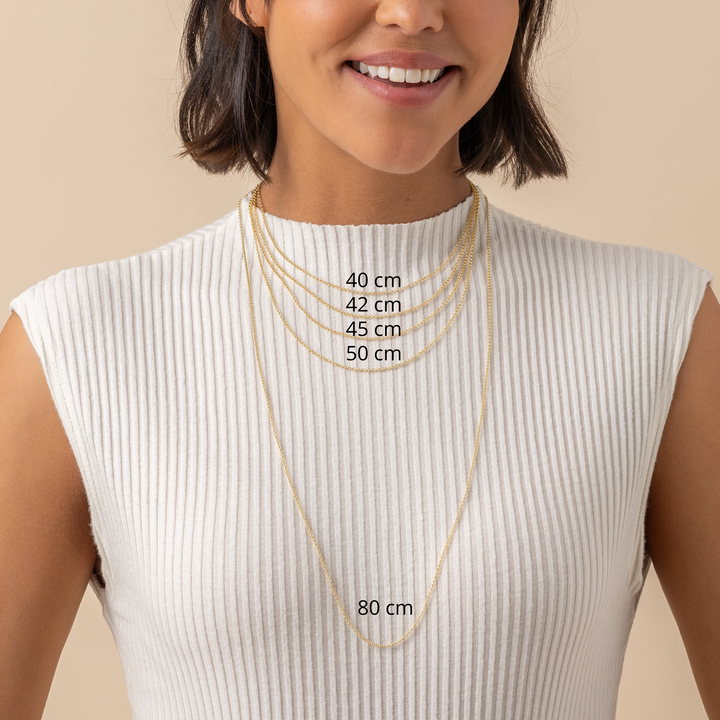
21 mm pendant in 18K gold vermeil (sterling silver core with 2.5 micron gold plating), nickel-free and hypoallergenic. 45 cm gold vermeil chain with a 5 cm extender and lobster clasp. Ships free worldwide via DHL Express in 1-5 business days. Comes in a ready-to-gift jewelry box with the 30-day “Love It or Return It” policy.
Does the gold plating wear off with daily wear?
Gold vermeil is a durable finish. The 2.5 micron gold plating will develop a natural patina with daily wear over time. Many customers wear their pieces continuously without issue. The 30-day “Love It or Return It” policy applies if the piece is not what you expected.
Molecules
Delve into the hidden elegance of science with our meticulously crafted jewelry, inspired by the intricate structures of chemical molecules. Each piece serves as a tactile tribute to the building blocks of life and matter, capturing the allure of atoms and bonds in precious metals. A harmonious fusion of art and science, these creations are more than mere accessories; they're a celebration of the enigmatic beauty that underpins our universe.
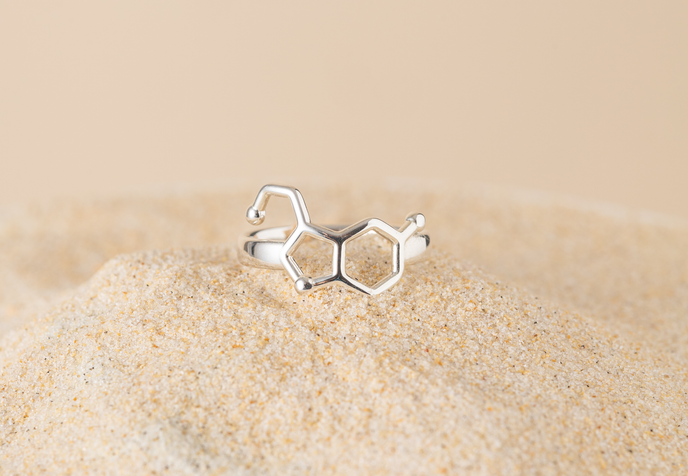

Find your perfect fit: measure an Existing Ring
Finding out your ring size at home is a simple process and can help you shop for jewelry online with confidence.
Necklace length guide