€ 175


Still questions? Contact us
Kidney necklace | sterling silver
In 1943, in occupied Netherlands, Willem Kolff built the first artificial kidney from cellophane sausage casing, an aluminium drum, and salvaged car parts. Sixteen patients went through it before the first survived, two years later. The kidney is the organ that founded a clinical specialty out of an engineering improvisation. Worn here as a 21 mm sterling silver pendant.
The Anatomy of the Kidney
Each adult kidney weighs about 150 g and processes roughly 180 litres of plasma per day, returning all but about 1.5 litres as filtered ultrafiltrate that becomes urine. The functional unit is the nephron, with around one million per kidney: glomerulus and Bowman's capsule for ultrafiltration, proximal tubule for bulk reabsorption, Loop of Henle for the counter-current concentrating mechanism, distal tubule and collecting duct for fine-tuning electrolytes and water. The kidneys also carry the renin-angiotensin-aldosterone system that regulates blood pressure and sodium balance, and they synthesise erythropoietin, which drives red-cell production. Clinical history followed function. Willem Kolff's rotating-drum dialyser in 1943 was the first artificial kidney. Belding Scribner's arteriovenous shunt in 1960 made long-term hemodialysis possible. Joseph Murray and David Hume's 1954 identical-twin transplant in Boston was the first successful kidney transplantation.
A Quiet Symbol For
- nephrologists, transplant surgeons, and dialysis-medicine clinicians
- renal physiology researchers and clinical pharmacologists working on the renin-angiotensin axis
- patients who have been through dialysis or a kidney transplant, and their family members
- nursing staff and renal-care technicians who run dialysis units
Explore Related Human Anatomy Jewelry
- Lungs necklace | silver
- Heart section necklace | silver
- Uterus necklace | silver
- Embryo necklace | silver
- Cyclosporine necklace | silver
FAQ
Is the kidney pendant for working nephrologists or for personal-medical reasons?
Both, in roughly equal measure. Working nephrologists, transplant surgeons, and dialysis-medicine clinicians buy it as a clinical reference to the organ at the centre of their practice. The pendant works for either reading without committing to one. The wearer brings the meaning.
Why does the kidney sit at the centre of so much modern medicine?
Because it touches blood pressure, fluid balance, electrolyte regulation, red-cell production, vitamin D activation, and acid-base homeostasis. Renal failure breaks all of these at once, which is why dialysis and transplantation both became defining problems in twentieth-century medicine. The renin-angiotensin-aldosterone axis links the kidney to cardiovascular disease through ACE inhibitors and ARBs, two of the most-prescribed drug classes in cardiology. The transplant story made the kidney the first solid organ to be successfully transplanted, founding the modern field of transplant immunology.
What size is the pendant and what chain comes with it?
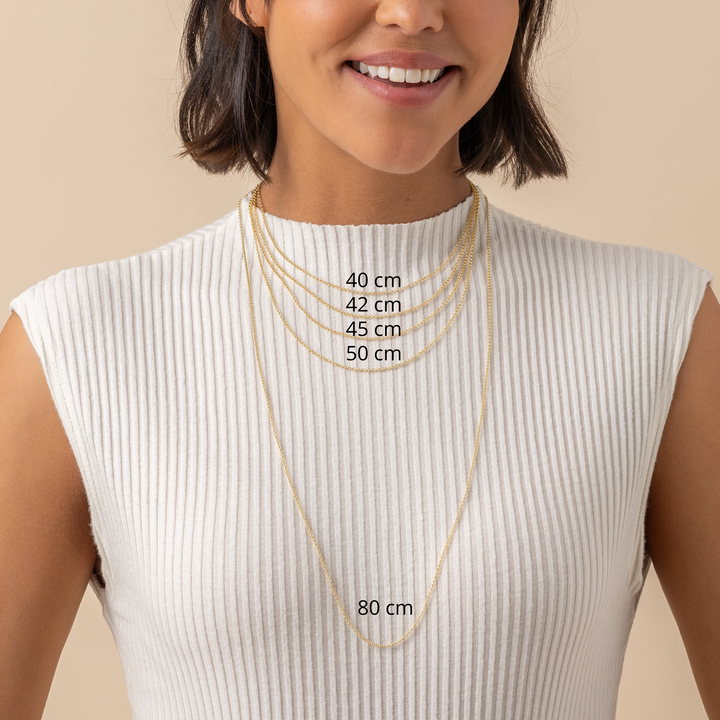
925 sterling silver, 21 mm pendant on a 45 cm sterling silver chain (ø 1.8 mm) with a 5 cm extender. Nickel-free and hypoallergenic. Free worldwide DHL Express in 1-5 business days, with all import duties and taxes covered. 30-day “Love It or Return It” returns.
Is there a gold version?
Yes. The kidney necklace is also available in 18K gold vermeil, same design, 21 mm pendant.

Human Anatomy
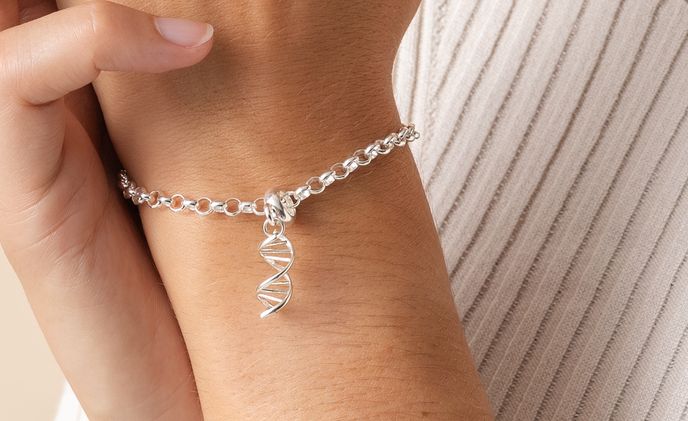
Anatomical wonders have never been so elegantly articulated. Our anatomical collection embodies the intricate and awe-inspiring structures that make us who we are. From DNA double helices to neuronal networks, our pieces don't merely imitate—they interpret. The collection serves as a tangible tribute to the hidden beauty within us all, elevating the realms of biology and medicine into wearable art. With exquisite attention to detail, each piece is a dialogue between form and function, revealing the enigmatic eloquence of the human body.
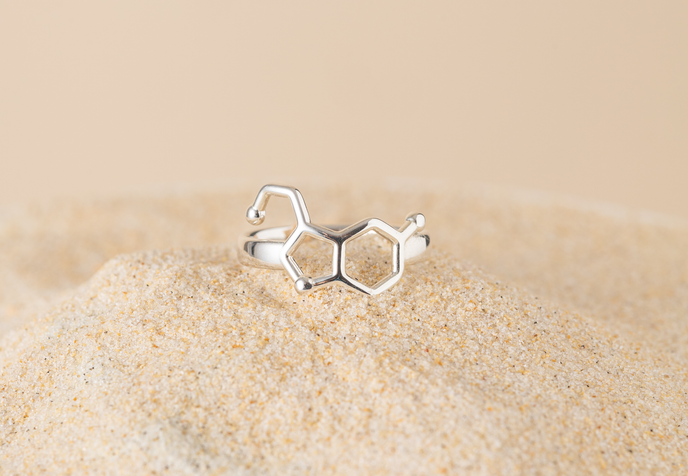
Find your perfect fit: measure an Existing Ring
Finding out your ring size at home is a simple process and can help you shop for jewelry online with confidence.
Necklace length guide