€ 205


Still questions? Contact us
Mandible necklace | sterling silver
Forensic anthropologists can often identify a person from a mandible alone. Age estimated from dental wear, sex from chin morphology, population affinity from arch shape. The lower jaw carries more biographical information than almost any other bone in the body.
The Anatomy of the Mandible
The mandible is a U-shaped bone with a horizontal body and two vertical rami. Each ramus ends in two processes: the condylar process forms the temporomandibular joint with the temporal bone, and the coronoid process anchors the temporalis muscle. The TMJ is the most frequently activated joint in the body, used during speaking, chewing, swallowing, and yawning, and it works as both a hinge and a sliding joint depending on the movement. The mental foramen on the body's outer surface lets the mental nerve and vessels emerge into the chin. In oral and maxillofacial surgery, mandibular reconstruction after trauma or tumour is one of the most demanding procedures in the field, often involving fibula free flaps to rebuild a functional arch.
Who Reaches For This
The audience clusters by profession:
- oral and maxillofacial surgeons, orthodontists, and prosthodontists
- forensic anthropologists who read mandibular morphology routinely
- medical and dental anatomists who teach the head and neck
- archaeology students who work with skeletal material in the field
- artists and illustrators whose subject is the human face
Explore Related Human Anatomy Jewelry
- Skull necklace | silver
- Skull necklace | gold vermeil
- Teeth necklace | silver
- Hyoid bone necklace | silver
FAQ
Who is the mandible necklace for, beyond dentists?
Quite a lot of people, in practice. Oral surgeons and orthodontists are the obvious audience, but it lands well with forensic anthropologists, with anatomy teachers, with archaeology students who work with skeletal material, and with anyone whose work or training has put them on the head-and-neck side of the body. The mandible is also the bone most people can identify on themselves with a single touch.
Why is the temporomandibular joint such a tricky one clinically?
Because it does two things at once. It hinges open and shut for biting, and it slides forward for wider opening, and the disc between the condyle and the temporal bone moves with both motions. When the disc displaces, the joint clicks, and chronic displacement is the most common cause of TMJ disorders. The combination of high use, complex motion, and a small fibrocartilage disc makes it one of the most failure-prone joints in the body.
What's the size, material, and chain?
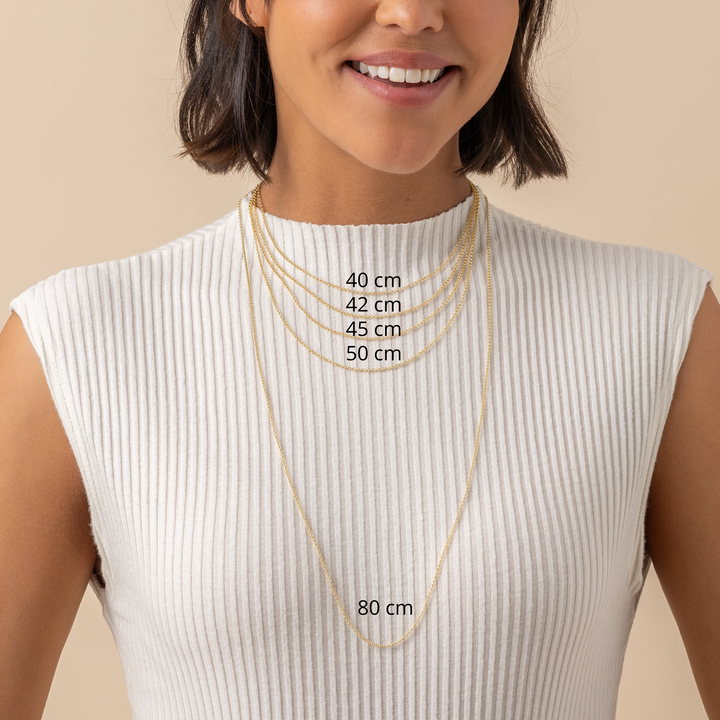
27 mm pendant in 925 sterling silver, nickel-free. 45 cm sterling silver chain with a 5 cm extender. Ships free worldwide via DHL Express in 1-5 business days, with all import duties prepaid. Comes in a ready-to-gift jewelry box with the 30-day “Love It or Return It” policy.
Is there a gold version?
Not currently. The mandible is silver only. The catalog has silver and gold versions of the full skull and several other head pieces, but the mandible itself is a single material for now.

Human Anatomy
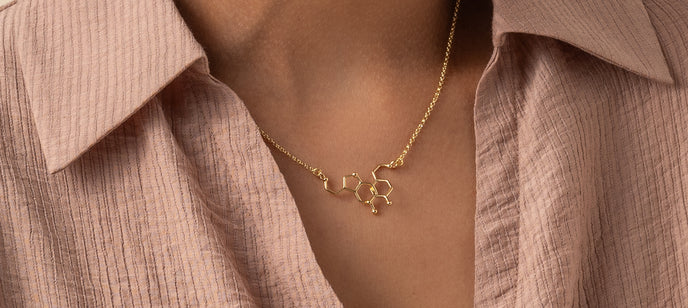
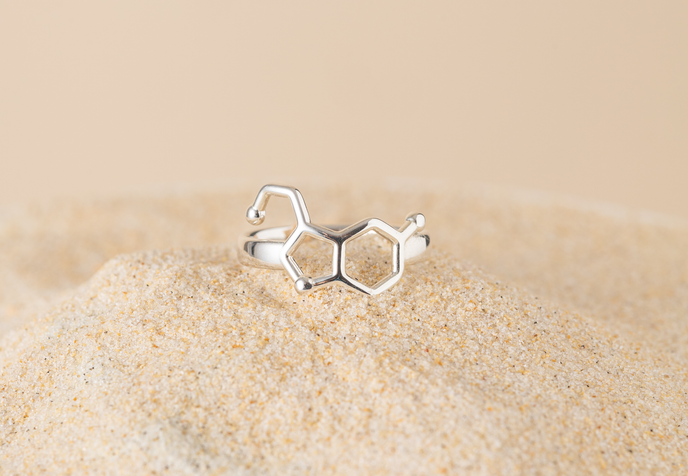
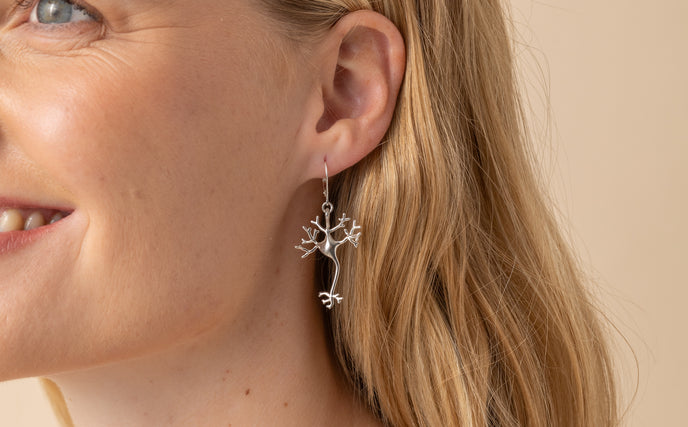
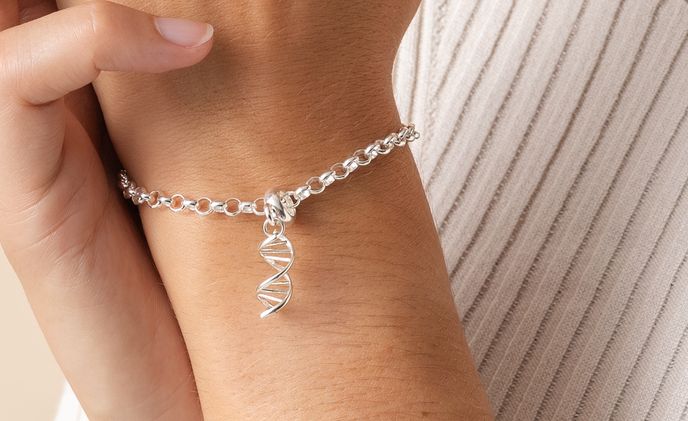
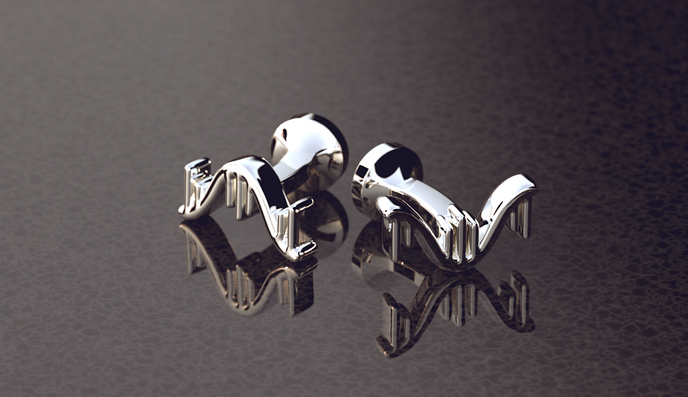
Anatomical wonders have never been so elegantly articulated. Our anatomical collection embodies the intricate and awe-inspiring structures that make us who we are. From DNA double helices to neuronal networks, our pieces don't merely imitate—they interpret. The collection serves as a tangible tribute to the hidden beauty within us all, elevating the realms of biology and medicine into wearable art. With exquisite attention to detail, each piece is a dialogue between form and function, revealing the enigmatic eloquence of the human body.
Find your perfect fit: measure an Existing Ring
Finding out your ring size at home is a simple process and can help you shop for jewelry online with confidence.
Necklace length guide