€ 190


Still questions? Contact us
Nuclear pore necklace | gold vermeil
Between divisions, a cell keeps adding pores, the gates in its nuclear envelope, and researchers are still working out how each new one assembles. A cell biologist who wears a nuclear pore necklace in gold vermeil might be the one to fill in the rest.
Who It's For
- a daughter or sister doing a PhD on the cell nucleus
- a friend in structural biology or cryo-electron microscopy
- a biology teacher or university lecturer
- a colleague who studies how genes are switched on
- yourself, if you work on how molecules cross the nuclear envelope
How a Messenger RNA Leaves the Nucleus
A gene is copied into messenger RNA inside the nucleus, but ribosomes read the message outside it, in the cytoplasm, so the message has to leave through a nuclear pore. In a 2010 study, David Grünwald and Robert Singer followed single messenger RNAs for one gene, β-actin, as they met pores in mouse cells. A crossing took about 180 thousandths of a second: about 80 to dock on the nuclear side, 5 to 20 to pass through the channel and about 80 to be released into the cytoplasm. Passing through was the quick part. Some messages moved back and forth inside a pore, and not every pore was equally active.
Explore Related Cell Biology Jewelry
- nuclear pore necklace | silver
- mammalian cell necklace | gold vermeil
- ribosomes necklace | gold vermeil
- nucleosomes necklace | gold vermeil
FAQ
How big is the pendant, and how does it sit?
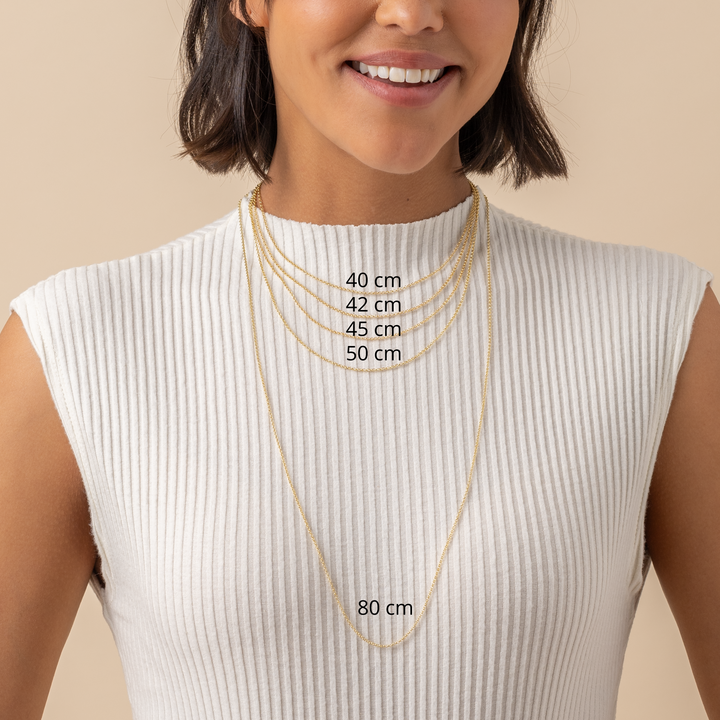
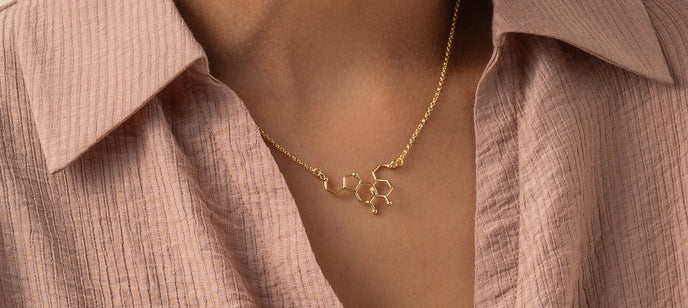
The pendant measures 21 mm (about 0.8 inches), about 3 mm more than the width of a US dime (17.91 mm). It hangs from a small ring at its top and sits below the collarbone on a 45 cm (17.7 inch) gold vermeil chain with a 5 cm (2 inch) extender. Our vermeil is 2.5 microns of 18K gold over solid sterling silver.
Does it come in sterling silver?
Yes. The nuclear pore necklace comes in 18K gold vermeil and in sterling silver, both with a 21 mm pendant on a 45 cm chain with a 5 cm extender. Choose the finish the recipient already wears. The design is the same in both finishes. For a second cell biology piece in gold vermeil, the mammalian cell necklace has a 20 mm pendant on the same length of chain.
Will it arrive in time, and what if it isn't right?
DHL Express delivers it free worldwide in 1-5 business days, and we pay the import duties and taxes, so nothing is due at the door. It arrives in a ready-to-gift jewelry box and festive envelope. If it isn't right, our 30-day “Love It or Return It” policy applies.
How did researchers find the seven-amino-acid signal that sends a virus protein into the nucleus?
They changed single amino acids in a virus protein, then moved the stretch onto other proteins. In 1984 Robert Lanford and Janet Butel, and Daniel Kalderon, Alan Smith and colleagues, each reported that changing lysine 128 kept large T antigen of SV40, a monkey virus, out of the nucleus. Kalderon's team then attached the stretch around it to beta-galactosidase and pyruvate kinase, and both collected in the nucleus. Trimming it down, they concluded that seven amino acids can act as the signal: proline, lysine, lysine, lysine, arginine, lysine, valine.
Cellular Biology
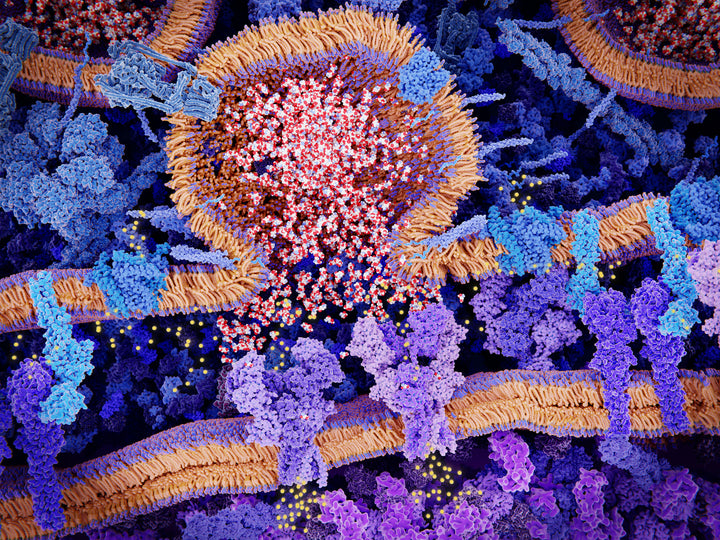
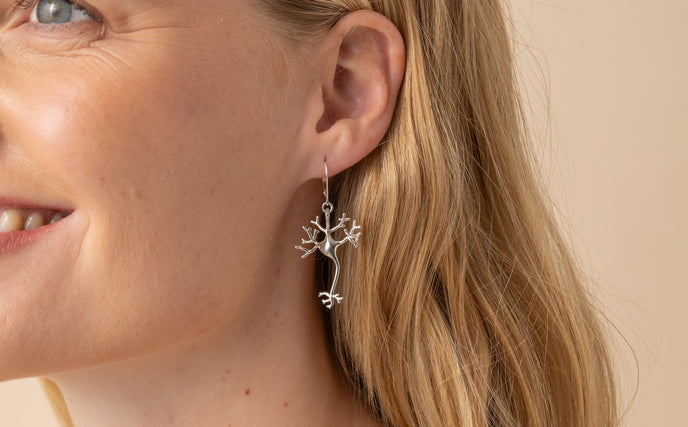
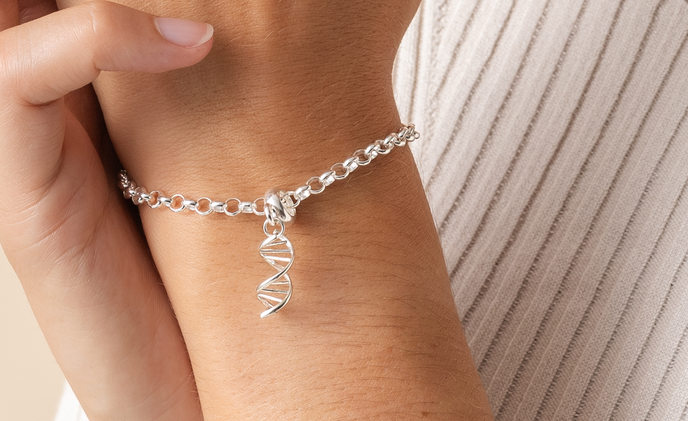
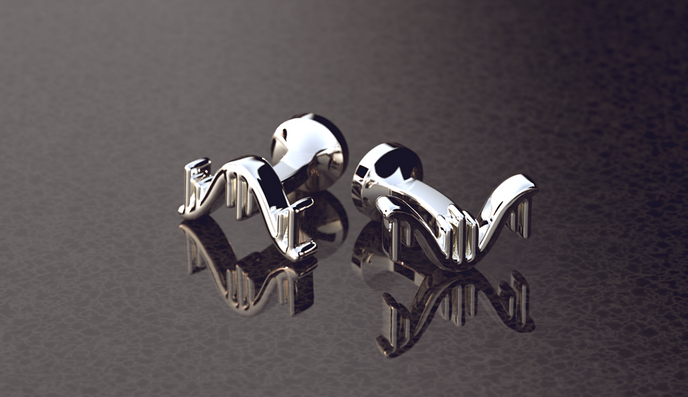
Step into the fascinating world of cellular biology through our unique jewelry designs. These pieces serve as wearable reflections of life's microscopic wonders, capturing the aesthetics of DNA strands, cellular formations, and more. Far from simple adornments, they spark dialogue and honor the captivating complexities found within biological research. Merging scientific accuracy with artistic flair, each creation offers a tactile experience that bridges the gap between scientific inquiry and aesthetic appreciation.
Find your perfect fit: measure an Existing Ring
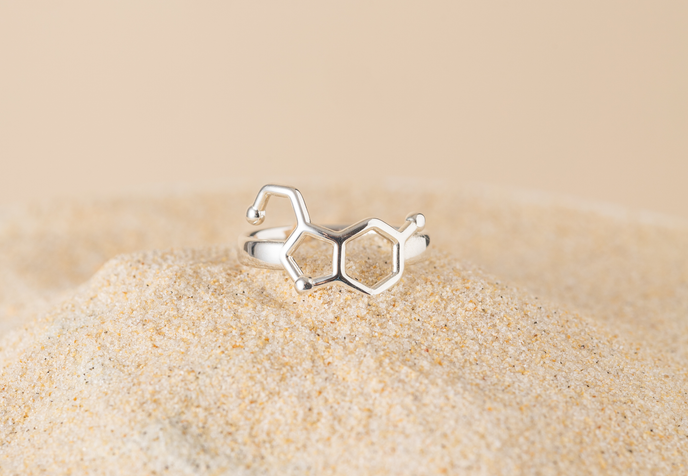
Finding out your ring size at home is a simple process and can help you shop for jewelry online with confidence.
Necklace length guide