€ 290


Still questions? Contact us
Purkinje cell earrings | 18K gold vermeil
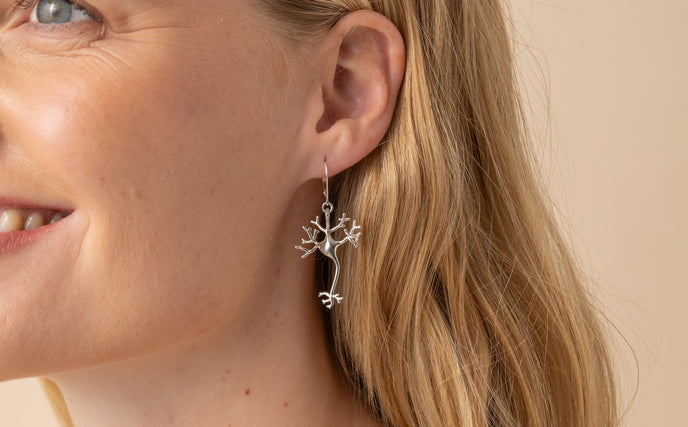
The Purkinje cell is the neuron in the cerebellum that helps every movement come out smooth, with one of the largest branching trees in the brain. These Purkinje cell earrings in 18K gold vermeil are for the neuroscientist, neurologist or student who knows the cell on sight. Give them to her, or keep the pair for yourself.
Who It's For
- a neuroscientist who works on the cerebellum or motor learning, for her birthday
- a neurologist or neurology resident, when she finishes training
- a PhD student in neuroscience, on the day she defends
- someone who already wears the Purkinje cell necklace in gold, to make a set
- yourself, if gold is what you wear every day
From a review of the silver version. Camille S.: “This piece is stunning.”
One Teacher for Every Purkinje Cell
Each Purkinje cell receives signals from up to hundreds of thousands of thin parallel fibres, but from only one climbing fibre, a single input from the brainstem that wraps around its branches. It does not start that way. Shortly after birth, several climbing fibres reach each cell. Over the first weeks of life they compete, and all but one are pruned away. The winner acts like a teacher: when a movement goes wrong, it fires and tells the Purkinje cell which of its many other inputs to weaken. Meanwhile the cell itself fires steadily, often 50 or more times a second even at rest.
Explore Related Neuroscience Jewelry
- purkinje cell earrings | silver
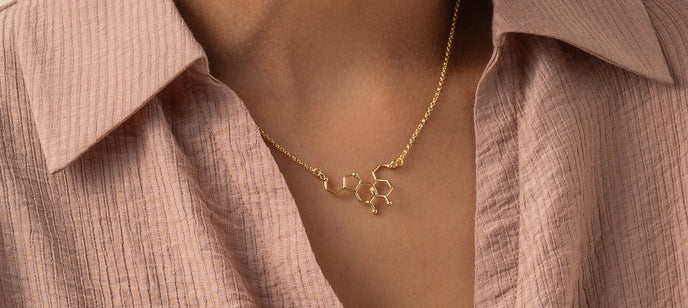
- purkinje cell necklace | gold vermeil
- neuron necklace | gold vermeil
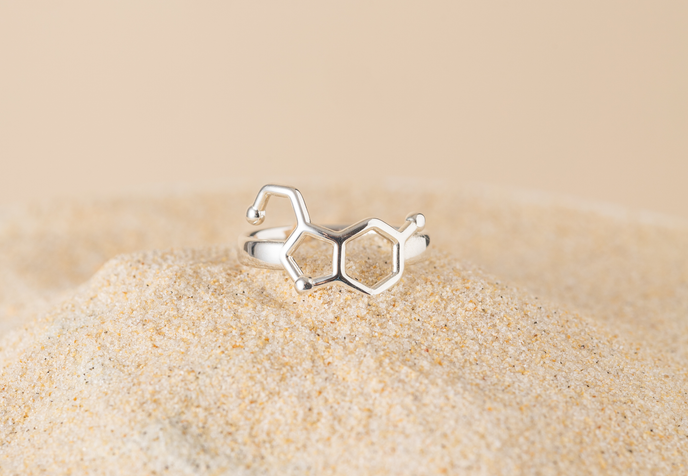
- dopamine serotonin earring hoops | gold vermeil
FAQ
How long are they, and how do they fasten?
Each Purkinje cell measures 39 mm (about 1.5 inches), not counting the hook, about one and a half times the width of a 2-euro coin. They hang from gold vermeil leverback hooks, which close at the back so the earring stays in place. The fine branches can catch on a scarf or a knit, so take them off before pulling a jumper over your head. 18K gold vermeil means 2.5 microns of 18K gold over solid sterling silver, nickel-free and hypoallergenic. To keep the gold bright, wipe them with a soft cloth and store them dry in their box.
Is there a silver pair, or a matching necklace?
Yes. The Purkinje cell earrings also come in sterling silver, at the same 39 mm. Choose the finish she already wears: the design is the same in both. For a set, the Purkinje cell necklace, a 47 mm pendant, comes in gold vermeil and in sterling silver.
Is delivery free, and what if they aren't right?
Yes. DHL Express delivers free in 1-5 business days worldwide, and we pay the import duties and taxes, so nothing is due at the door. They arrive in a ready-to-gift jewelry box and festive envelope. If they aren't right, our 30-day “Love It or Return It” policy applies to unworn earrings.
Who first drew the full branching tree?
Santiago Ramón y Cajal. Jan Purkinje had seen the large cell bodies in 1837, but the branches stayed invisible until Camillo Golgi's silver stain, published in 1873, turned a few whole neurons black against a clear background. Cajal improved the method and spent the 1880s and 1890s drawing what he saw, including Purkinje cells with every branch traced by hand. He used those drawings to argue that the brain is made of separate cells. Golgi disagreed. They shared the 1906 Nobel Prize in Physiology or Medicine all the same.

Neuroscience
Dive into the intricacies of the human mind with our neuroscience-inspired jewelry collection. Each piece is a tactile ode to the neural networks that shape our thoughts, memories, and consciousness. Crafted with meticulous attention to detail, our designs mirror the dendritic branches and synaptic connections that form the basis of mental activity. With these elegant pieces, wear the enigma of cognition close to your skin, offering a subtle yet profound exploration of what it means to be sentient.
Find your perfect fit
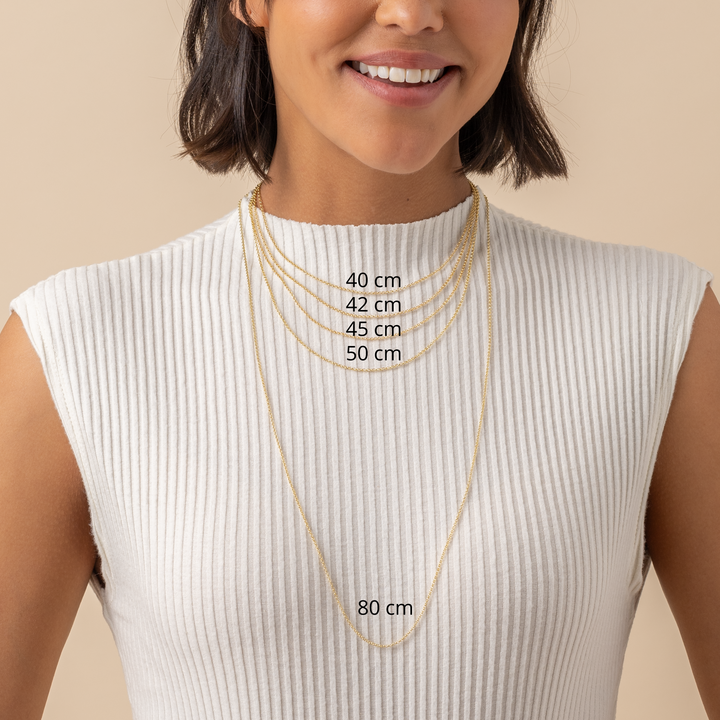
Necklace length guide