€ 225


Still questions? Contact us
Sagittal brain necklace | gold vermeil
Less than 1 per cent of the human brain is hypothalamus, yet this small region helps regulate hunger, thirst and body temperature. A sister in neuroscience with a sagittal brain necklace in gold vermeil takes the brain as her subject, and while she works, that small share of her own helps keep her temperature and thirst in check.
Who It's For
- your girlfriend, as an everyday necklace
- a close friend who works in neuroscience
- a daughter studying psychology
- a neurologist or neuroanatomy lecturer
- yourself
How the Senses Reach the Cortex
The thalamus sits deep in the brain at the top of the brainstem, an egg-shaped mass of grey matter on each side of the third ventricle. Signals from the eyes, ears, tongue and skin stop here on their way to the cortex. Smell is the exception: signals from the nose reach their first area of cortex without passing through the thalamus. The thalamus also links areas of the cortex with each other and with deeper structures such as the amygdala. In ancient Greek the word can mean an inner room, and Riolan the Younger and Thomas Willis settled it as the name of this structure in the 17th century.
Explore Related Neuroscience Jewelry
- sagittal brain necklace | silver
- brain studs | gold vermeil
- brain necklace | gold vermeil
- neuron necklace | gold vermeil
FAQ
How big is the pendant, and how does it sit?
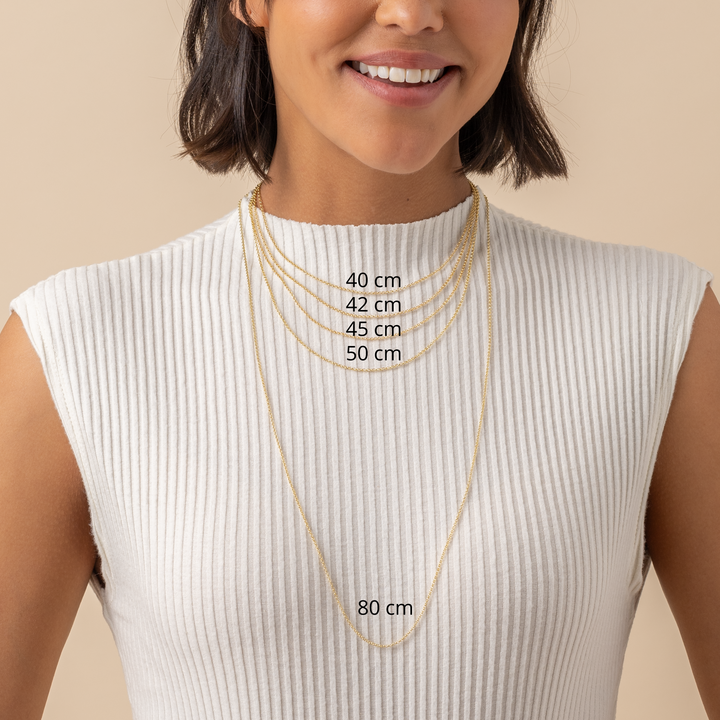
The pendant measures 18 mm (about 0.7 inch), only 0.09 mm more than a US dime (17.91 mm). It hangs from a small ring at its top and sits below the collarbone on a 45 cm (17.7 inch) gold vermeil chain with a 5 cm (2 inch) extender. Our vermeil is 2.5 microns of 18K gold over solid sterling silver, nickel-free and hypoallergenic.
Is there a silver version, or matching earrings?
Yes, there is a sterling silver version, but there are no sagittal brain earrings. The sagittal brain necklace comes in 18K gold vermeil and in sterling silver, both with an 18 mm pendant on a 45 cm chain with a 5 cm extender. Choose the finish the recipient already wears. The design is the same in both finishes. For a set in gold vermeil, the brain studs measure 12 by 9 mm each and close with ear nuts. They also come in sterling silver.
Will it arrive in time, and what if it isn't right?
DHL Express delivers it free worldwide in 1-5 business days, and we pay the import duties and taxes, so nothing is due at the door. It arrives in a ready-to-gift jewelry box and festive envelope. If it isn't right, our 30-day “Love It or Return It” policy applies.
Which mistake about the brain did Vesalius admit to?
Andreas Vesalius admitted he had followed Galen in giving the human brain a rete mirabile, a net of fine arteries where the carotid arteries end. In 1538 he drew it as part of human anatomy. At a public dissection in 1540 he showed it on a sheep's head. By 1543, the year of the Fabrica, he denied that humans have one and reproached himself for missing Galen's error. The net does exist in sheep and other hoofed animals, and Galen relied heavily on animal dissection. Humans have no rete mirabile.

Neuroscience
Dive into the intricacies of the human mind with our neuroscience-inspired jewelry collection. Each piece is a tactile ode to the neural networks that shape our thoughts, memories, and consciousness. Crafted with meticulous attention to detail, our designs mirror the dendritic branches and synaptic connections that form the basis of mental activity. With these elegant pieces, wear the enigma of cognition close to your skin, offering a subtle yet profound exploration of what it means to be sentient.
Find your perfect fit: measure an Existing Ring
Finding out your ring size at home is a simple process and can help you shop for jewelry online with confidence.
Necklace length guide