€ 220


Still questions? Contact us
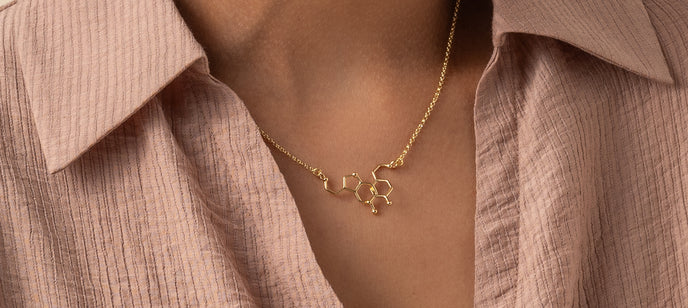
Sarcomere necklace | gold vermeil
If you can read a sarcomere diagram (Z disc, I band, A band, M line, with thick and thin filaments sliding past each other) and know exactly what each band is doing during a contraction, you already recognise what this is. The gold vermeil version is the same sarcomere as the silver, in a warmer key.
The Science of the Sarcomere
The sarcomere is the basic contractile unit of striated muscle. Bounded by two Z discs, it contains the regular array of thick filaments (myosin) and thin filaments (actin) that the sliding-filament theory of contraction is built on. Hugh Huxley and Andrew Huxley independently proposed the model in 1954, and it has been the foundation of muscle physiology ever since. During contraction, ATP binds myosin heads, which then attach to actin and pull, walking the thin filament toward the centre of the sarcomere. The Z discs come closer together, the I bands shorten, the A band stays the same length, and the M line stays centred. Cardiac muscle, skeletal muscle, and most of the diseases of muscle (cardiomyopathies, muscular dystrophies, statin myopathies) come back to changes in this geometry.
The Audience
The audience is the same as the silver version:
- cardiac and skeletal muscle physiologists
- cardiologists working on heart failure, hypertrophy, or cardiomyopathies
- exercise physiologists and sports medicine specialists
- biophysicists studying motor proteins and force generation
- family members marking a doctorate in muscle biology or a major paper
The same sarcomere pendant is also available in sterling silver.
Explore Related Cellular Biology Jewelry
- Sarcomere necklace | sterling silver
- Myosin necklace | silver
- Anatomical heart necklace | gold vermeil
- Mammalian cell necklace | gold vermeil
FAQ
Same model as the silver sarcomere?
Yes. Same 42 mm pendant, identical sarcomere geometry. Material is the only difference.
Why does the sarcomere matter so much for medicine, not just biology?
Because most muscle disease is sarcomere disease. Hypertrophic cardiomyopathy is caused by mutations in sarcomere proteins (MYH7, MYBPC3, TNNT2, TPM1). Dilated cardiomyopathy can be too. Skeletal muscular dystrophies disrupt the dystrophin-glycoprotein complex that anchors the sarcomere to the cell membrane. Statin myopathy disturbs sarcomere maintenance. Even healthy training adaptation (hypertrophy, fibre-type shifts) is sarcomere remodelling. A clinician treating any of these conditions is reasoning at the sarcomere level whether they say so or not.
What is the size, material, and chain?
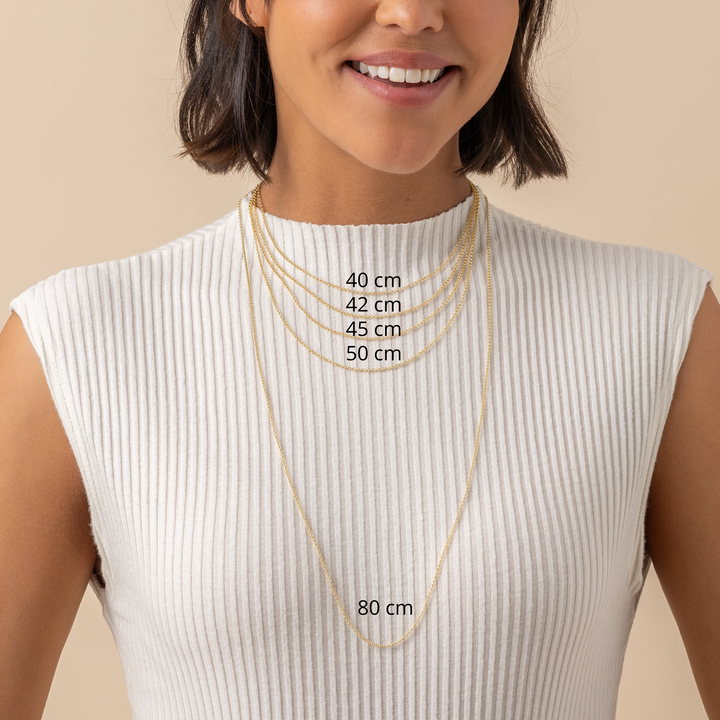
42 mm pendant in 18K gold vermeil (sterling silver core with 2.5 micron gold plating), nickel-free and hypoallergenic. 45 cm gold vermeil chain with a 5 cm extender. Ships free worldwide via DHL Express in 1-5 business days, with all import duties prepaid. Comes in a ready-to-gift jewelry box with the 30-day “Love It or Return It” policy.
Who is this usually given to?
Most often a thesis-defence or fellowship-completion gift inside muscle biology, cardiac physiology, or biophysics of motor proteins. The recipient is usually someone who has spent years on the sarcomere itself, and the piece names that work specifically rather than gesturing at "muscle" or "biology" in general.
Cellular Biology
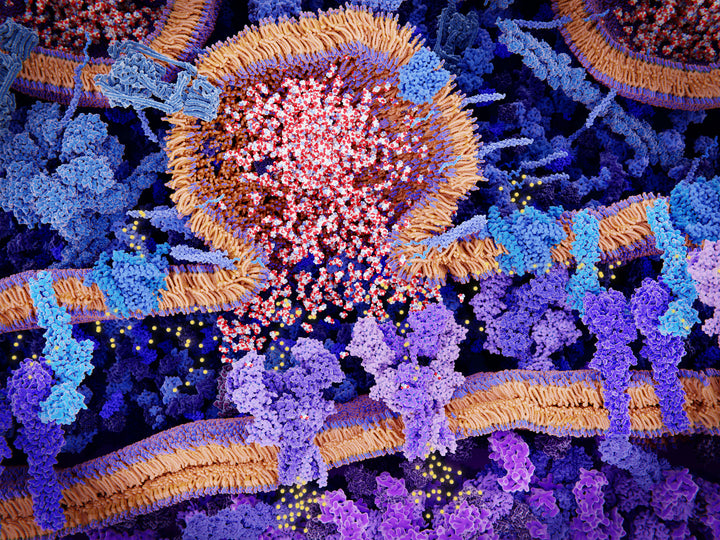
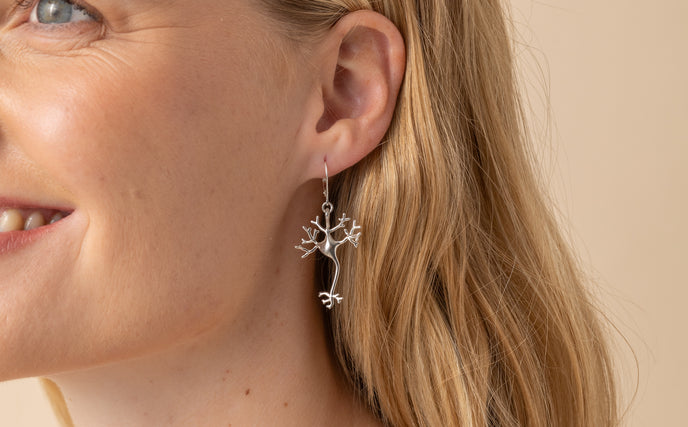
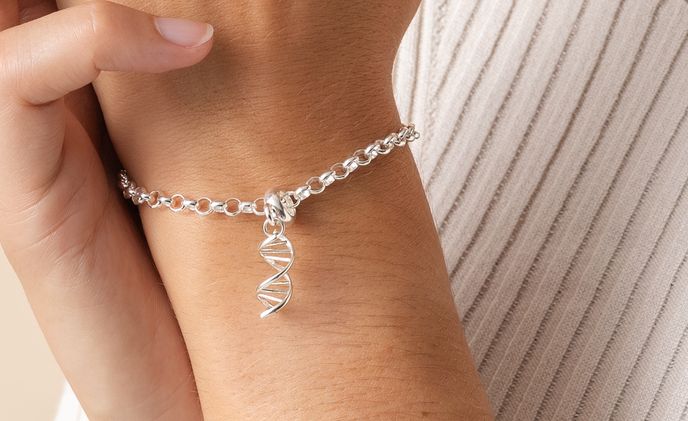
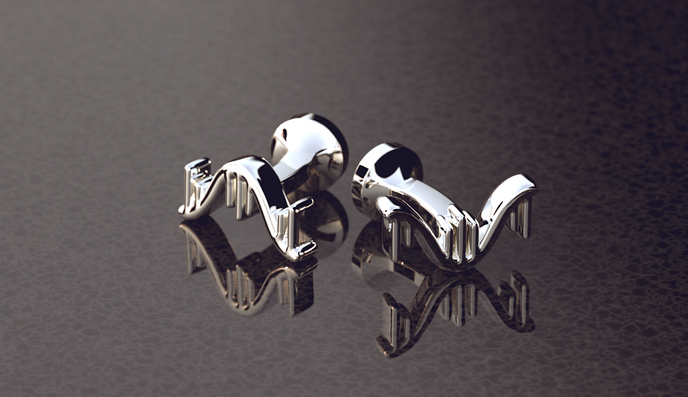
Step into the fascinating world of cellular biology through our unique jewelry designs. These pieces serve as wearable reflections of life's microscopic wonders, capturing the aesthetics of DNA strands, cellular formations, and more. Far from simple adornments, they spark dialogue and honor the captivating complexities found within biological research. Merging scientific accuracy with artistic flair, each creation offers a tactile experience that bridges the gap between scientific inquiry and aesthetic appreciation.
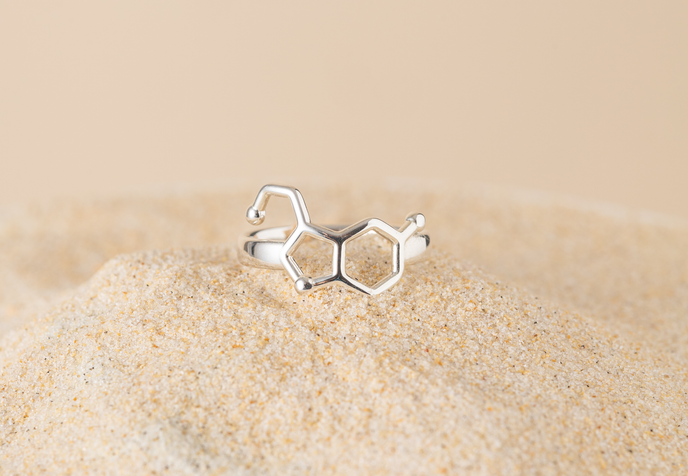
Find your perfect fit: measure an Existing Ring
Finding out your ring size at home is a simple process and can help you shop for jewelry online with confidence.
Necklace length guide