€ 155


Still questions? Contact us
Stomach necklace | sterling silver
The stomach is one of the most chemically aggressive environments inside the body. pH 1.5 to 3.5, three muscle layers churning the contents, and a gastric epithelium that turns over every 3-5 days because the cells lining it are constantly being damaged by the acid they secrete.
The Anatomy of the Stomach
The stomach is a J-shaped muscular organ that sits between the oesophagus and the duodenum. It holds 1 to 1.5 litres at rest and can distend to 4 litres after a large meal. Three muscle layers (longitudinal, circular, oblique) churn the contents to mix food with gastric secretions. Parietal cells secrete hydrochloric acid via the H+/K+ ATPase (the proton pump that omeprazole and other PPIs target). Chief cells secrete pepsinogen, which is converted to active pepsin by gastric acid. G cells in the antrum secrete gastrin, regulating acid secretion through positive feedback. The stomach absorbs almost nothing of nutritional value (alcohol and a few small molecules excepted). It is a chemical and mechanical preprocessor for the small intestine, where most absorption happens. The 1982 discovery that Helicobacter pylori causes most peptic ulcer disease (Marshall and Warren, Nobel 2005) reframed an entire field of clinical medicine.
Worn By
The audience clusters around upper-GI medicine and adjacent fields:
- gastroenterologists and GI endoscopists
- upper-GI and bariatric surgeons
- gastric-cancer oncologists and surgical oncologists
- anatomy teachers and medical students through GI rotations
- anyone with a personal upper-GI story (peptic ulcer, gastric bypass, partial or total gastrectomy)
Explore Related Human Anatomy Jewelry
FAQ
What does a gastroenterologist read into this piece?
The whole upper-GI story. The stomach is the organ around which most outpatient gastroenterology revolves: reflux, peptic ulcer disease, gastritis, Helicobacter testing and treatment, gastric polyps and cancers, bariatric surgery follow-up. A piece naming the organ specifically rather than gesturing at "digestion" reads as well-chosen. Often given by partners or patients at the close of a GI fellowship or after a successful long-running clinical relationship.
How does the stomach survive its own acid?
By a layered defence and constant renewal. The gastric epithelium is coated in a thick mucus layer that traps bicarbonate from underlying cells, creating a near-neutral microenvironment at the cell surface despite a luminal pH of 1.5 to 3.5. Tight junctions between epithelial cells prevent acid penetration into the lamina propria. The whole epithelium is replaced every 3 to 5 days from a stem-cell population in the gastric pits, which means damaged cells are constantly being shed and replaced before injury accumulates. Failure of any of these defences (NSAID-induced mucus disruption, Helicobacter pylori colonisation, bile reflux) is what causes gastritis and peptic ulcer disease.
What is the size, material, and chain?
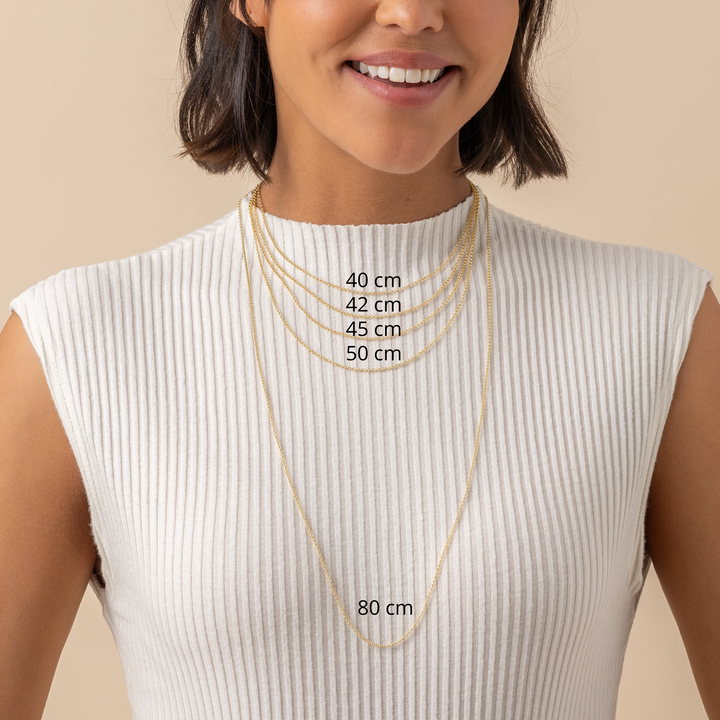
16 mm pendant in 925 sterling silver, nickel-free. 45 cm sterling silver chain with a 5 cm extender. Ships free worldwide via DHL Express in 1-5 business days, with all import duties prepaid. Comes in a ready-to-gift jewelry box with the 30-day “Love It or Return It” policy.
Is there a gold version?
Not currently. The stomach pendant is silver only. The catalog has gold versions of several other GI-organ pieces (liver, pancreas in development) but the stomach is single-material for now.

Human Anatomy
Anatomical wonders have never been so elegantly articulated. Our anatomical collection embodies the intricate and awe-inspiring structures that make us who we are. From DNA double helices to neuronal networks, our pieces don't merely imitate—they interpret. The collection serves as a tangible tribute to the hidden beauty within us all, elevating the realms of biology and medicine into wearable art. With exquisite attention to detail, each piece is a dialogue between form and function, revealing the enigmatic eloquence of the human body.

Find your perfect fit: measure an Existing Ring
Finding out your ring size at home is a simple process and can help you shop for jewelry online with confidence.
Necklace length guide