€ 175


Still questions? Contact us
Sphenoid bone necklace | sterling silver
In 1930 Gregor Popa and Una Fielding described the vessels between the brain and the pituitary gland, set in a saddle of the sphenoid bone. A neuroendocrinologist wearing her sphenoid bone necklace studies what they carry. The pair thought the blood ran up to the brain. Most of it runs down, with signals that tell the gland what to release.
Who It's For
- a medical student learning the bones of the skull
- a neurosurgeon or an ENT surgeon
- a radiologist
- a friend who loves anatomy
- yourself
Adalbert P., who bought one as a present: “It's an amazing piece of human beauty.” Lauren V., who bought one to keep: “The perfect gift to myself.”
How the Base of the Skull Grows Longer
The sphenoid lies across the middle of the skull base and meets every other bone of the cranium: the frontal, ethmoid and occipital bones, and both parietal and both temporal bones. It forms from many separate centres of bone that later fuse into one. Behind its body, a plate of cartilage joins it to the occipital bone. This joint, the spheno-occipital synchondrosis, is one place where the skull base keeps growing. It is often said to close in adolescence, but a review of 60 years of studies found the age varies from childhood to the mid-twenties.
Explore Related Anatomy Jewelry
- skull necklace | silver
- skull necklace | gold vermeil
- mandible necklace | silver
- atlas necklace | silver
FAQ
How big is the pendant, and how does it sit?
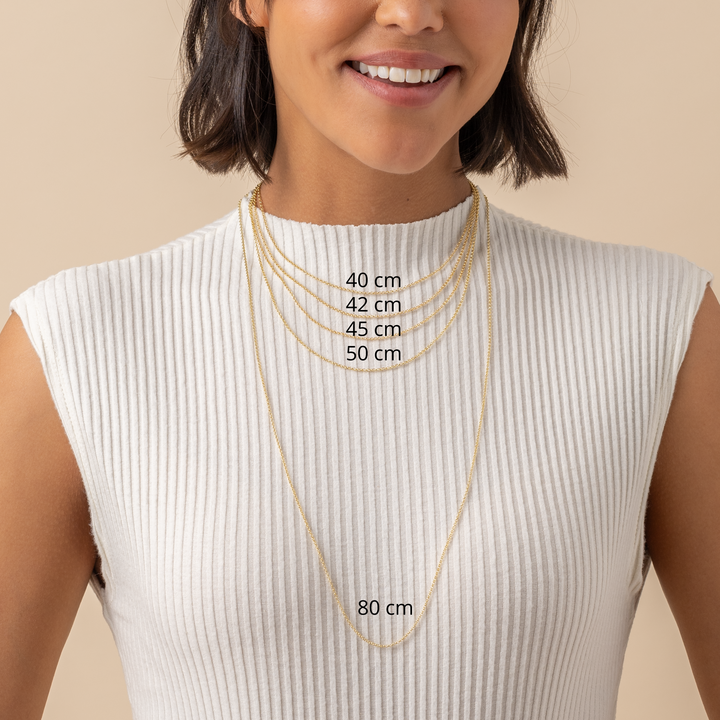
The pendant measures 24 mm (just under 1 inch), almost exactly the size of a US quarter (24.26 mm). The chain attaches at both ends, so the pendant hangs level below the collarbone, on a 45 cm (17.7 inch) sterling silver chain with a 5 cm (2 inch) extender. Our 925 sterling silver is nickel-free and hypoallergenic.
Is there a gold version?
No, the sphenoid bone necklace comes in sterling silver only. For more of the head and neck in the same metal, the skull necklace (25 mm), the mandible necklace (27 mm) and the atlas necklace (26 mm), named for the first vertebra of the neck, also come in sterling silver, each on a 45 cm chain with a 5 cm extender. The skull and the atlas are also made in gold vermeil, as a separate choice.
Will it arrive in time, and what if it isn't right?
DHL Express delivers it free worldwide in 1-5 business days, and we pay the import duties and taxes, so nothing is due at the door. It arrives in a ready-to-gift jewelry box and festive envelope. If it isn't right, our 30-day “Love It or Return It” policy applies.
Is there a hole in the sphenoid that only some people have?
Yes, the foramen of Vesalius. It is a small opening in the greater wing of the sphenoid, close to the larger foramen ovale, and it can be on one side, on both or on neither. It is named after Andreas Vesalius, the 16th-century anatomist. Counts vary widely between studies. A 2022 meta-analysis of 26 studies, mostly of dry skulls, found it in about 38 per cent.

Human Anatomy
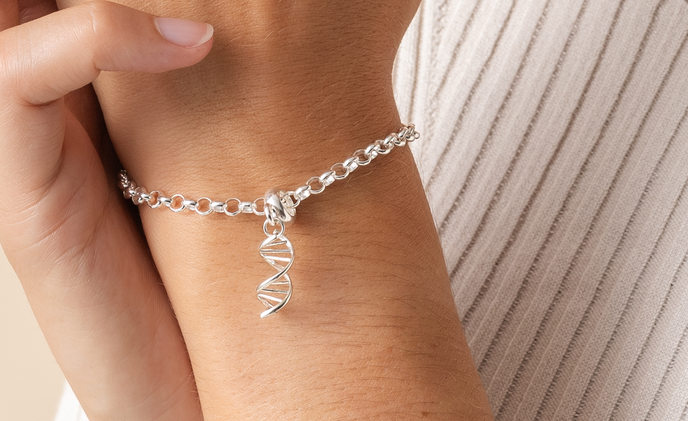
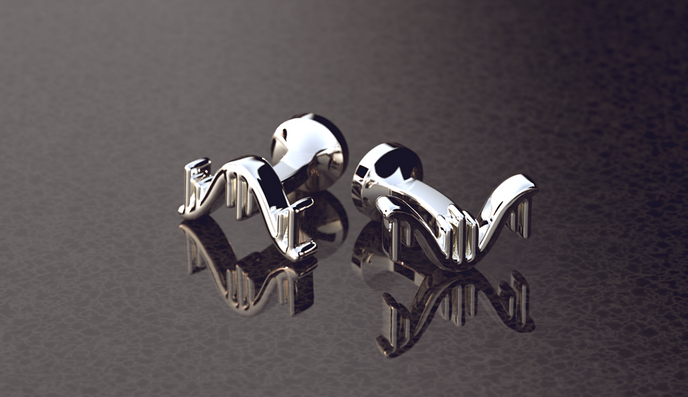
Anatomical wonders have never been so elegantly articulated. Our anatomical collection embodies the intricate and awe-inspiring structures that make us who we are. From DNA double helices to neuronal networks, our pieces don't merely imitate—they interpret. The collection serves as a tangible tribute to the hidden beauty within us all, elevating the realms of biology and medicine into wearable art. With exquisite attention to detail, each piece is a dialogue between form and function, revealing the enigmatic eloquence of the human body.
Find your perfect fit: measure an Existing Ring
Finding out your ring size at home is a simple process and can help you shop for jewelry online with confidence.
Necklace length guide