€ 225


Still questions? Contact us
cockchafer necklace | sterling silver
The May bug once swarmed so thick it darkened the sky. Now a rare sight, its decline is a visible measure of how much insect biomass we have lost. A pendant that carries both natural beauty and ecological weight.
The Science of the Cockchafer
The cockchafer (Melolontha melolontha) is a large European scarab beetle (Coleoptera: Scarabaeidae). Adults emerge in late April and May, hence the name May bug. They feed on tree leaves for 4-6 weeks. Larvae live underground for 3-4 years, feeding on plant roots. Male antennae have seven lamellae, female antennae have six. Cockchafers were once so abundant that their spring flights darkened central European skies. The species collapsed by more than 99% following widespread soil pesticide use (lindane, benzene hexachloride) in the mid-20th century. Populations have partially recovered since pesticide restrictions, but remain a fraction of historical levels. The cockchafer is now legally protected in many European countries and serves as a visible indicator of insect decline.
A Meaningful Gift for Science Lovers
- entomologists and beetle specialists
- ecologists studying insect decline
- anyone working on soil invertebrate conservation
- naturalists who remember the scale of the loss
Explore Related Zoology Jewelry
- Tardigrade necklace | silver
- Rotifer necklace | silver
- Ammonite necklace | silver
- Trilobite necklace | silver
FAQ
Why is the cockchafer so important to entomologists?
The cockchafer is a visible indicator of insect decline. Its population collapse is well-documented and linked to pesticide use. Recovery since the 1980s shows that ecosystems can bounce back when practices change. For entomologists, it is both a research subject and a metaphor for conservation.
What does the cockchafer life cycle tell us?
Adults live a brief aerial life. Larvae spend 3-4 years underground eating plant roots. This long larval period makes populations vulnerable to soil-applied pesticides. Understanding the full life cycle is critical to conservation.
What are the size and material?
30 mm pendant in 925 polished sterling silver, nickel-free and hypoallergenic. 45 cm sterling silver chain with lobster clasp and 5 cm extender. High-polish finish. Comes in a ready-to-gift, eco-friendly jewelry box with the 30-day “Love It or Return It” policy. Free worldwide DHL Express shipping (1-5 business days).
Is the cockchafer available in other materials?
Currently available in silver. The pendant is distinctive enough to stand alone, and the material choice suits the story: the working scientist's everyday piece, not a milestone marker.
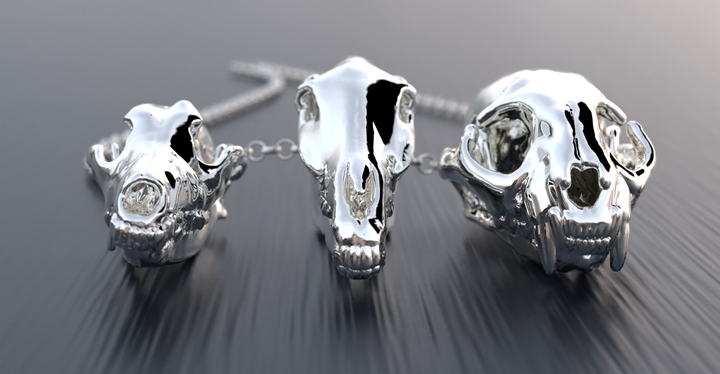
Animal skulls & bones
Drawing upon the intricate architecture of animal anatomy, our collection captures the haunting beauty of skulls and bones. Each piece serves as a tactile memento mori, reminding us of the delicate balance between life and death. Crafted with scientific accuracy, these masterpieces evoke a sense of awe and curiosity, offering a tribute to the intricacies of the natural world. Far more than mere adornments, they are conversation-starters that provoke intellectual dialogue.
Find your perfect fit: measure an Existing Ring
Finding out your ring size at home is a simple process and can help you shop for jewelry online with confidence.
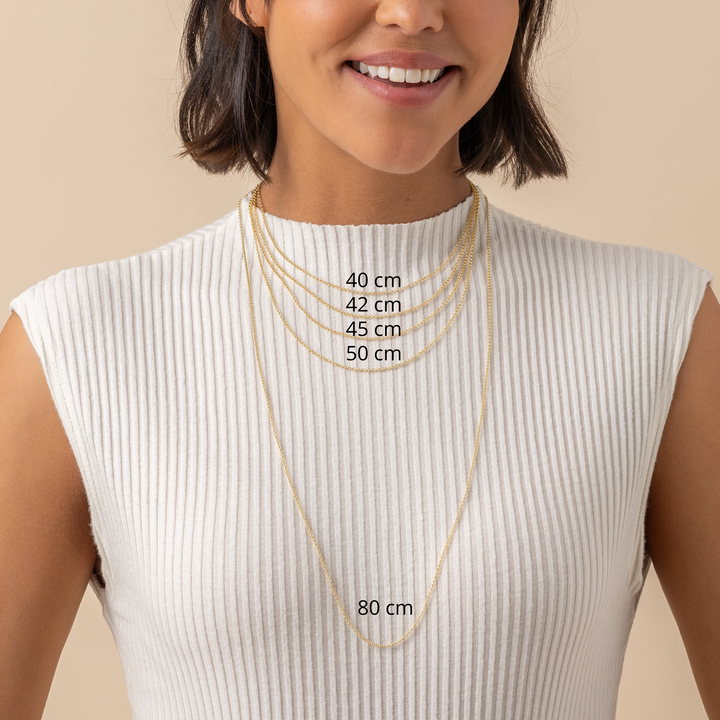
Necklace length guide