€ 175


Still questions? Contact us
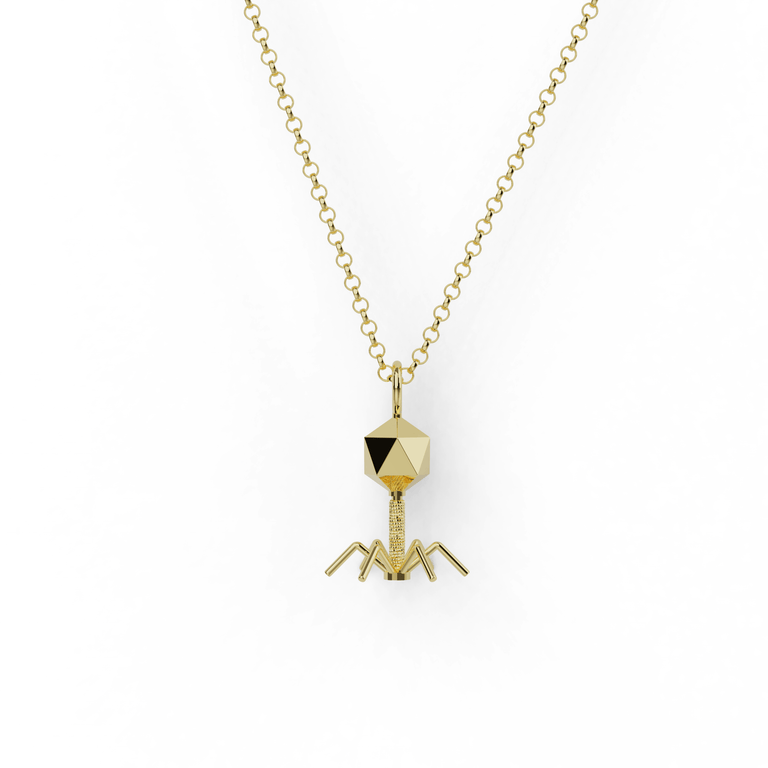
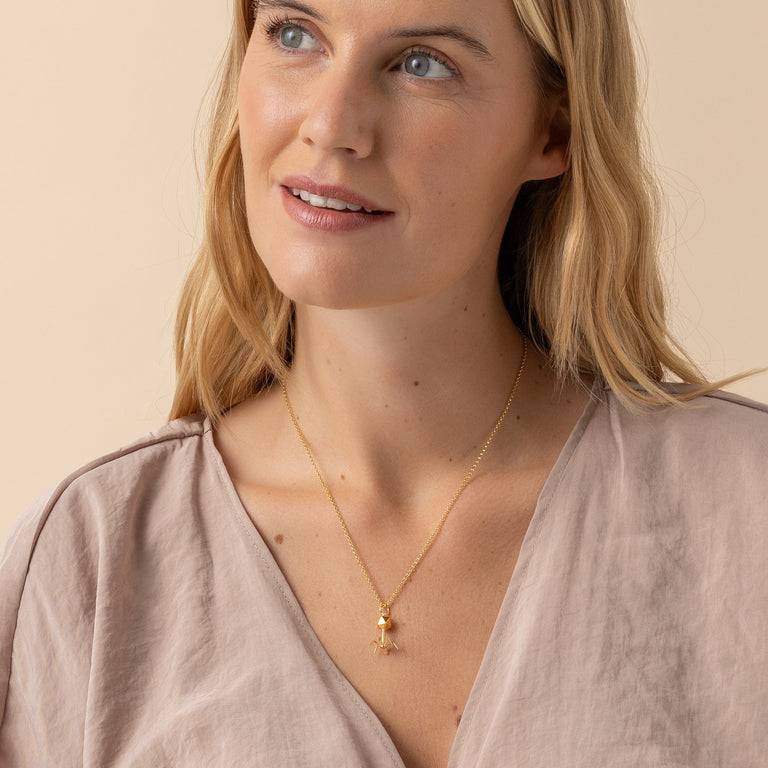
Bacteriophage necklace | gold vermeil
This bacteriophage necklace in gold vermeil is for a woman who works with the viruses that infect bacteria, at the bench, in the clinic or in front of a class. Phages gave biology some of its clearest early answers about how genes work. Give it to someone who studies them, or keep it for yourself.
Who It's For
- a partner with a PhD in infectious diseases, for her birthday
- a daughter who teaches college biology and wears her science to class
- a wife who is a biologist too, for Christmas
- a girlfriend who studied science with you
- yourself, if gold is what you already wear
Paul R., on the gold version: “The bacteriophage is a great design and i'm looking forward to giving it to my partner (who is Ph.D specialising in infectious diseases and working with phage) for her birthday.” Susan M., from a review of the silver version: “She loves wearing her biology jewelry to class and her students always get excited about it!”
How a Phage Injects Its DNA
A phage such as T4 works like a syringe. Its long tail fibres feel for receptors on the surface of a bacterium such as E. coli. Once they bind, the baseplate at the end of the tail changes shape, from a dome to a star, and the sheath around the tail contracts to less than half its length, from about 93 to 42 nanometres. That drives a rigid inner tube through the outer membrane, and the DNA, about 170,000 base pairs in T4, passes on through the inner membrane into the cell.
Explore Related Microbiology Jewelry
- bacteriophage necklace | silver
- bacteriophage earrings | silver
- coronavirus necklace | gold vermeil
- petri dish necklace | gold vermeil
FAQ
How big is the pendant, and how does it sit?
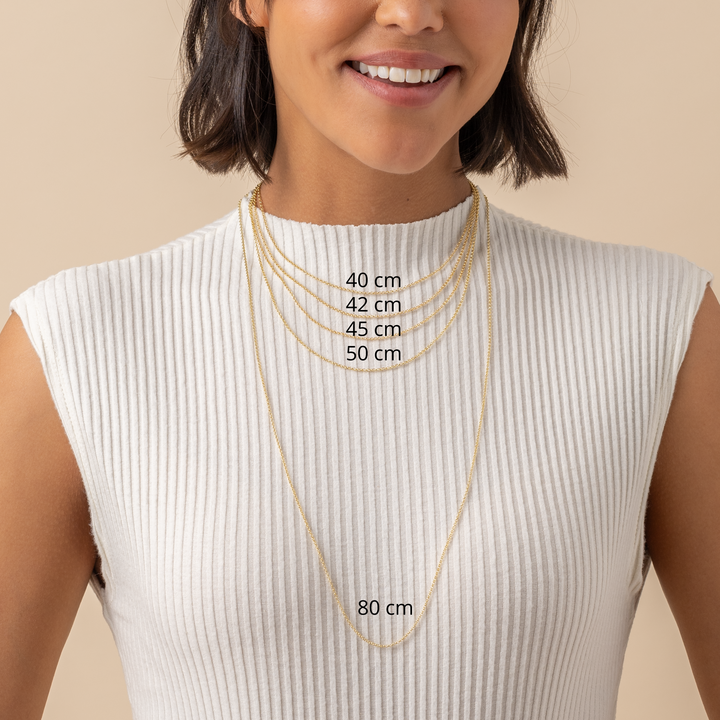
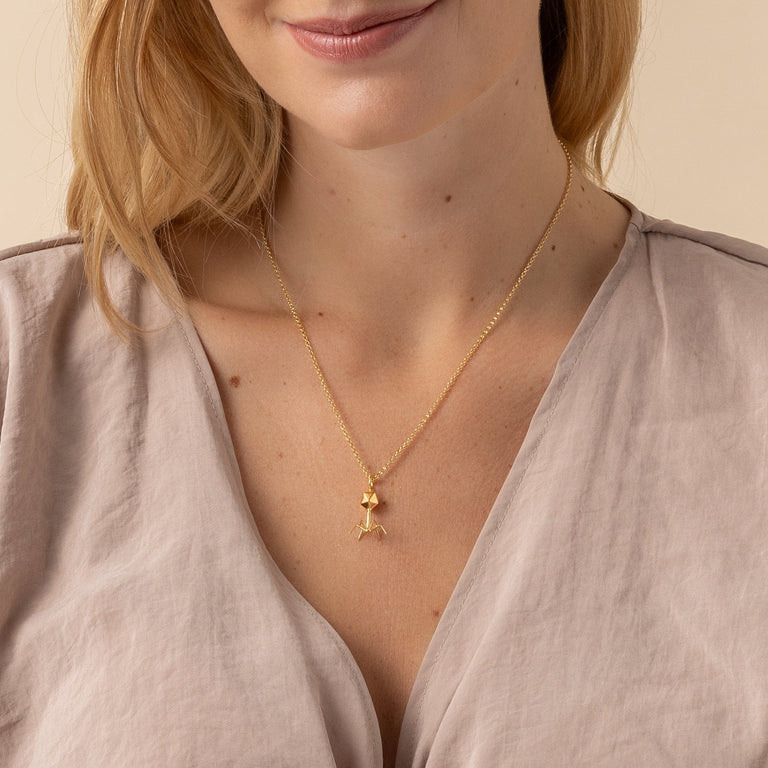
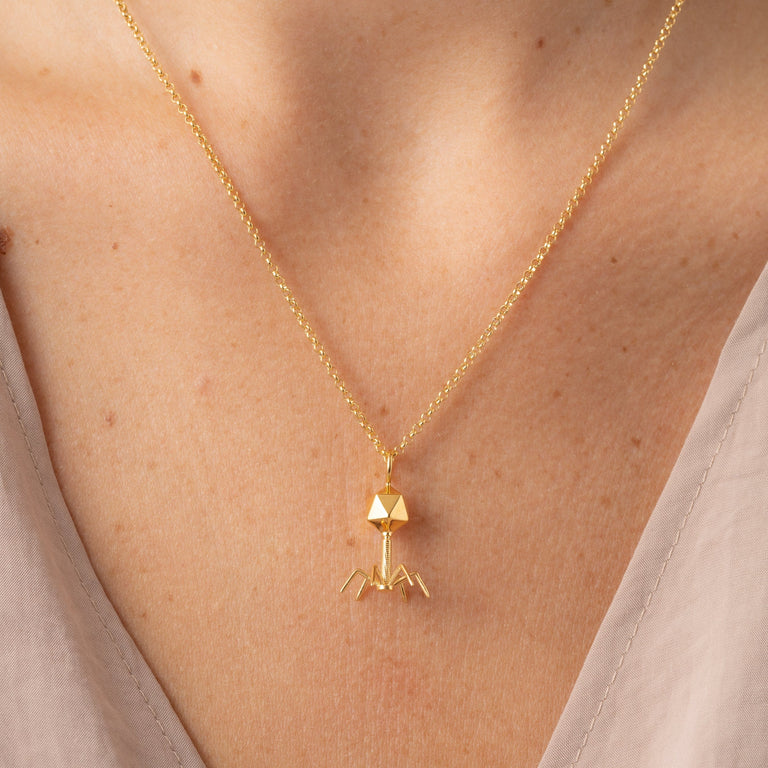
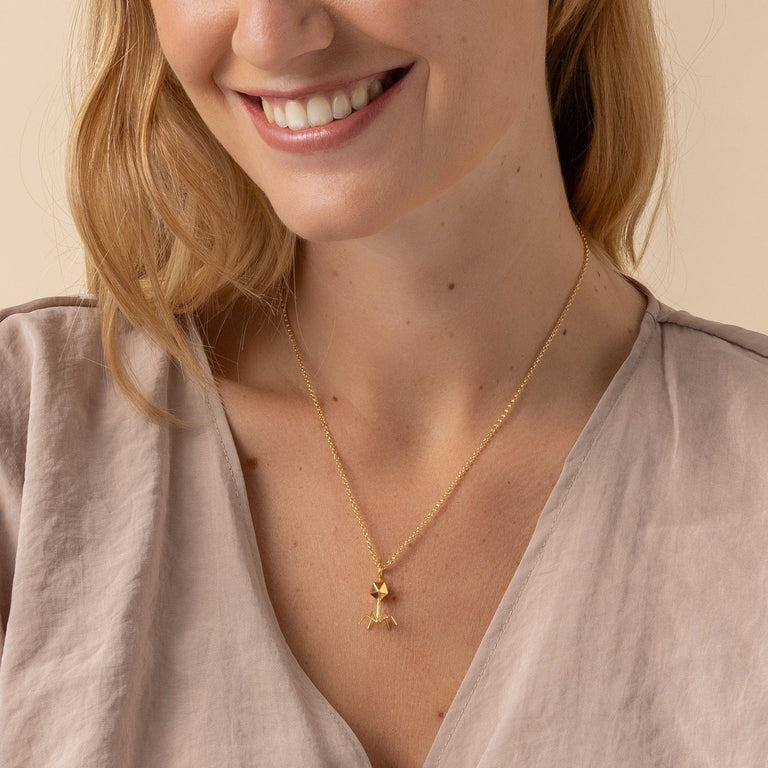
The pendant measures 23 mm (about 0.9 inch), a little smaller than a US quarter (24.26 mm) or a 2-euro coin (25.75 mm). It sits around the collarbone on a 45 cm (17.7 inch) gold vermeil chain with a lobster clasp and a 5 cm (2 inch) extender. Other chain lengths, from 40 to 80 cm, are sold on this page. It is 2.5 microns of 18K gold over solid sterling silver, nickel-free and hypoallergenic. It sits best over smooth fabrics, since loose knits can catch on it.
Is there a silver version, or bacteriophage earrings?
Yes. The same 23 mm bacteriophage necklace comes in sterling silver. Choose the finish she already wears. The design is the same in both. The bacteriophage earrings, 23 mm on leverback hooks, come in sterling silver only, so for a matching set in one metal, pair them with the silver necklace.
Will it arrive in time, and what if it isn't right?
It ships free worldwide with DHL Express and arrives in 1-5 business days. We pay the import duties and taxes, so there is nothing to pay on delivery. It comes in a ready-to-gift jewelry box and festive envelope. If it isn't right, our 30-day “Love It or Return It” policy applies.
What did Hershey and Chase's blender experiment show?
That when a phage infects a bacterium, its DNA goes in and its protein coat stays outside. In 1952 Alfred Hershey and Martha Chase, his research assistant, tagged phage T2 two ways: its protein with radioactive sulfur, its DNA with radioactive phosphorus. Once the phages had attached, a kitchen blender sheared off what stayed outside. Most of the protein came away. Most of the DNA had gone into the cells. Hershey shared the 1969 Nobel Prize in Physiology or Medicine with Max Delbrück and Salvador Luria. Chase was not included.
Cellular Biology
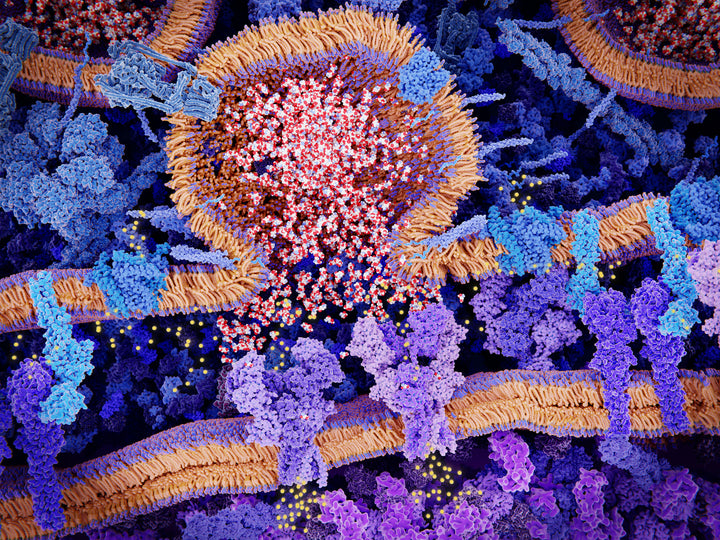
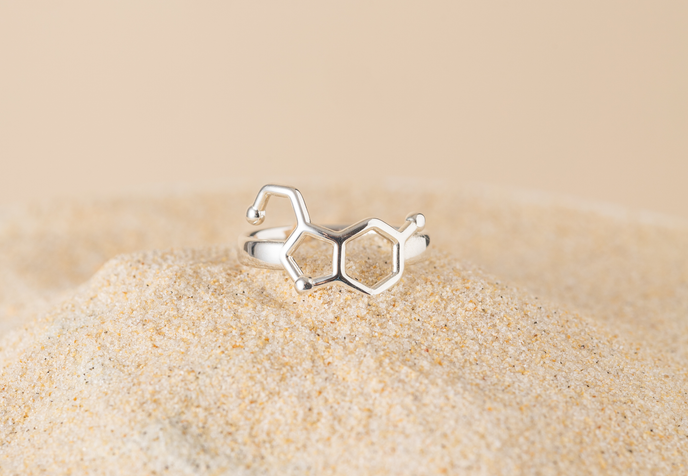
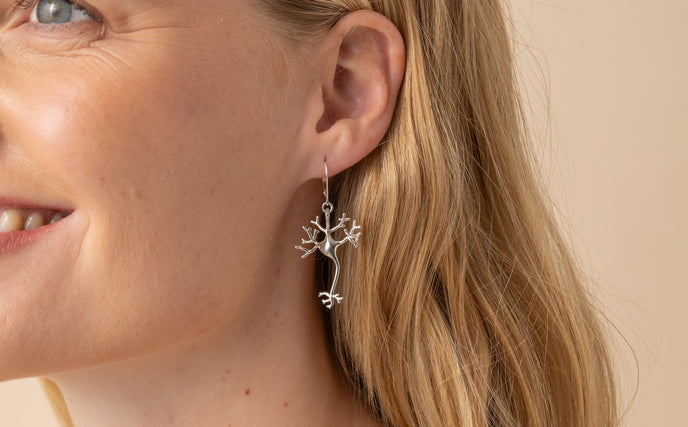
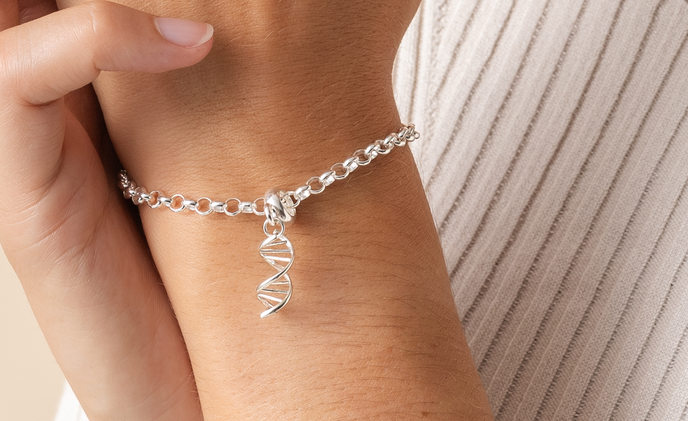
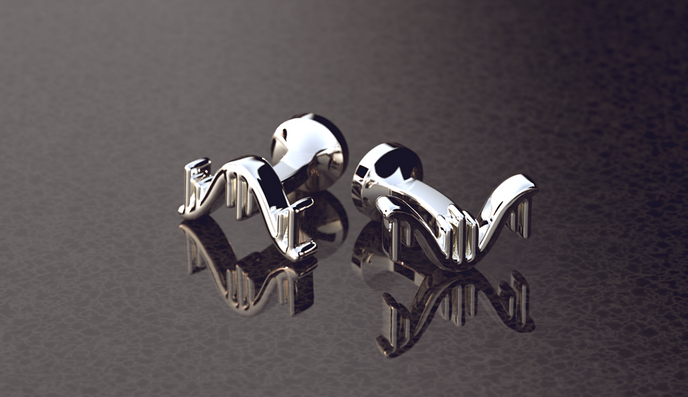
Step into the fascinating world of cellular biology through our unique jewelry designs. These pieces serve as wearable reflections of life's microscopic wonders, capturing the aesthetics of DNA strands, cellular formations, and more. Far from simple adornments, they spark dialogue and honor the captivating complexities found within biological research. Merging scientific accuracy with artistic flair, each creation offers a tactile experience that bridges the gap between scientific inquiry and aesthetic appreciation.
Find your perfect fit: measure an Existing Ring
Finding out your ring size at home is a simple process and can help you shop for jewelry online with confidence.
Necklace length guide