€ 190


Still questions? Contact us
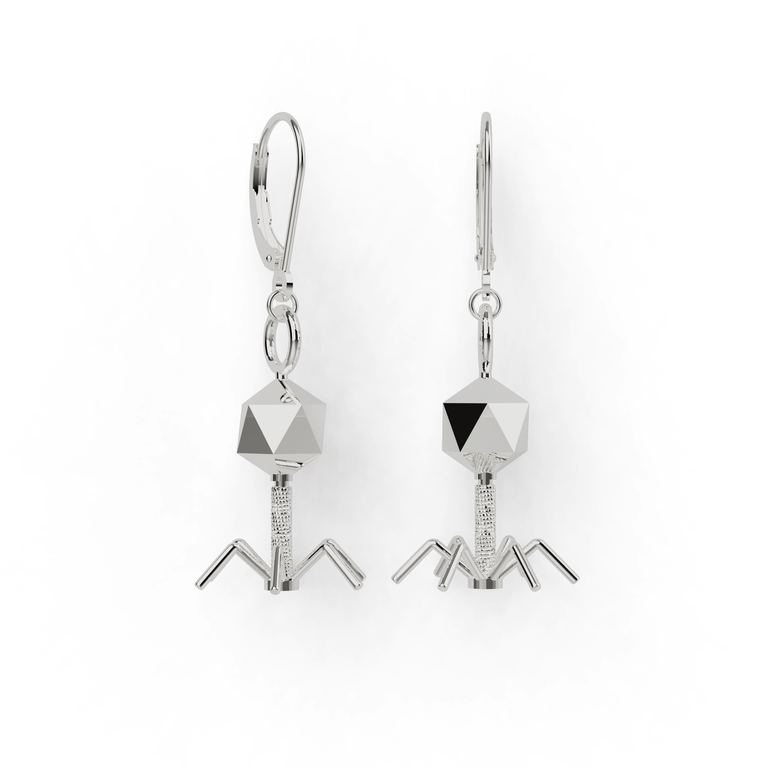
Bacteriophage earrings | sterling silver
The word bacteriophage means bacteria eater, the name for a virus that infects bacteria and nothing else. These bacteriophage earrings are a gift for the woman who spends her working day with microbes, at the bench or in the lecture hall.
Who It's For
- a wife or partner in microbiology or virology, for her birthday
- a daughter who teaches biology, to wear in front of her class
- a friend defending her PhD on viruses or bacteria
- someone who already has the bacteriophage necklace, to make a set
- yourself, if phages are part of your working week
Caton O. on his gift: “Bought a pair of these for my wife's birthday. Quality is amazing.” Cornelia R. bought her own: “Absolutely love them!”
How a Phage Lives
Phages live in one of two ways. Lytic phages, such as T4, take over a bacterium, copy themselves and burst it open. Temperate phages can take a quieter route. Most insert their DNA into the bacterial chromosome, where it is copied with every cell division, sometimes for many generations, until stress such as DNA damage sets it free to make new phages. That borrowed DNA can change the host. In 1996 Matthew Waldor and John Mekalanos showed that the cholera toxin genes reach Vibrio cholerae through a phage called CTXΦ. The diphtheria toxin gene also comes from a phage.
Explore Related Microbiology Jewelry
- bacteriophage necklace | silver
- bacteriophage necklace | gold vermeil
- petri dish earrings | silver
- CRISPR necklace | silver
FAQ
How big are they, and how do they fasten?
Each earring measures 23 mm (about 0.9 inches), not counting the hook, a little smaller than a US quarter or a 2-euro coin. They hang from sterling silver leverback hooks, which clip closed behind the earlobe so they stay in place all day. Our sterling silver is 925, nickel-free and hypoallergenic. If the silver darkens over time, a soft polishing cloth brings it back.
Is there a matching necklace, or a gold pair?
The earrings come in sterling silver only. For a set in the same metal, the bacteriophage necklace comes in sterling silver, with a 23 mm pendant on a 45 cm chain and 5 cm extender. The same necklace is also made in 18K gold vermeil, for someone who already wears gold.
Is delivery free, and what if they aren't right?
Yes. DHL Express delivers free in 1-5 business days worldwide, and we pay the import duties and taxes, so nothing is due at the door. They arrive in a ready-to-gift jewelry box and festive envelope. If they aren't right, our 30-day “Love It or Return It” policy applies to unworn earrings.
Why did Félix d'Hérelle swallow his own medicine?
To show it was safe. In 1917 d'Hérelle at the Pasteur Institute in Paris reported an invisible microbe that destroyed dysentery bacteria and called it a bacteriophage. Frederick Twort had described a similar effect in The Lancet in 1915. In 1919, at the Hôpital des Enfants-Malades in Paris, d'Hérelle, the head of paediatrics Victor-Henri Hutinel and several interns drank his phage preparation. The next day it went to a 12-year-old boy with severe dysentery. His symptoms stopped after a single dose, and he recovered within a few days.
Cellular Biology
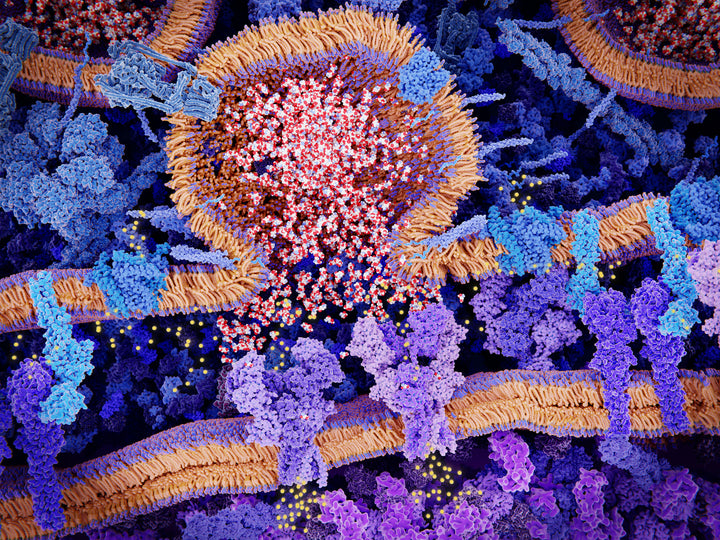
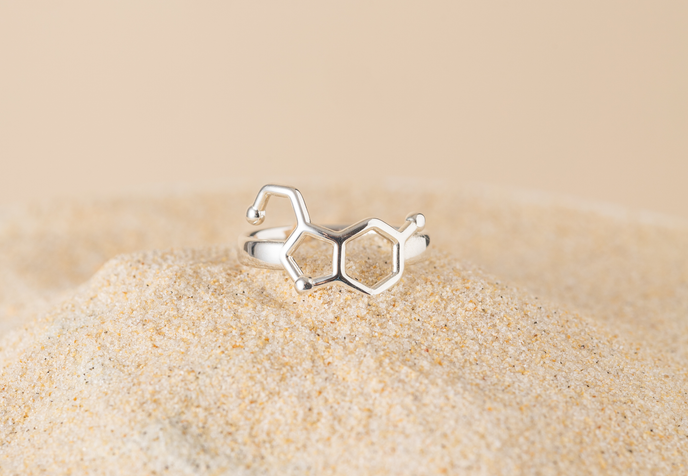
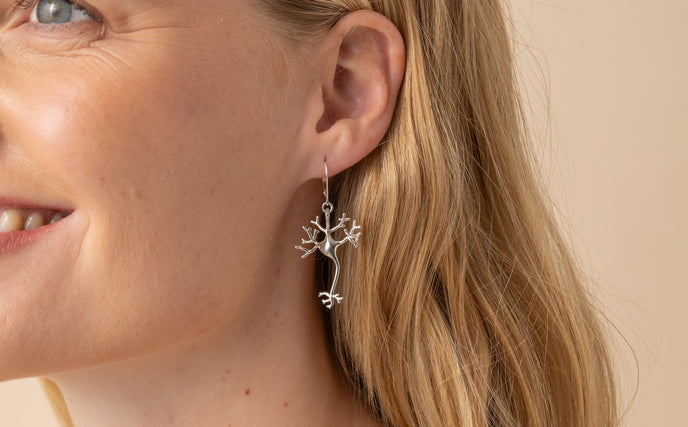
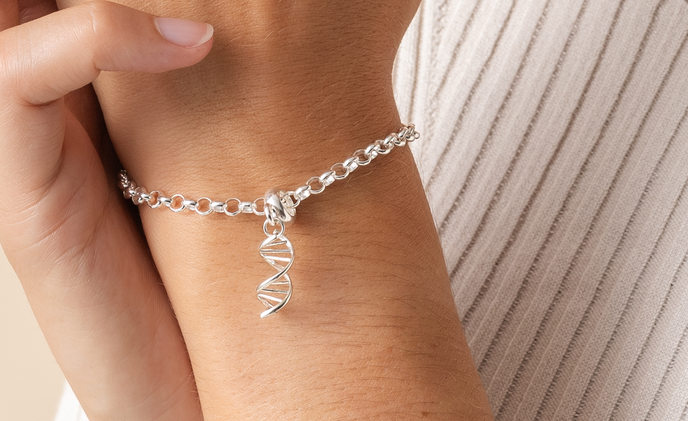
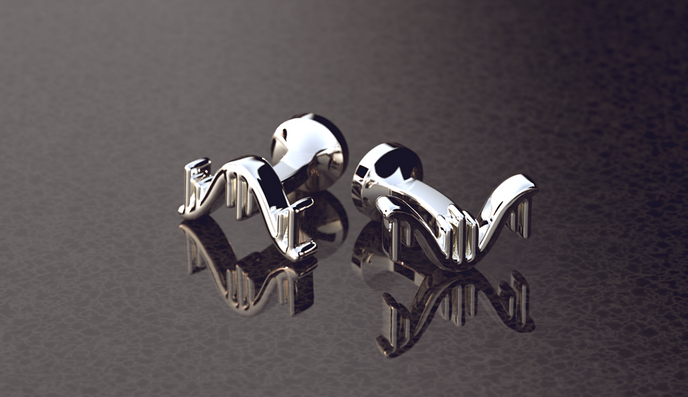
Step into the fascinating world of cellular biology through our unique jewelry designs. These pieces serve as wearable reflections of life's microscopic wonders, capturing the aesthetics of DNA strands, cellular formations, and more. Far from simple adornments, they spark dialogue and honor the captivating complexities found within biological research. Merging scientific accuracy with artistic flair, each creation offers a tactile experience that bridges the gap between scientific inquiry and aesthetic appreciation.
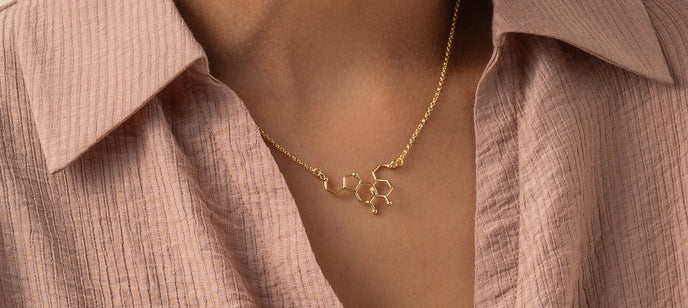
Find your perfect fit
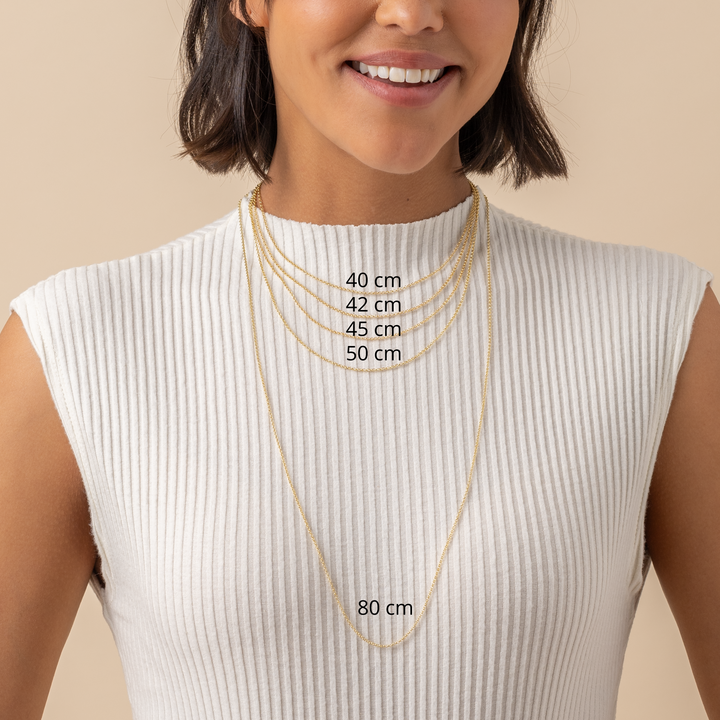
Necklace length guide