€ 140


Still questions? Contact us
Glucose necklace | sterling silver
A glucose necklace says something simple to a daughter: you keep me going. Glucose is the sugar the brain runs on, and the necklace makes a present for a special occasion that she can go on wearing long after the day itself.
Who It's For
- your daughter
- a woman studying food science
- someone close to you, for a special occasion
- yourself, if you like your jewelry simple
Diane L. wrote: “I purchased this for my daughter as a gift. Wonderful service! I got it a week earlier than originally stated! I had given her a ring from here. She loved it!”
The Science Behind Glucose
Plants use sunlight to turn carbon dioxide and water into sugars, and glucose is the building block of much of what they make from them. Linked one way, glucose chains coil and branch into starch, the energy store in rice, wheat and potatoes, which our digestive enzymes take apart again. Linked the other way, the chains lie straight and pack side by side into cellulose, the fibre of wood and cotton, and no human enzyme can break those links. Cellulose is the most abundant organic polymer on Earth. So the same sugar, joined by a bond that faces the other way, ends up as either a meal or a cotton shirt.
Explore Related Molecules Jewelry
- glucose necklace | gold vermeil
- glucose earrings | silver
- insulin necklace | silver
- chlorophyll necklace | silver
FAQ
How big is the pendant, and how does it sit?
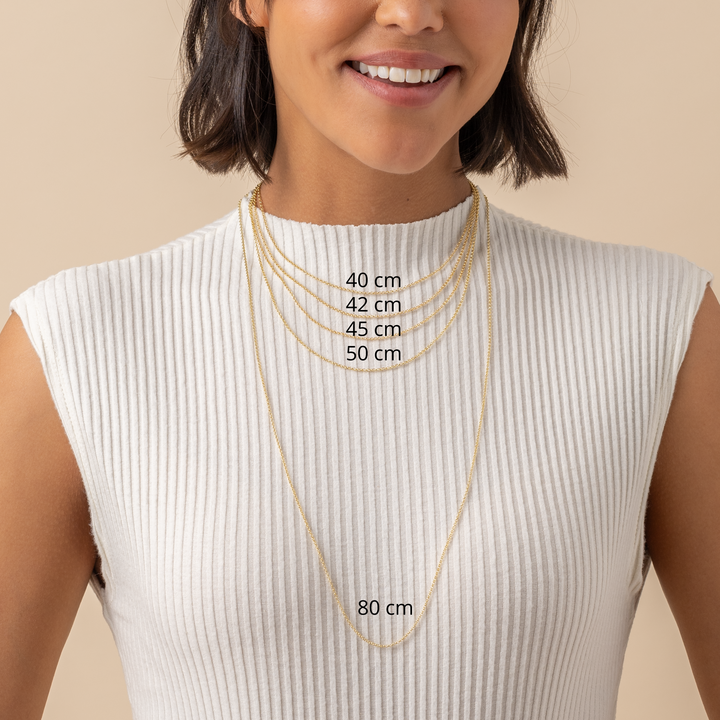
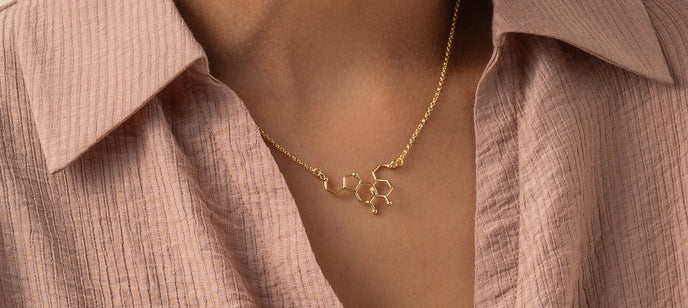
The pendant measures 21 mm (about 0.8 inch), about 5 mm smaller than a 2-euro coin and 3 mm smaller than a US quarter. It hangs from a small ring on a 45 cm (17.7 inch) sterling silver chain with a 5 cm (2 inch) extender, and sits below the collarbone. Extra chains of 40, 42, 45 and 50 cm (each with the extender) or 80 cm can be added here for layering. Our 925 sterling silver is nickel-free and hypoallergenic, and a soft cloth brings back the shine.
Which version should I choose?
The glucose necklace comes in sterling silver and in 18K gold vermeil, both with a 21 mm pendant on a 45 cm chain with a 5 cm extender. Choose the finish the recipient already wears. The design is the same in both finishes. For a matching set in silver, the glucose earrings have a 14 mm pendant on each 17.5 mm sterling silver hoop.
Will it arrive in time, and what if it isn't right?
DHL Express delivers it free worldwide in 1-5 business days, and we pay the import duties and taxes, so nothing is due at the door. It arrives in a ready-to-gift jewelry box and festive envelope. If it isn't right, our 30-day “Love It or Return It” policy applies.
Who won a Nobel Prize for showing how the body uses its glucose store?
Gerty and Carl Cori, in St. Louis. The body keeps glucose in reserve as glycogen, branched chains in the liver and muscles. In 1936, in minced frog muscle, the Coris found glucose-1-phosphate (the Cori ester), the first compound glycogen is broken into, and with colleagues later found the enzyme that makes it. Gerty spent years in a research post on a fraction of her husband's pay. She became full professor in 1947, months before the Coris' Nobel Prize, and the first woman to win it in physiology or medicine.
Molecules
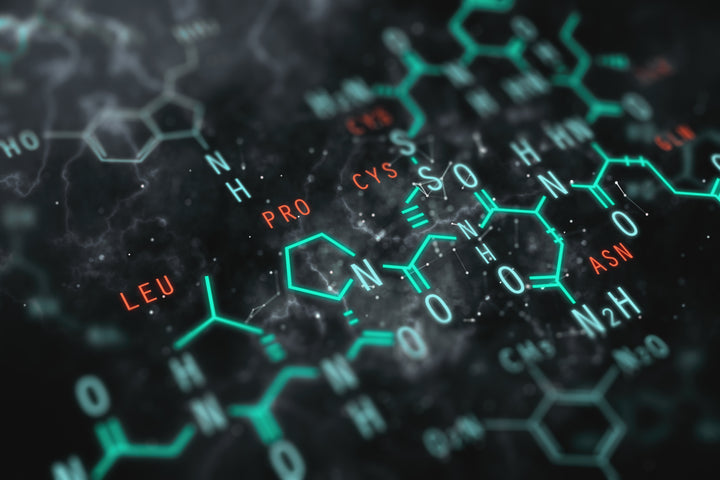
Delve into the hidden elegance of science with our meticulously crafted jewelry, inspired by the intricate structures of chemical molecules. Each piece serves as a tactile tribute to the building blocks of life and matter, capturing the allure of atoms and bonds in precious metals. A harmonious fusion of art and science, these creations are more than mere accessories; they're a celebration of the enigmatic beauty that underpins our universe.
Find your perfect fit: measure an Existing Ring
Finding out your ring size at home is a simple process and can help you shop for jewelry online with confidence.
Necklace length guide