€ 165


Still questions? Contact us
Telescope necklace | 18k gold vermeil
In 1610 Galileo pointed an early refracting telescope at Jupiter and found four moons orbiting it. The discovery ended the geocentric universe in one season of observation. Every telescope built since has been a continuation of that single decision to look more carefully.
The Science of the Telescope
From Galileo's small refractor to the 6.5 metre primary mirror of the James Webb Space Telescope, the instrument has done one thing across four centuries: collect more light from further away. The Hubble Space Telescope's deep field exposures revealed thousands of galaxies in a patch of sky that ground-based instruments saw as empty. The James Webb, parked at the second Lagrange point about 1.5 million kilometres from Earth, observes in the infrared and looks through dust clouds that block visible light. Most of the universe we have learned about over the past century has been seen first through a telescope, then verified everywhere else.
Who Will Recognise It
Anyone whose work or attention sits in the sky:
- astronomers and astrophysicists across observational disciplines
- cosmologists, planetary scientists, and astrobiology researchers
- physicists working on optics, detectors, or space instrumentation
- amateur astronomers who own a Dobsonian and use it weekly
- science teachers, planetarium staff, and anyone who has spent a clear night looking up
About half the orders ship to working scientists, and the rest to enthusiasts who built their interest from a borrowed telescope as a teenager and never quite let it go.
Explore Related Astronomy Jewelry
- Telescope necklace | silver
- Saturn necklace | gold vermeil
- Orion necklace L | gold vermeil
- CubeSat necklace | silver
FAQ
What does an astronomer see when they look at this?
An instrument they trust. The telescope is one of the few scientific objects that crosses the working and professional divide cleanly. The same basic optics underlie a backyard refractor and a space observatory, so a piece that names the instrument directly tends to read as well-chosen by both audiences, where a piece naming a specific telescope or galaxy might land too narrowly.
Why has the telescope mattered so much to physics, beyond just astronomy?
Because it forced physics to take its own theories at scale. General relativity got its first observational test from telescope measurements during the 1919 solar eclipse. Dark matter was inferred from telescopic observations of galactic rotation. The accelerating expansion of the universe was found through telescope photometry of distant supernovae, work that won the 2011 Nobel Prize in Physics. The telescope is the instrument that forces theoretical physics to face data.
What's the size, material, and chain?
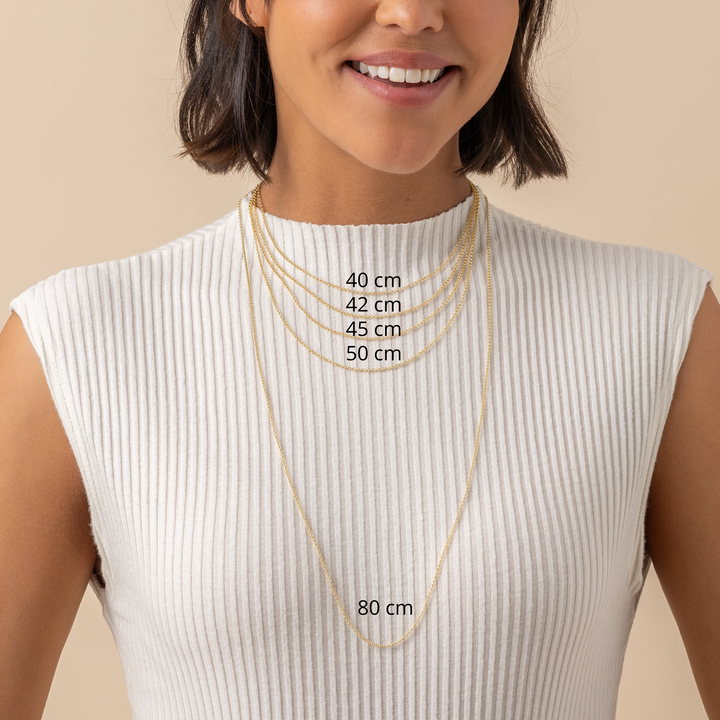
31 mm pendant in 18k gold vermeil over a sterling silver core, nickel-free. 45 cm gold vermeil chain with a 5 cm extender. Ships free worldwide via DHL Express in 1-5 business days, with all import duties prepaid. Comes in a ready-to-gift jewelry box with the 30-day “Love It or Return It” policy.
Same design as the silver telescope?
Yes. Same model, same 31 mm size. Material is the only difference. The silver is the everyday piece. The gold reads as the more deliberate version, often a milestone gift after a doctorate in astronomy or astrophysics.
Math & Physics
Unlock the elegance of the abstract with our math and physics-inspired jewelry collection. These carefully crafted pieces mirror the profound equations and natural laws that shape our understanding of the universe. Experience the allure of fractals, the rhythmic beauty of pi, and the celestial wonder of astral formations—each piece serves as a wearable homage to the artistry inherent in scientific inquiry.

Find your perfect fit: measure an Existing Ring
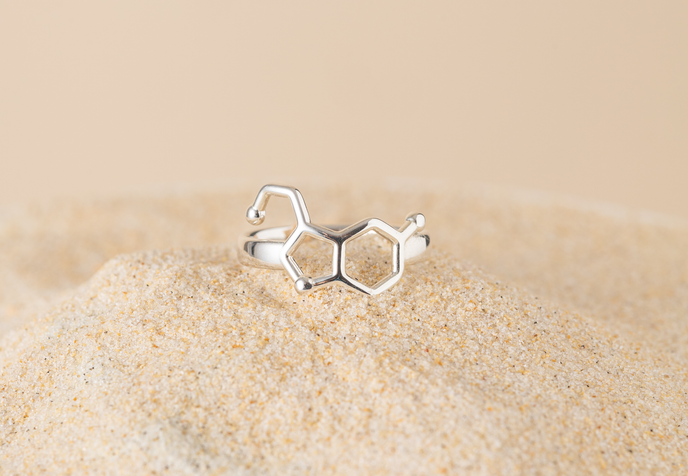
Finding out your ring size at home is a simple process and can help you shop for jewelry online with confidence.
Necklace length guide