$370


Still questions? Contact us
Uterus necklace H | gold vermeil
Everyone's first home was a uterus, long before the first flat, the student room or the childhood bedroom. Keep that thought close with a uterus necklace in gold vermeil, a small reminder of where each of us started.
Who It's For
- a midwife, or anyone with special knowledge of female anatomy
- an OB-GYN friend
- your best friend
- your partner
- yourself
If the uterus figures in your own story, whatever that story is, this one can be for you.
Michael F., from a review of the horizontal version in silver: “I bought this for my girlfriend and she loved it.”
How the Cervix Gets Ready for Birth
The cervix is the narrow lower end of the uterus, and for most of a pregnancy its work is to stay shut: firm, closed and sealed with a plug of mucus. The change starts early. In women it begins to soften in the first trimester, as collagen, the most abundant protein in the cervix, slowly changes its structure. In the weeks or days before birth it ripens further and grows softer and thinner. Once contractions begin, it can open to about 10 centimetres. After the birth, a repair phase restores the tissue.
Explore Related Jewelry
- uterus necklace H | silver
- uterus necklace V | gold vermeil
- fetus necklace | gold vermeil
- oxytocin necklace 3D | gold vermeil
FAQ
How big is it, and how does it hang?
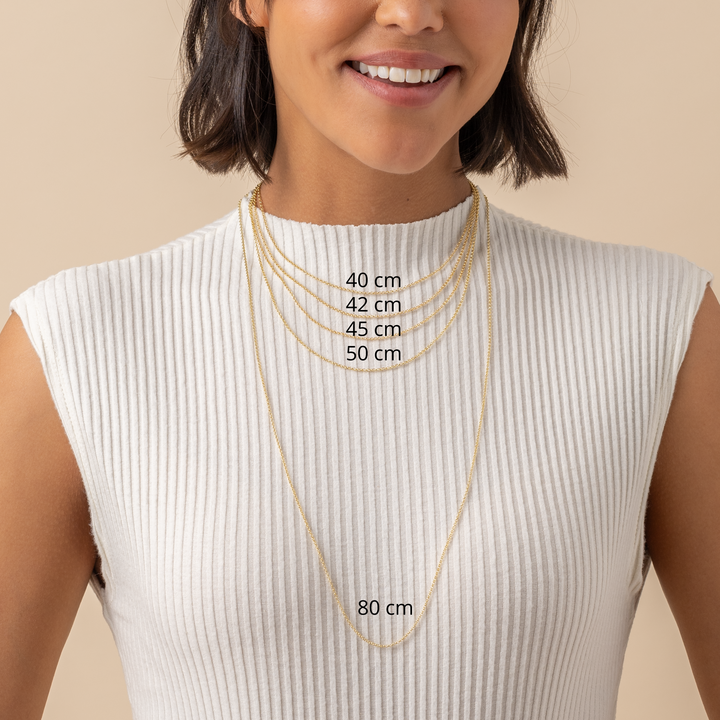
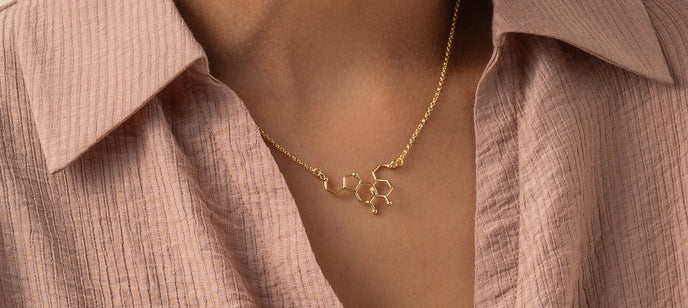
The pendant measures 27 mm (about 1.1 inches), 1.25 mm more than a 2-euro coin. The 45 cm (17.7 inch) gold vermeil chain runs through the ends of the side arms, with a 5 cm (2 inch) extender, so the pendant sits level below the collarbone. An extra chain can be added on this page, in 40, 42, 45 or 50 cm with the extender, or 80 cm, in silver or gold vermeil. Our gold vermeil is 2.5 microns of 18K gold over solid sterling silver, nickel-free and hypoallergenic.
Does it come in silver, or in a smaller size?
Yes to both. This horizontal design also comes in sterling silver, with the same 27 mm pendant on a 45 cm chain with a 5 cm extender. The vertical uterus necklace is the same design at 18 mm, in sterling silver and gold vermeil, and it hangs from a single loop at the top instead of the side arms. Choose the finish the recipient already wears. The design is the same in both finishes.
Will it arrive in time, and what if it isn't right?
DHL Express delivers it free worldwide in 1-5 business days, and we pay the import duties and taxes, so nothing is due at the door. It arrives in a ready-to-gift jewelry box and festive envelope. If it isn't right, our 30-day “Love It or Return It” policy applies.
Who is the Graafian follicle named after?
Regnier de Graaf, a Dutch physician who practised in Delft. In 1672 he published a treatise on the female reproductive organs, drawing on work with female rabbits, and in it he described the ovarian follicles. Albrecht von Haller later called them ova Graafiana, and the mature follicle still carries de Graaf's name. De Graaf died in 1673, aged 32. The egg inside the follicle was not identified until 1827, by Karl Ernst von Baer.

Human Anatomy
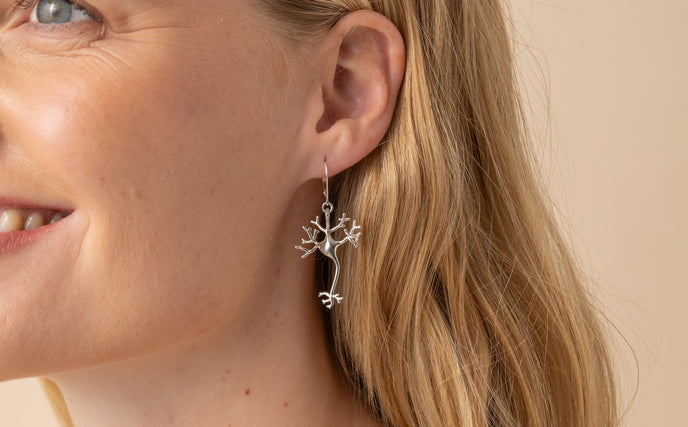
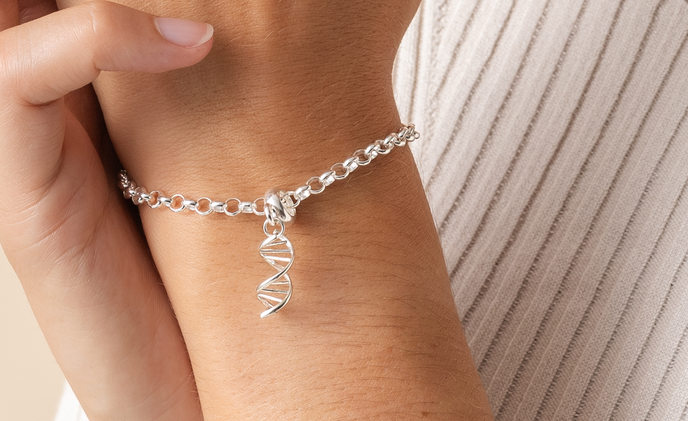
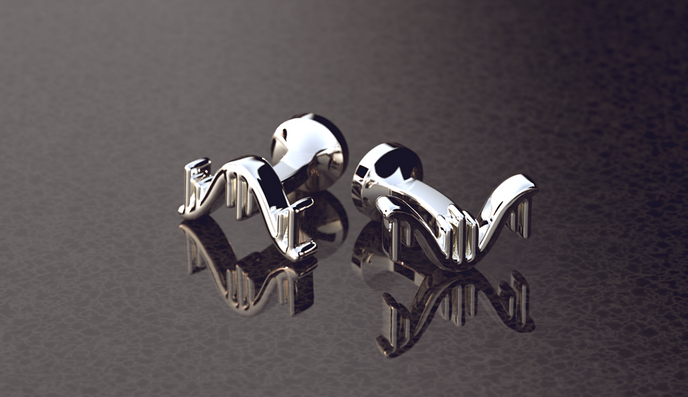
Anatomical wonders have never been so elegantly articulated. Our anatomical collection embodies the intricate and awe-inspiring structures that make us who we are. From DNA double helices to neuronal networks, our pieces don't merely imitate—they interpret. The collection serves as a tangible tribute to the hidden beauty within us all, elevating the realms of biology and medicine into wearable art. With exquisite attention to detail, each piece is a dialogue between form and function, revealing the enigmatic eloquence of the human body.
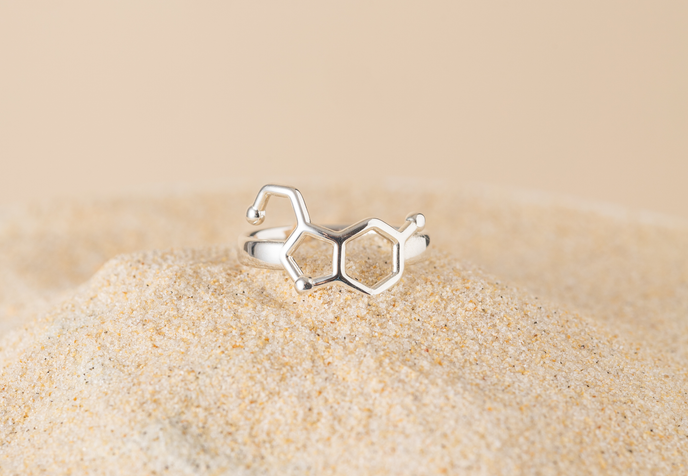
Find your perfect fit: measure an Existing Ring
Finding out your ring size at home is a simple process and can help you shop for jewelry online with confidence.
Necklace length guide