€ 175


Still questions? Contact us
circular DNA necklace | gold vermeil
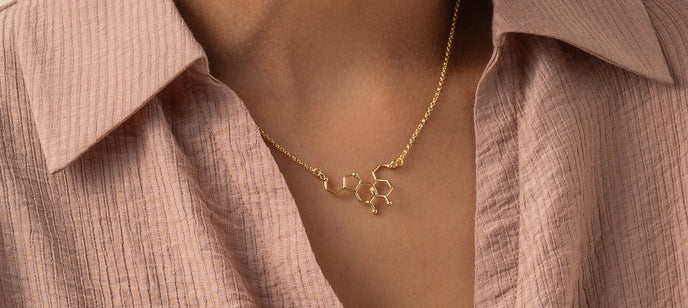
“Passing on this beautiful DNA as a gift” is how a review of this gold vermeil circular DNA necklace puts it. Closed loops of DNA are the plasmids that genetics labs cut, join and copy, so it suits someone whose work runs on them, or anyone in your life who loves biology.
Who It's For
- a manager or colleague retiring from a genetics lab
- a partner, for Valentine's Day
- a friend, when the present has to arrive looking its best
- yourself, as a second science piece next to one you already wear
From reviews of the silver version: Jenny L.: “Beautiful gift for a science fan. Great service, very happy!” Saana K., who bought one to keep: “My 2,5 year-old thinks the circular shape is a ring; we’ve got some interesting conversations ahead.”
What Copying Does to a Loop of DNA
DNA is two chains wound around each other. To copy DNA or read a gene, a cell has to pull the chains apart, and that winds the helix tighter just ahead of the work. A loose, straight piece of DNA could in principle spin the extra turns away. In a closed loop the strain has nowhere to go. Bacteria deal with it using enzymes called topoisomerases, which cut the DNA, pass a strand or a segment through the gap and seal it again. One of them, gyrase, helps keep the bacterial loop slightly underwound, about five or six turns short in every hundred turns of the helix, so its two chains open more easily the next time.
Explore Related Genetics Jewelry
- circular DNA necklace | silver
- cloning vector necklace | gold vermeil
- DNA necklace H | gold vermeil
- RNA necklace | gold vermeil
FAQ
How big is the pendant, and how does it sit?
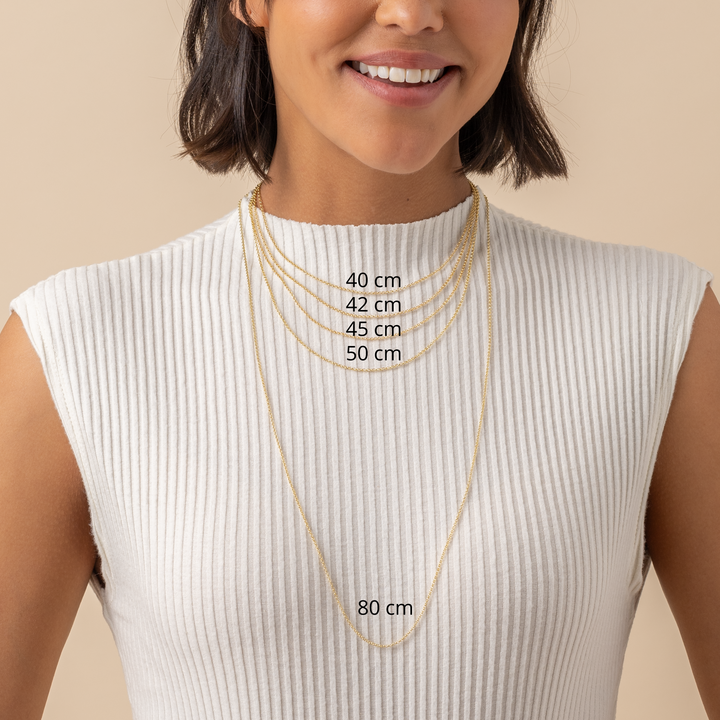
The pendant is 20 mm (0.8 inches) across, about 6 mm narrower than a 2-euro coin and 4 mm narrower than a US quarter. The chain runs through the ring, so the pendant hangs freely on the upper chest from the 45 cm (17.7 inch) gold vermeil chain with a 5 cm (2 inch) extender. Extra chains, sold on this page: 40, 42, 45 or 50 cm with a 5 cm extender, or 80 cm. It is 2.5 microns of 18K gold over solid sterling silver, nickel-free and hypoallergenic.
Is there a silver version?
Yes. This circular DNA necklace also comes in sterling silver, at the same 20 mm. Choose the finish the recipient already wears: the design is the same in both. If she works with plasmids every day, the cloning vector necklace is a related design, also 20 mm, in gold vermeil and in sterling silver.
Will it arrive in time, and what if it isn't right?
DHL Express delivers free in 1-5 business days worldwide, and we pay the import duties and taxes, so nothing is due at the door. It arrives in a ready-to-gift jewelry box and festive envelope. If it isn't right, our 30-day “Love It or Return It” policy applies.
Who discovered DNA gyrase?
Martin Gellert, Kiyoshi Mizuuchi and colleagues, in 1976. They purified an enzyme from E. coli that takes a relaxed loop of DNA and, using ATP, turns it into the underwound form, and named it DNA gyrase. Within weeks, Gellert's group showed that novobiocin, an antibiotic already known to stop bacteria copying their DNA, acts on gyrase. A year later, his group and Nicholas Cozzarelli's lab each traced nalidixic acid to gyrase too. The quinolone antibiotics descended from it still count gyrase among their targets.
Genetics
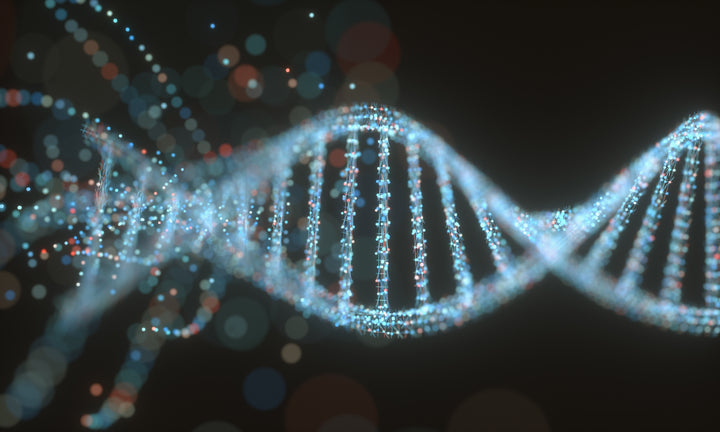
Our genetics-inspired jewelry captures the essence of life's code in striking detail. Crafted to mirror the DNA double helix, each piece is more than an aesthetic marvel—it's a tribute to the complexity of our genetic makeup. Far from ordinary, this collection combines scientific precision with artistic flair, making each item a captivating blend of form and function. It's not just an accessory; it's a meaningful representation of the miracle that is genetics.
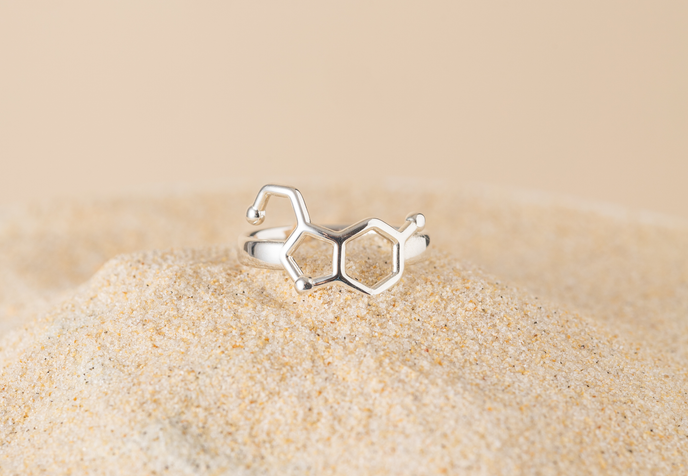
Find your perfect fit: measure an Existing Ring
Finding out your ring size at home is a simple process and can help you shop for jewelry online with confidence.
Necklace length guide