€ 170


Still questions? Contact us
Mendel's peas necklace | sterling silver
If you can recite a 9:3:3:1 ratio from memory, you have spent enough time inside Mendelian genetics to recognise this. The story behind it (the monastery garden in Brno, the friar who failed his teaching exams twice, the work that was correct and ignored for 35 years) is more interesting than any textbook version.
The Science Behind Mendel's Peas
Gregor Mendel conducted roughly 28,000 pea plant crosses between 1856 and 1863 in the monastery garden of St. Thomas's Abbey in Brno. He published his findings in "Versuche über Pflanzen-Hybriden" (Experiments in Plant Hybridisation) in 1866. Mendel deliberately chose Pisum sativum: the plants self-fertilise by default, generation time is short, offspring number is large, and the seven traits he studied assort independently across chromosomes. Remarkably, all seven traits he selected happen to assort independently, a coincidence that continued to fuel debate about whether Mendel manipulated data. Ronald Fisher raised this possibility in 1936. The probability of this happening by chance remains disputed. Mendel's laws were independently rediscovered by de Vries, Correns, and Tschermak around 1900.
A Meaningful Gift for Science Lovers
For genetics educators, biology teachers, students who study inheritance, and science historians who appreciate both the elegance and the complexity of Mendel's legacy.
- genetics professors and biology teachers
- genetics and cell biology students
- science historians and science communicators
- anyone who teaches or studies the foundations of heredity
Explore Related Genetics Jewelry
- DNA necklace H | silver
- Flat chromosome necklace | silver
- Mitosis necklace | silver
- Darwin's phylogenetic tree necklace | silver
FAQ
What are the F2 ratios Mendel discovered?
When Mendel crossed hybrid peas, he got a 3:1 ratio in the second generation: three dominant traits to one recessive. That ratio, and the laws behind it, founded modern genetics. This pendant shows the pea pods he studied.
Why was Mendel's work ignored for so long?
His paper was published in an obscure journal and his statistical thinking was a century ahead of his peers. It was not until 1900, when three researchers independently rediscovered the same principles, that his work was recognised as genius.
What size, material, and chain?
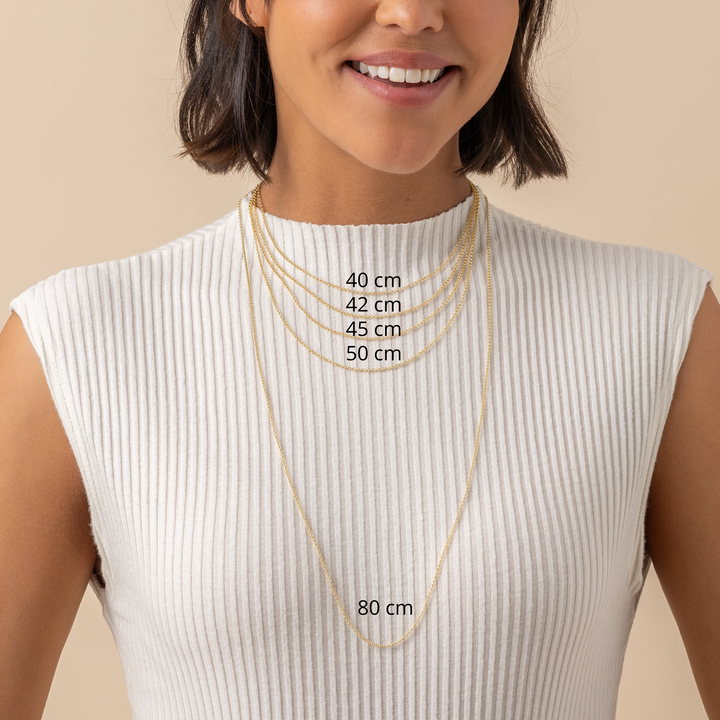
Sterling silver pendant at 34 mm, nickel-free and hypoallergenic. 45 cm sterling silver chain with a 5 cm extender and lobster clasp. Ships free worldwide via DHL Express in 1-5 business days. Comes in a ready-to-gift jewelry box with the 30-day “Love It or Return It” policy.
Is this specific enough for someone who is not a geneticist?
Yes. Mendel's monastery garden in Brno is where modern genetics began. It is a piece of intellectual heritage that anyone who respects the history of science can wear.

Genetics
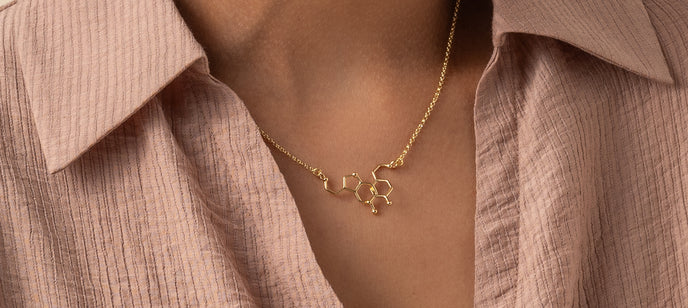
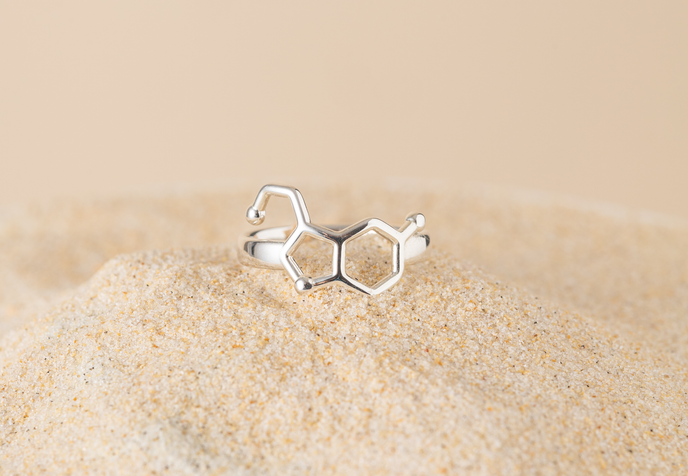
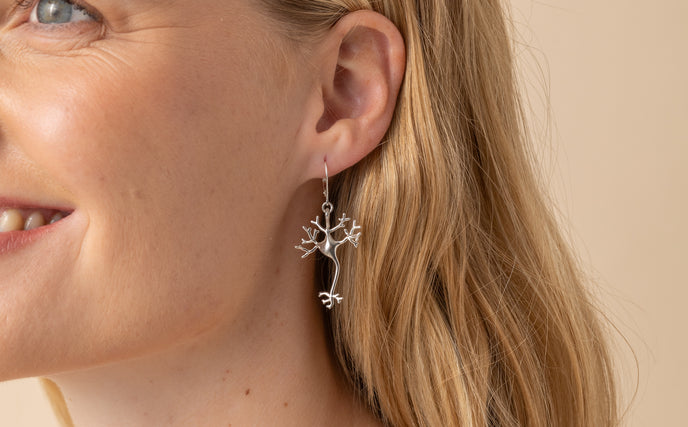
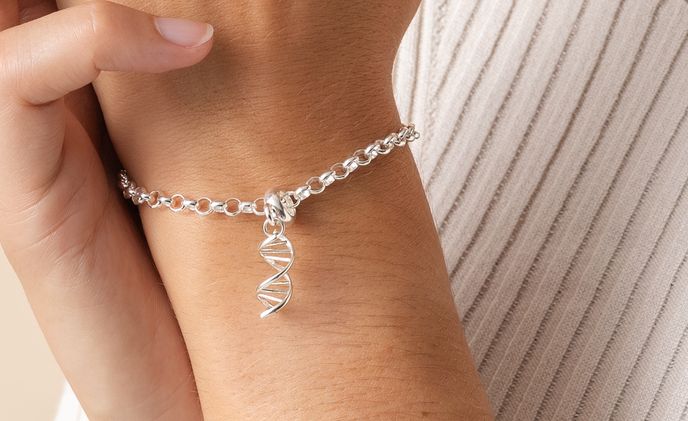
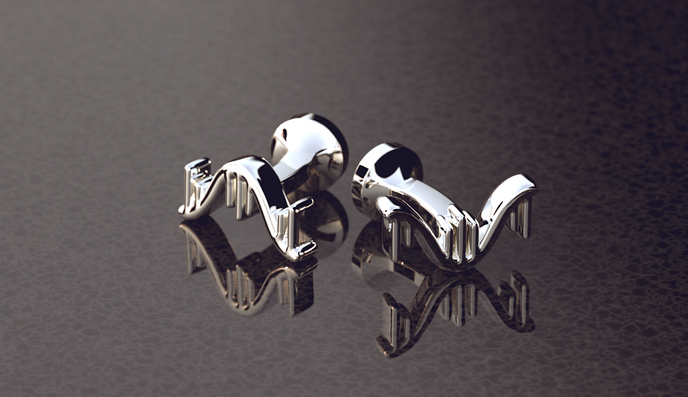
Our genetics-inspired jewelry captures the essence of life's code in striking detail. Crafted to mirror the DNA double helix, each piece is more than an aesthetic marvel—it's a tribute to the complexity of our genetic makeup. Far from ordinary, this collection combines scientific precision with artistic flair, making each item a captivating blend of form and function. It's not just an accessory; it's a meaningful representation of the miracle that is genetics.
Find your perfect fit: measure an Existing Ring
Finding out your ring size at home is a simple process and can help you shop for jewelry online with confidence.
Necklace length guide