

€ 265


Still questions? Contact us
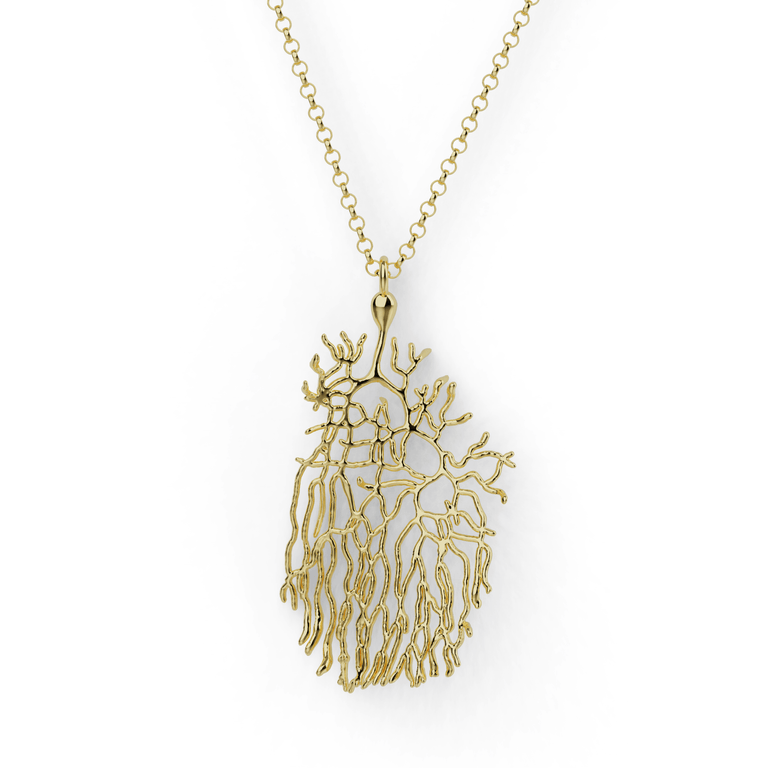
Purkinje cell necklace | gold vermeil
A sister in neuroscience studies the cell behind a Purkinje cell necklace in gold vermeil. The rest of us rely on it every time a bus lurches: some Purkinje cells sit in the oldest lobe of the cerebellum in evolutionary terms, a lobe that works mainly on balance.
Who It's For
- a colleague in neuroscience or neurology
- a daughter studying biology or psychology
- a friend who loves the brain
- yourself, if your other jewelry is gold
From a review of the silver version. Elise L.: “I love this necklace because of how unique it is. It's also larger than I expected so people tend to ask about it!”
Stripes Hidden in the Cerebellum
Purkinje cells are not all alike. Stain the cerebellum for a marker called zebrin II, later identified as the sugar-processing enzyme aldolase C, and some Purkinje cells carry it while their neighbours stay pale. They form bands that run from front to back, a pattern often compared to a zebra's stripes. Brochu, Maler and Hawkes described zebrin II in rat and fish cerebellum in 1990, building on bands Hawkes had mapped with an earlier marker. A common plan has since been found in every mammal studied. Different bands receive their incoming fibres from different sources, and researchers describe the cerebellum as a set of modules rather than one uniform sheet.
Explore Related Neuroscience Jewelry
- purkinje cell necklace | silver
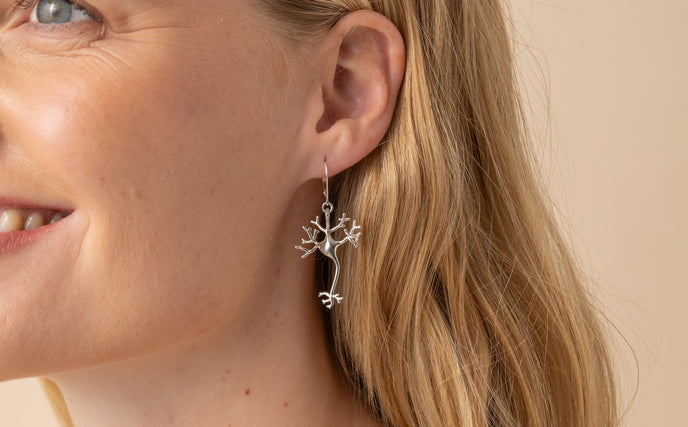
- purkinje cell earrings | gold vermeil
- neuron necklace | gold vermeil
- spindle neuron necklace | gold vermeil
FAQ
How big is the pendant, and how does it sit?
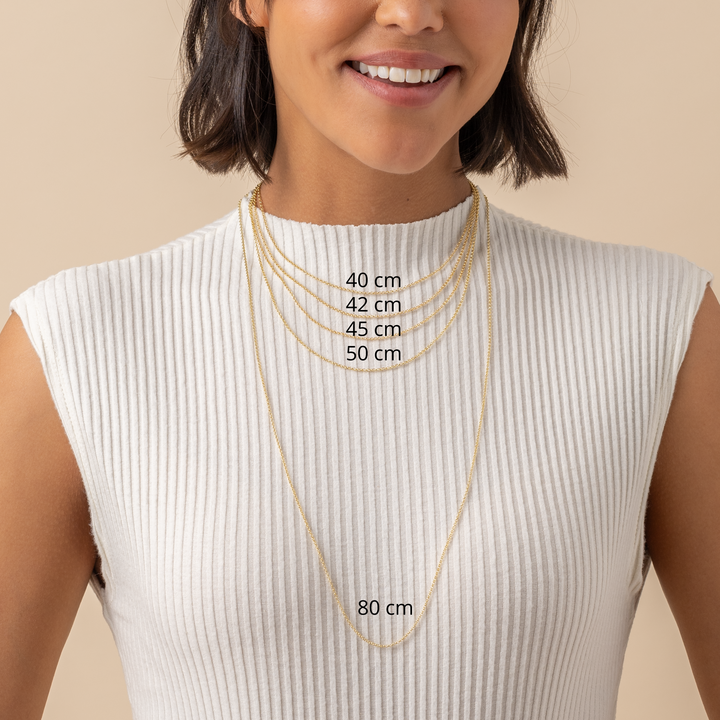
The pendant measures 47 mm (1.85 inches), about 21 mm more than the width of a 2-euro coin (25.75 mm): a large pendant, not a small charm. It hangs from a small ring at its top and sits below the collarbone on a 45 cm (17.7 inch) gold vermeil chain with a 5 cm (2 inch) extender. The fine branches can bend if knocked, so keep it in its box between wears. Our vermeil is 2.5 microns of 18K gold over solid sterling silver, nickel-free and hypoallergenic.
Does it come in silver, and are there earrings to match?
Yes to both. The Purkinje cell necklace comes in 18K gold vermeil and in sterling silver, both with a 47 mm pendant on a 45 cm chain with a 5 cm extender. Choose the finish the recipient already wears. The design is the same in both finishes. Purkinje cell earrings also come in gold vermeil and in sterling silver, each earring 39 mm, not counting the leverback hook, so you can make a set in either metal.
Will it arrive in time, and what if it isn't right?
DHL Express delivers it free worldwide in 1-5 business days, and we pay the import duties and taxes, so nothing is due at the door. It arrives in a ready-to-gift jewelry box and festive envelope. If it isn't right, our 30-day “Love It or Return It” policy applies.
What happens when you see the world flipped for almost four weeks?
A reflex that keeps your view steady retunes itself. In 1976 Gonshor and Melvill Jones reported on four adults who wore prisms that reversed their view left to right, one for 27 days. In the three who wore them longest, the reflex fell to about a quarter of its normal strength within a week, and over the longest stay it came close to working in reverse. The same year, Robinson found that in cats, removing the part of the cerebellum that works with the inner ear abolished this retuning.

Neuroscience
Dive into the intricacies of the human mind with our neuroscience-inspired jewelry collection. Each piece is a tactile ode to the neural networks that shape our thoughts, memories, and consciousness. Crafted with meticulous attention to detail, our designs mirror the dendritic branches and synaptic connections that form the basis of mental activity. With these elegant pieces, wear the enigma of cognition close to your skin, offering a subtle yet profound exploration of what it means to be sentient.
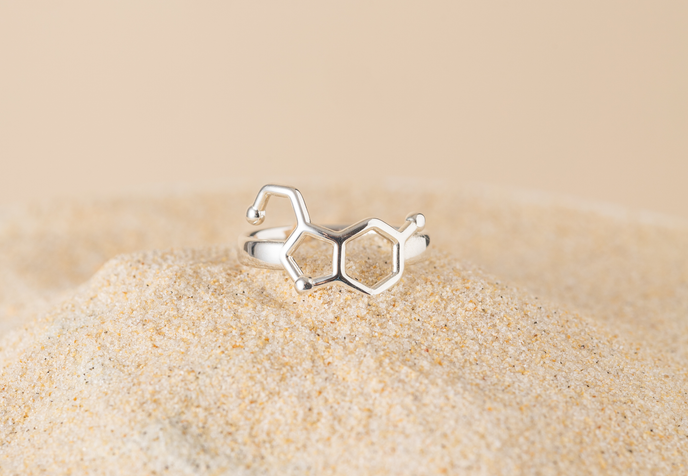
Find your perfect fit: measure an Existing Ring
Finding out your ring size at home is a simple process and can help you shop for jewelry online with confidence.
Necklace length guide