€ 205


Still questions? Contact us
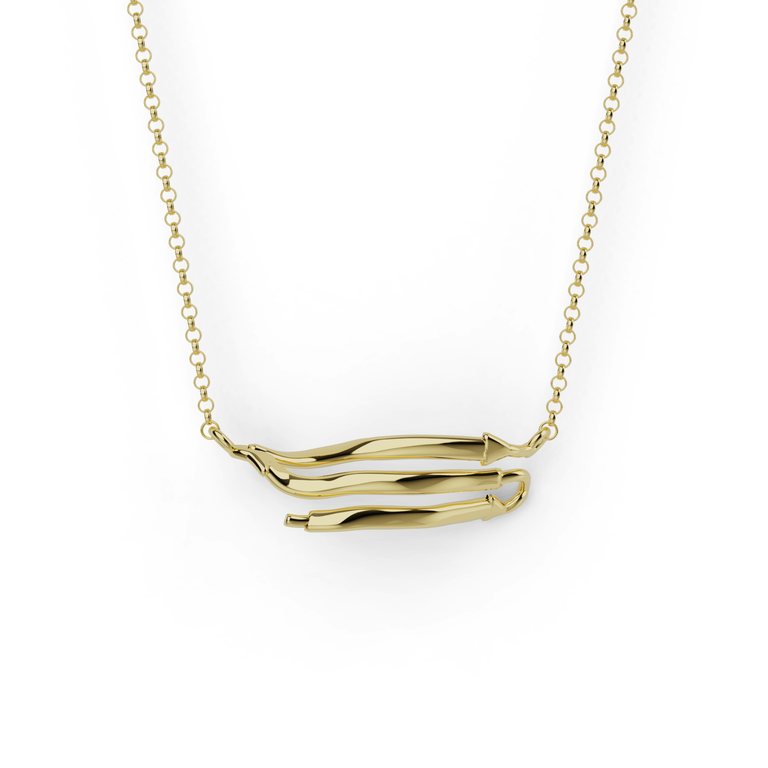
beta sheet necklace | 18k gold vermeil
A beta sheet necklace for protein chemists, structural biologists, and anyone who can read a Ramachandran plot without looking it up. One of the two fundamental secondary structures that fold every protein in your body, in 18k gold vermeil.
The Science Behind the Beta Sheet
Linus Pauling and Robert Corey proposed the beta sheet in 1951, the same year they described the alpha helix. It forms when the polypeptide backbone runs in extended strands that hydrogen-bond side by side, either in the same direction (parallel) or alternating (antiparallel). Beta sheets give proteins their stability, build the cores of immunoglobulins, line the channels of porins in bacterial outer membranes, and unfortunately also stack into the amyloid fibrils found in Alzheimer's disease, Parkinson's, and type II diabetes. The same fold solves the structural problem and creates the pathology, depending on context.
A Meaningful Gift for Science Lovers
For people whose mental model of protein folding starts with secondary structure and works outward.
- protein chemists and structural biologists
- biochemistry and biophysics students
- researchers working on amyloid disease or protein misfolding
- anyone who has memorised the 20 amino acids and their preferred conformations
For the chemist who would notice if you got the hydrogen bonding wrong on the design.
Explore Related Cellular Biology Jewelry
- Beta sheet necklace | silver
- Collagen necklace | gold vermeil
- Myosin necklace | gold vermeil
- Antibody necklace | silver
FAQ
Who buys a beta sheet necklace?
Mostly people who have spent serious time with protein structure: PhD students, postdocs, and faculty in biochemistry or structural biology. It also lands well as a gift for someone working on amyloid disease, since the beta sheet is at the heart of that pathology. The kind of piece that gets recognised by the right person at a Gordon conference dinner.
Why beta and not alpha?
Alpha helices get most of the attention because they are more visually obvious and easier to draw. Beta sheets are the underrated half of the secondary structure story: they hold up the immune system through immunoglobulin folds, build most membrane transport channels, and are doing more of the structural work in the average protein than people realise. Wearing the beta sheet is a small act of restoring the balance.
What are the materials and dimensions?
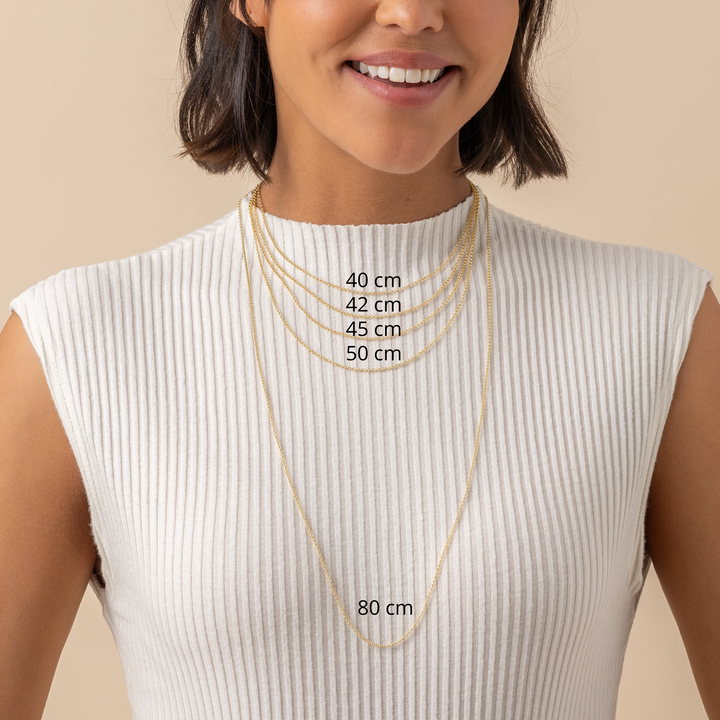
The pendant is 35 mm wide, with a 925 sterling silver core and a 2.5 micron 18K gold layer over it. The chain is 45 cm gold vermeil with a 5 cm extender. Vermeil is the most durable form of gold layering by definition, requiring at least 2.5 microns of gold over solid silver. Ships free worldwide via DHL Express within 1-5 business days, with import duties and taxes covered.
Will it tarnish?
Vermeil is more resistant to tarnish than uncoated silver, but no plated finish is permanent. With normal wear and a soft-cloth wipe-down it holds for years. Avoid pools, perfumes sprayed directly on the pendant, and storage in humid bathrooms.
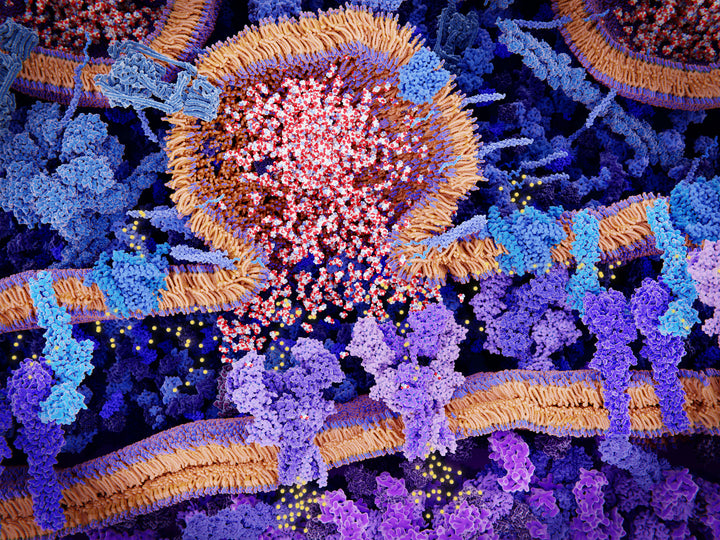
Cellular Biology
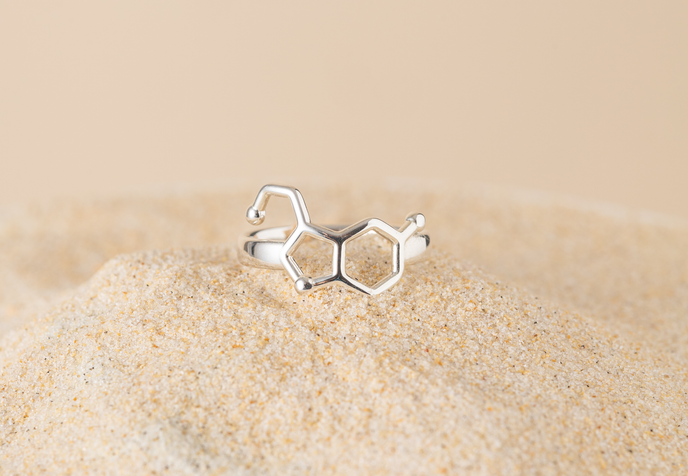
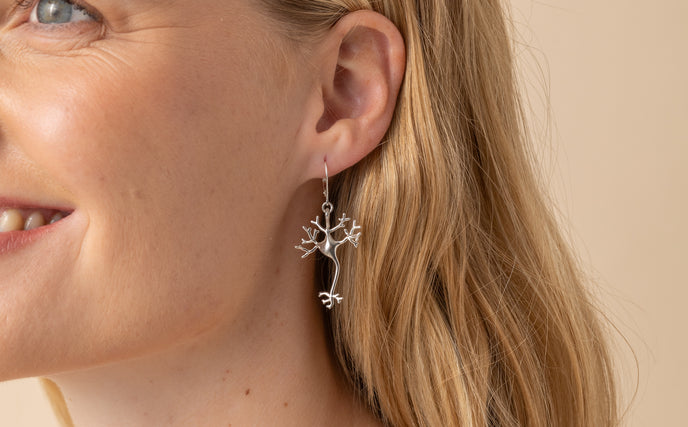
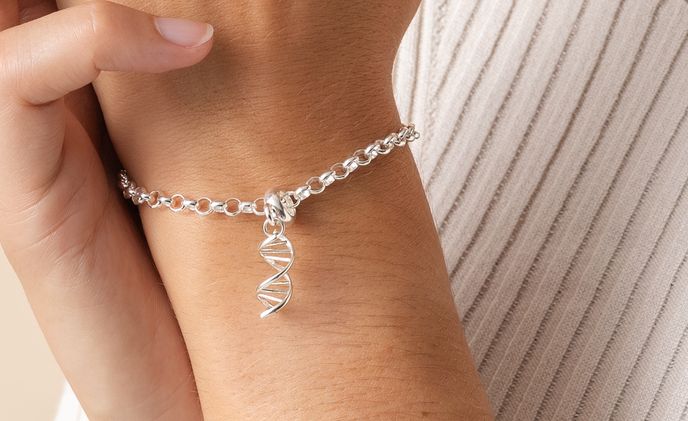
Step into the fascinating world of cellular biology through our unique jewelry designs. These pieces serve as wearable reflections of life's microscopic wonders, capturing the aesthetics of DNA strands, cellular formations, and more. Far from simple adornments, they spark dialogue and honor the captivating complexities found within biological research. Merging scientific accuracy with artistic flair, each creation offers a tactile experience that bridges the gap between scientific inquiry and aesthetic appreciation.
Find your perfect fit: measure an Existing Ring
Finding out your ring size at home is a simple process and can help you shop for jewelry online with confidence.
Necklace length guide