€ 150


Still questions? Contact us
Collagen necklace | sterling silver
Collagen is the most abundant protein in the human body, roughly 30% of total protein mass. Skin, tendon, ligament, bone matrix, blood-vessel walls, and most of the connective tissue holding the rest of the body together is built around the same triple-helical scaffold.
The Science of Collagen
The collagen molecule is a right-handed triple helix of three left-handed polyproline-II-like chains, stabilised by glycine at every third position (which fits inside the helix where no other residue would) and by hydroxyproline residues that hydrogen-bond across chains. The triple helices assemble into staggered fibrils, and the fibrils crosslink into the load-bearing networks of skin, tendon, and bone. There are 28 known collagen types in the human genome. Type I dominates skin, tendon, ligament, and bone (90% of total collagen). Type II builds the cartilage of joints and intervertebral discs. Type III sits alongside type I in skin and blood vessels. The structural diseases of collagen read like a survey of connective-tissue medicine: Ehlers-Danlos syndromes, osteogenesis imperfecta, scleroderma, vitamin C deficiency (scurvy disrupts hydroxyproline synthesis and the triple helix collapses), and most age-related dermal thinning.
The Audience
The audience clusters around connective-tissue medicine:
- dermatologists, plastic surgeons, and aesthetic physicians
- orthopaedic surgeons working on tendon, ligament, and bone repair
- rheumatologists managing connective-tissue disease (Ehlers-Danlos, scleroderma)
- biochemists and structural biologists studying collagen folding and crosslinking
- wound-healing and regenerative-medicine researchers
Explore Related Cellular Biology Jewelry
- Fibroblast necklace | silver
- Collagen earring hoops | silver
- DNA necklace | silver
- Molecules collection
FAQ
Why is collagen so often given as a gift to dermatologists or plastic surgeons?
Because the molecule is the substrate of the work. Almost every cosmetic injectable, almost every skin-rejuvenation procedure, and almost every surgical repair of soft tissue is collagen biology applied. A piece naming the molecule rather than the procedure reads as a peer-recognition gift. Often given by patients to a surgeon after a major reconstructive case, or by partners marking the close of a dermatology fellowship.
Why does scurvy make collagen collapse?
Because vitamin C is required for prolyl hydroxylase activity, the enzyme that hydroxylates proline residues in nascent collagen chains. Hydroxyproline residues form the cross-chain hydrogen bonds that hold the triple helix together. Without ascorbic acid, hydroxylation fails, the triple helix is unstable, and collagen synthesis collapses. The clinical picture (bleeding gums, loose teeth, poor wound healing, fragile skin and blood vessels) is what happens when the body cannot maintain its connective-tissue scaffold. Scurvy is one of the most direct molecular biology lessons in clinical medicine: a single missing cofactor brings down a whole tissue class.
What is the size, material, and chain?
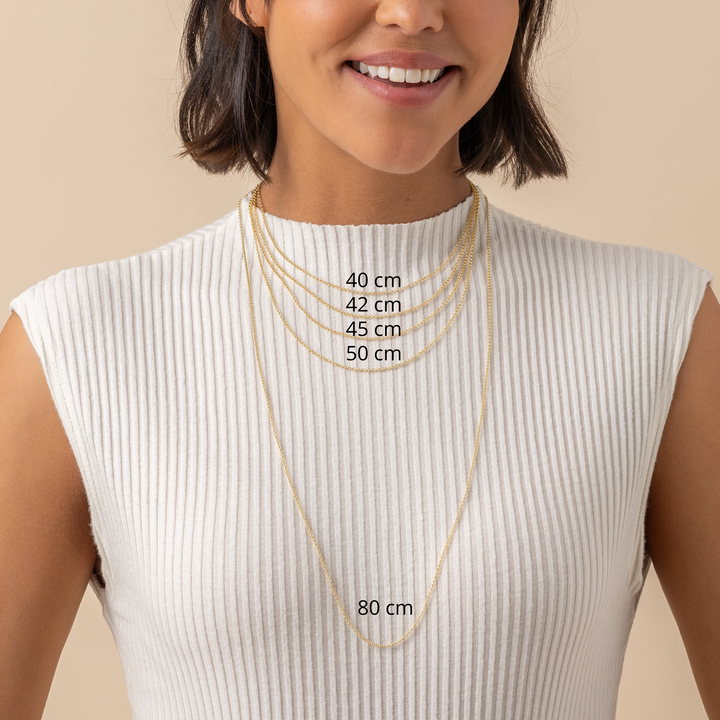
35 mm pendant in 925 sterling silver, nickel-free. 45 cm sterling silver chain with a 5 cm extender. Ships free worldwide via DHL Express in 1-5 business days, with all import duties prepaid. Comes in a ready-to-gift jewelry box with the 30-day “Love It or Return It” policy.
Are there other collagen formats?
Yes. The collagen earring hoops are a separate product, sized for daily wear in clinical settings. The triple-helix geometry is the same on both, calibrated to two different formats and price points. Most buyers in dermatology and plastic surgery start with the necklace.
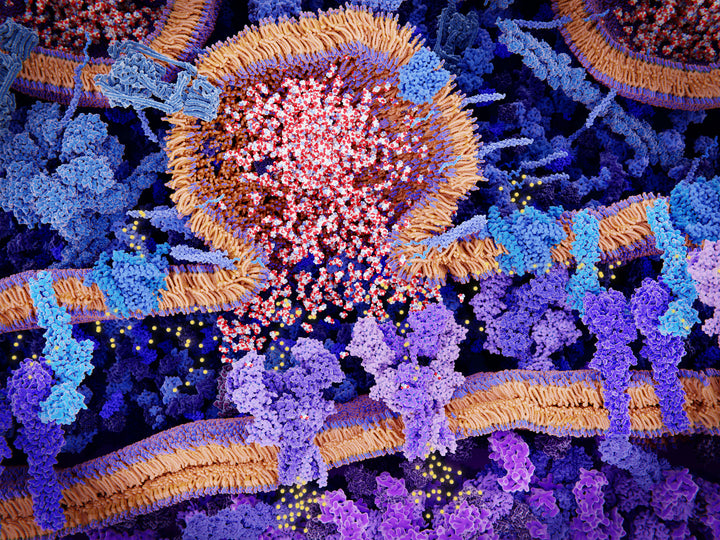
Cellular Biology
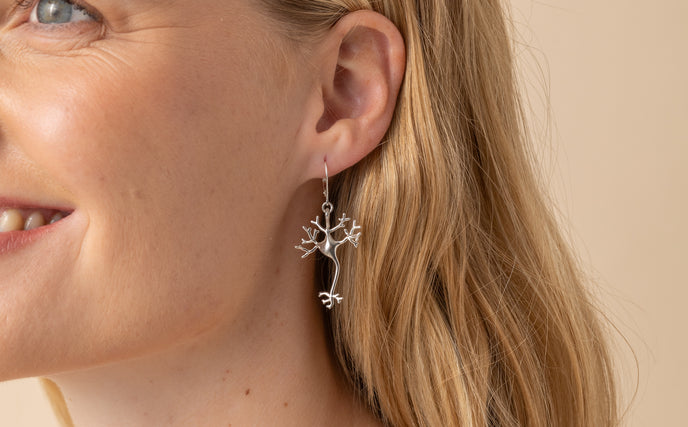
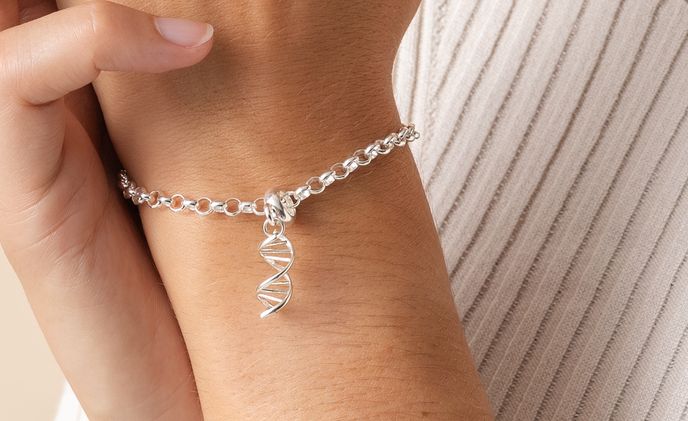
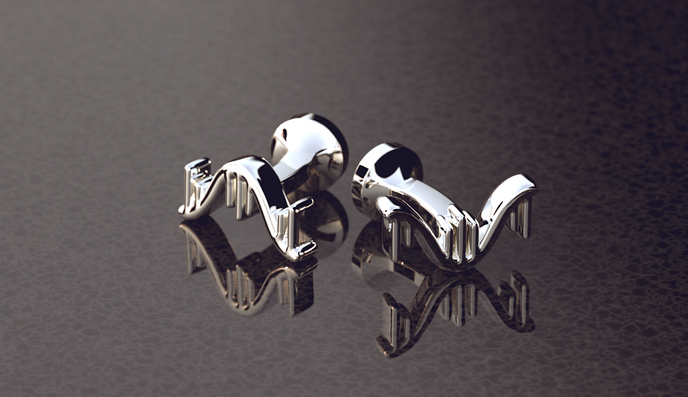
Step into the fascinating world of cellular biology through our unique jewelry designs. These pieces serve as wearable reflections of life's microscopic wonders, capturing the aesthetics of DNA strands, cellular formations, and more. Far from simple adornments, they spark dialogue and honor the captivating complexities found within biological research. Merging scientific accuracy with artistic flair, each creation offers a tactile experience that bridges the gap between scientific inquiry and aesthetic appreciation.
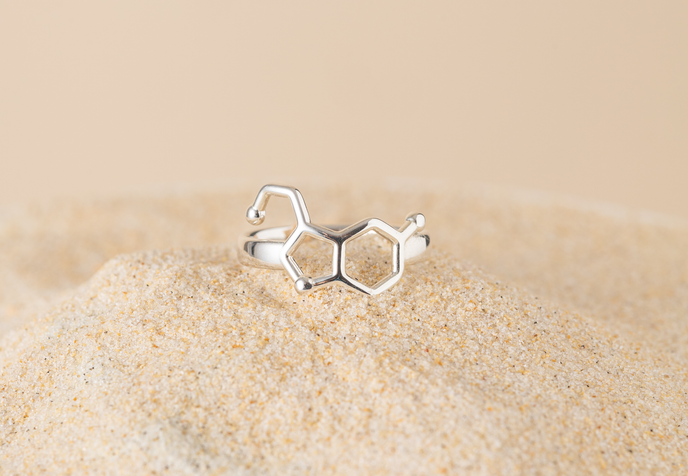
Find your perfect fit: measure an Existing Ring
Finding out your ring size at home is a simple process and can help you shop for jewelry online with confidence.
Necklace length guide