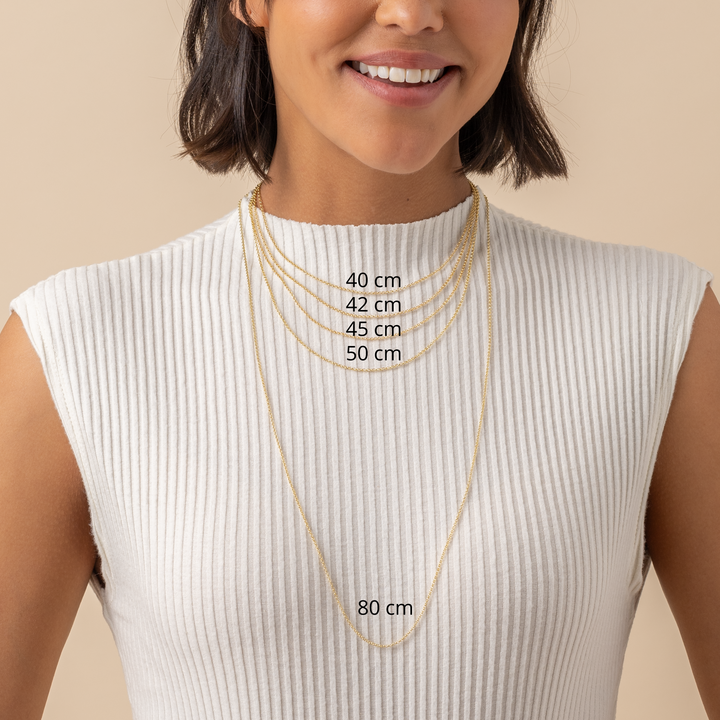
€ 200


Still questions? Contact us
Cytosine-guanine earrings | 18K gold vermeil
Cytosine and guanine are one of the two base pairs that hold the DNA double helix together. These cytosine-guanine earrings in 18K gold vermeil split the pair between two ears, cytosine on one and guanine on the other. Give them to a molecular biologist, a genetics student or a friend who loves DNA, or keep them for yourself.
Who It's For
- a molecular biologist or geneticist, for her birthday or a new position
- a PhD student in genetics or epigenetics, when she defends
- a biology teacher who explains base pairing every year
- someone who already wears the cytosine-guanine necklace in gold, to make a set
- yourself, if gold is what you wear every day
Why Cytosine Needs Watching
Cytosine is the least stable of the four DNA bases. Every day, in every cell, a few hundred cytosines lose an amino group on their own and turn into uracil, a base that belongs in RNA, not DNA. Left alone, that uracil would pair with adenine instead of guanine, and the letter would change at the next copy. Cells have a repair enzyme, uracil-DNA glycosylase, that finds these uracils and cuts them out so the right base can go back in. It may also be why DNA uses thymine rather than uracil: any uracil found in DNA can only be damage.
Explore Related Molecules Jewelry
- cytosine - guanine earrings | silver
- cytosine - guanine necklace | gold vermeil
- DNA earring hoops S | gold vermeil
- dopamine serotonin earrings | gold vermeil
FAQ
How big are they, and how do the hoops close?
Each molecule measures 13 mm (about half an inch), not counting the hoop, smaller than a 1-cent euro coin or a US dime. They hang just below the earlobe from thin 17.5 mm gold vermeil hoops. Each hoop has a small hinged section that opens, passes through the piercing and clicks shut. It can take some practice the first time, so try them once at home before a day out. 18K gold vermeil means 2.5 microns of 18K gold over solid sterling silver, nickel-free and hypoallergenic.
Is there a silver pair, or a matching necklace?
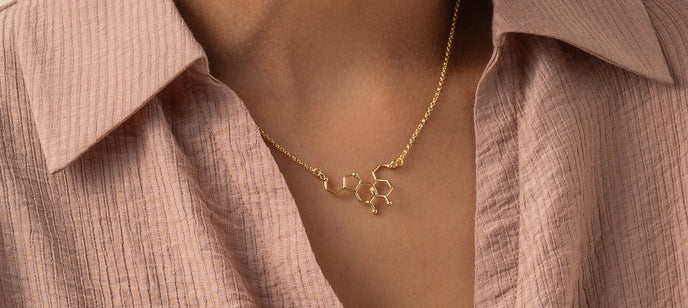
Yes. The cytosine-guanine earrings also come in sterling silver, with the same 13 mm molecules on 17.5 mm hoops. Choose the finish she already wears: the design is the same in both. For a set, the cytosine-guanine necklace, a 33 mm pendant of the paired bases, comes in gold vermeil and in sterling silver.
Is delivery free, and what if they aren't right?
Yes. DHL Express delivers free in 1-5 business days worldwide, and we pay the import duties and taxes, so nothing is due at the door. They arrive in a ready-to-gift jewelry box and festive envelope. If they aren't right, our 30-day “Love It or Return It” policy applies to unworn earrings.
Who noticed that cytosine and guanine come in equal amounts?
Erwin Chargaff, a biochemist at Columbia University in New York. In 1950 he reported that in the DNA of every species he tested, the amount of guanine matched the amount of cytosine, and adenine matched thymine, even though the overall mix differed from one species to the next. He could not explain why. In 1952 he met James Watson and Francis Crick in Cambridge and was not impressed by them. A year later their double helix explained his numbers: each base sits opposite its partner.
Molecules
Delve into the hidden elegance of science with our meticulously crafted jewelry, inspired by the intricate structures of chemical molecules. Each piece serves as a tactile tribute to the building blocks of life and matter, capturing the allure of atoms and bonds in precious metals. A harmonious fusion of art and science, these creations are more than mere accessories; they're a celebration of the enigmatic beauty that underpins our universe.
Find your perfect fit
Necklace length guide