
€ 220


Still questions? Contact us
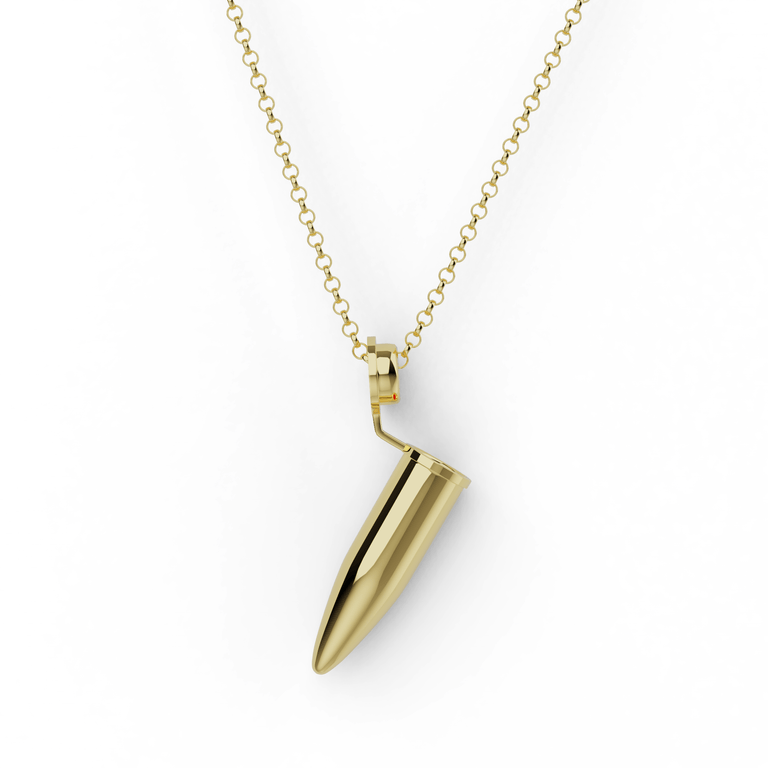
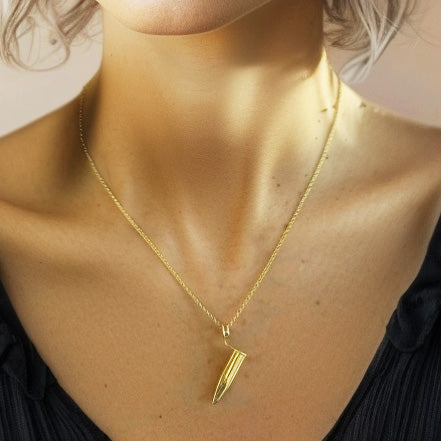
Eppendorf necklace | 18K gold vermeil
The 1.5 ml microcentrifuge tube is the most-handled object in any molecular biology lab. Several billion are manufactured every year. The brand name became the noun: scientists worldwide say "pass me an eppendorf" regardless of whose plastic is in their hand. The gold version of that career marker, in 18K gold vermeil at 31 mm.
The Science Behind the Eppendorf Tube
The Eppendorf microcentrifuge tube was developed by the Hamburg-based company Eppendorf AG, whose first microcentrifuge (the Centrifuge 3200) launched in 1962. The standardised polypropylene 1.5 ml tube became universal in molecular biology through the 1970s and 1980s by solving a practical problem: a small, closeable, centrifuge-compatible vessel for sub-millilitre volumes that does not contaminate or evaporate. The conical base allows complete pelleting of precipitated material, which matters in DNA extraction, protein precipitation, and most cell-fractionation procedures. By the time PCR became routine in the late 1980s, the Eppendorf tube was already the default sample container for an entire field.
Worn By
- molecular biologists and biochemists at career milestones
- PhD candidates and postdoctoral researchers finishing a thesis
- lab managers and senior bench scientists
- partners and family of working life scientists looking for a meaningful gold gift
About a quarter of orders ship to PhD graduates. The rest split between postdocs, faculty gifts, and self-purchases marking a thesis year.
Explore Related Medical & Lab Tools Jewelry
- Eppendorf necklace | silver
- Eppendorf earrings | silver
- Pipette necklace | gold vermeil
- Petri dish necklace | gold vermeil
- Microscope necklace | gold vermeil
FAQ
When is the gold version the right choice?
PhD graduation is the most common case, especially for someone moving from bench science into industry, teaching, or science communication. The Eppendorf tube is the most personal piece of equipment in molecular biology because it has been in the recipient's hand more times than any other object. A gold version reads as a marker of the years spent there. Silver tends to suit current bench scientists. Gold tends to suit transitions and milestones.
Why does the conical base matter?
Centrifugation. When you spin precipitated DNA, pelleted cells, or any other particulate down through liquid, the conical bottom collects everything in a tight cone at the bottom of the tube. A flat or rounded base would leave material smeared along the wall. The geometry is small but it shapes how the entire workflow runs, from DNA preps through transfection to quantitative PCR.
What size is the pendant and what is the return policy?
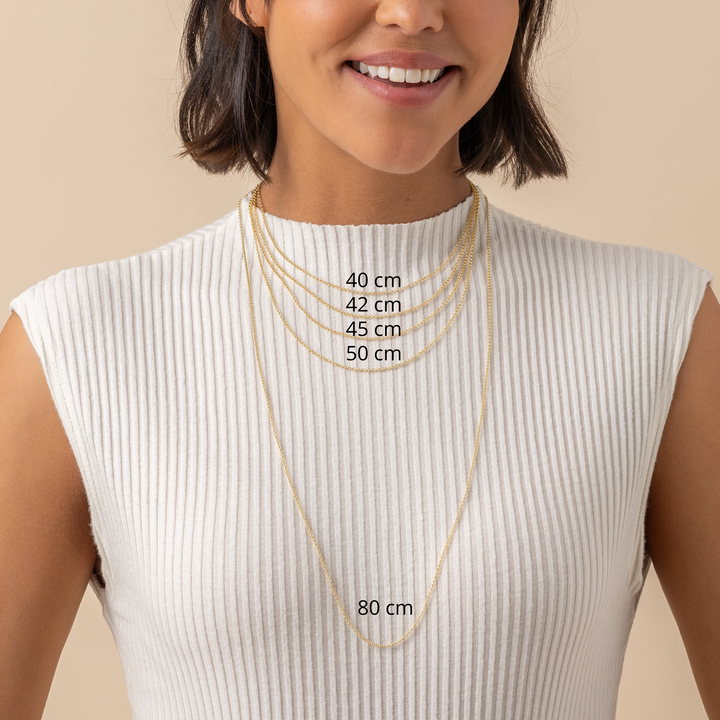
18K gold vermeil over a sterling silver core, 31 mm pendant on a 45 cm gold vermeil chain with a 5 cm extender. Nickel-free and hypoallergenic. Free worldwide DHL Express in 1-5 business days, with all import duties and taxes covered. 30-day “Love It or Return It” returns.
Is there a silver version, or matching earrings?
Both. The Eppendorf necklace exists in 925 sterling silver at the same 31 mm size. Eppendorf earrings also exist in sterling silver. The three pieces sometimes go together as a paired graduation set, or the gold and silver as a pair across two people who shared a lab.

Medical & Lab tools
Dive into the captivating world of science-inspired jewelry, where intricate designs meet the essence of medical and laboratory tools. These masterfully crafted pieces act as subtle yet striking tributes to the instruments that have paved the way for scientific discovery. From DNA helices to microscope charms, each piece serves as a conversation starter, a talisman, and a small monument to human ingenuity. They're not just accessories; they're wearable artifacts that tell a story of scientific exploration and advancement.
Find your perfect fit: measure an Existing Ring
Finding out your ring size at home is a simple process and can help you shop for jewelry online with confidence.
Necklace length guide