€ 210


Still questions? Contact us
GFP necklace | sterling silver
A GFP necklace for molecular and cell biologists, structural biologists, and anyone who has stared at green fluorescence under a microscope and known exactly what they were looking at. The 11-stranded beta-barrel from Aequorea victoria, in 925 sterling silver.
The Science of GFP
Green fluorescent protein is a 238-amino acid protein originally isolated from the jellyfish Aequorea victoria by Osamu Shimomura in 1962. Its defining structure is an 11-stranded beta-barrel with a central alpha helix carrying the chromophore, formed autocatalytically from the tripeptide Ser65-Tyr66-Gly67 without any cofactors. Once folded, the barrel shields the chromophore from the solvent and lets it fluoresce green when excited by blue light. Martin Chalfie showed in 1994 that GFP could be expressed in other organisms and used as a genetically encoded reporter, and Roger Tsien engineered the colour variants and improved folding kinetics that made the toolkit truly general. The 2008 Nobel Prize in Chemistry was awarded jointly to Shimomura, Chalfie, and Tsien for the discovery and development of GFP. Few molecules have done more to make invisible biology visible.
A Meaningful Gift for Science Lovers
For the people who have run a Western with anti-GFP and trusted the band.
- molecular and cell biologists who use GFP as a fusion tag, reporter, or live-cell marker
- structural biologists who appreciate the elegance of the barrel
- microscopists, imaging specialists, and biophysicists
- PhD students and postdocs whose entire project depends on a fluorescent fusion working
For the colleague whose first successful GFP image they still have on a slide somewhere.
Explore Related Cellular Biology Jewelry
- GFP necklace | gold vermeil
- Beta sheet necklace | sterling silver
- Mammalian cell necklace | sterling silver
- Nuclear pore necklace | sterling silver
FAQ
Will a working cell biologist actually appreciate this?
Yes. GFP is one of those proteins where the structure has lived in the field's collective memory for thirty years: a green can with the chromophore tucked inside. The pendant renders the 11-stranded beta-barrel cleanly, which is the version on every textbook slide. People who have spent a career building fusion constructs tend to recognise it across a room.
Why is the structure a barrel, and why does that matter?
The barrel architecture is what protects the chromophore from the surrounding water and lets it fluoresce. Pull the protein apart and the green disappears within seconds. The chromophore itself forms autocatalytically, just from the right three amino acids and oxygen, which is why GFP works as a single-gene reporter without any added cofactors. The barrel is also why GFP folds so robustly across organisms, from yeast to plants to mammalian cells. It is a self-contained piece of optical hardware.
What size is the pendant and what does it ship with?
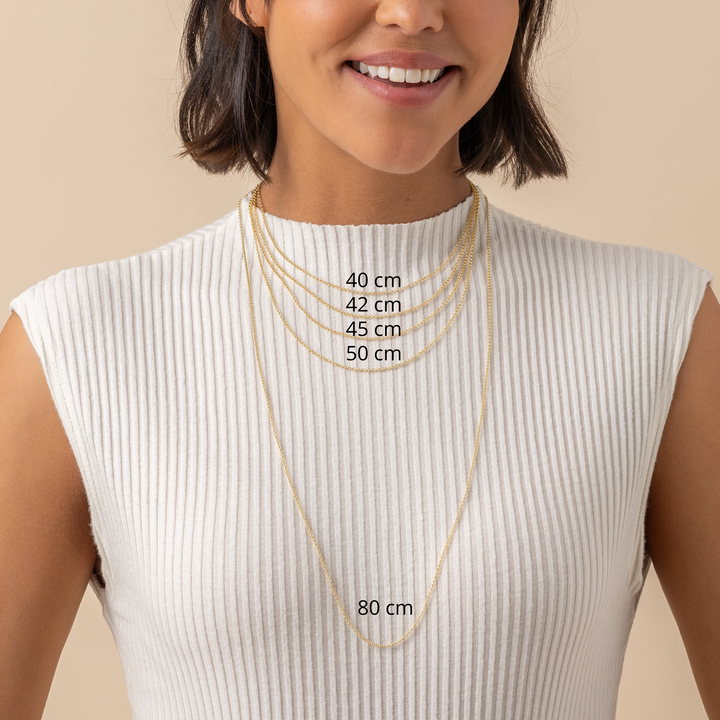
The pendant is 28 mm tall, sized so the beta-barrel architecture reads clearly at a glance. It comes on a 45 cm sterling silver chain (1.8 mm width, lobster clasp) with a 5 cm extender. Free worldwide DHL Express shipping in 1-5 business days, all import duties covered, in a ready-to-gift jewelry box.
Why GFP and not one of the other fluorescent proteins?
The colour palette has expanded enormously since the original wild-type protein, and most labs now use mEGFP, mCherry, mScarlet, or one of the far-red variants for serious imaging. The original GFP is still the structure that started it all, the one that the 2008 Nobel was awarded for, and the version most people in the field would draw if asked. The pendant is the foundational shape, not a specific colour variant.

Medical & Lab tools
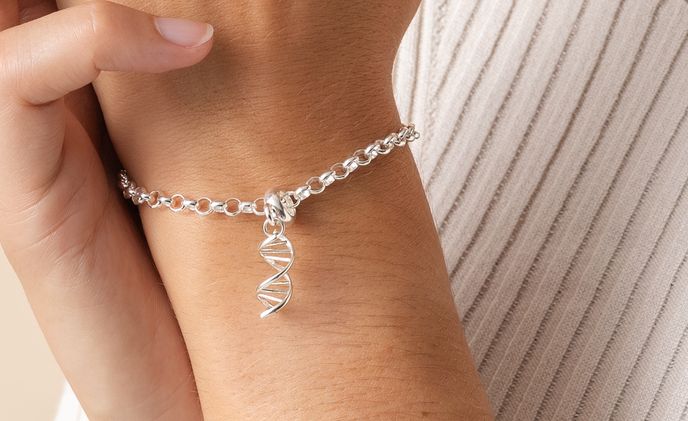
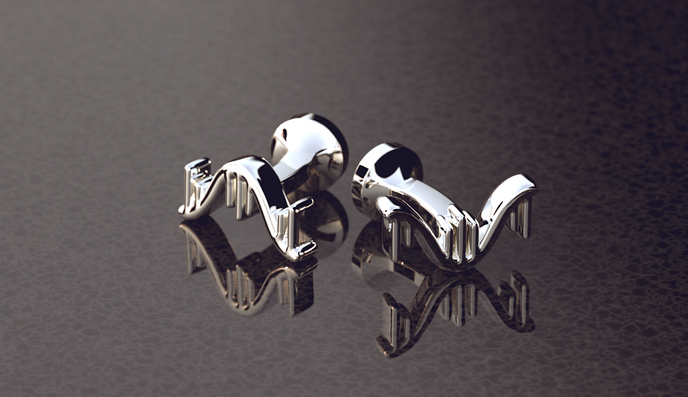
Dive into the captivating world of science-inspired jewelry, where intricate designs meet the essence of medical and laboratory tools. These masterfully crafted pieces act as subtle yet striking tributes to the instruments that have paved the way for scientific discovery. From DNA helices to microscope charms, each piece serves as a conversation starter, a talisman, and a small monument to human ingenuity. They're not just accessories; they're wearable artifacts that tell a story of scientific exploration and advancement.
Find your perfect fit: measure an Existing Ring
Finding out your ring size at home is a simple process and can help you shop for jewelry online with confidence.
Necklace length guide