€ 225


Still questions? Contact us
Lymphocyte necklace | 18k gold vermeil
If you've ever set a flow cytometry gate to separate CD4+ from CD8+ cells, you already know which cell this is. The lymphocyte is the cell behind every memory of every infection your immune system has ever seen.
The Lymphocyte and Adaptive Immunity
Lymphocytes carry adaptive immunity. T cells (thymus-derived) handle cellular responses: cytotoxic T cells kill virus-infected and tumour cells, helper T cells coordinate everything else through cytokines, regulatory T cells keep the response from turning on the host. B cells (bone marrow-derived) become plasma cells that secrete antibodies tuned to specific antigens. NK cells provide the innate-like cytotoxic backstop. The whole system runs on V(D)J recombination, the genetic shuffling that gives each lymphocyte a unique receptor and lets the body produce the essentially unlimited repertoire that adaptive immunity needs. CAR-T therapy, the contemporary cancer treatment that re-engineers a patient's own T cells, is the same biology turned into a clinical tool.
A Quiet Symbol For
The audience is mostly clinical and lab-side:
- immunologists and haematologists working with lymphocyte biology
- oncologists treating lymphoma, leukaemia, or running checkpoint inhibitor protocols
- cell therapy researchers working on CAR-T or TCR-engineered programmes
- vaccinologists who track T cell responses as their primary readout
Explore Related Cellular Biology Jewelry
- Lymphocyte necklace | silver
- Mammalian cell necklace | gold vermeil
- tRNA necklace | gold vermeil
- Nucleosomes necklace | gold vermeil
FAQ
What do you give an immunologist who doesn't want a generic gift?
Something at the cell-type level rather than at the system level. The lymphocyte is one of the few immune cells specific enough to feel chosen rather than picked from a category, and the gold version reads as conference-and-clinic appropriate rather than as a lab souvenir.
How does V(D)J recombination give lymphocytes their specificity?
By cutting and splicing receptor gene segments differently in every developing lymphocyte. The variable, diversity, and joining (V, D, J) gene segments are physically rearranged in each cell during development, generating an essentially unlimited repertoire of antigen receptors before the cell ever encounters its target. The cells with useful receptors get selected and kept.
What's the size, material, and chain?
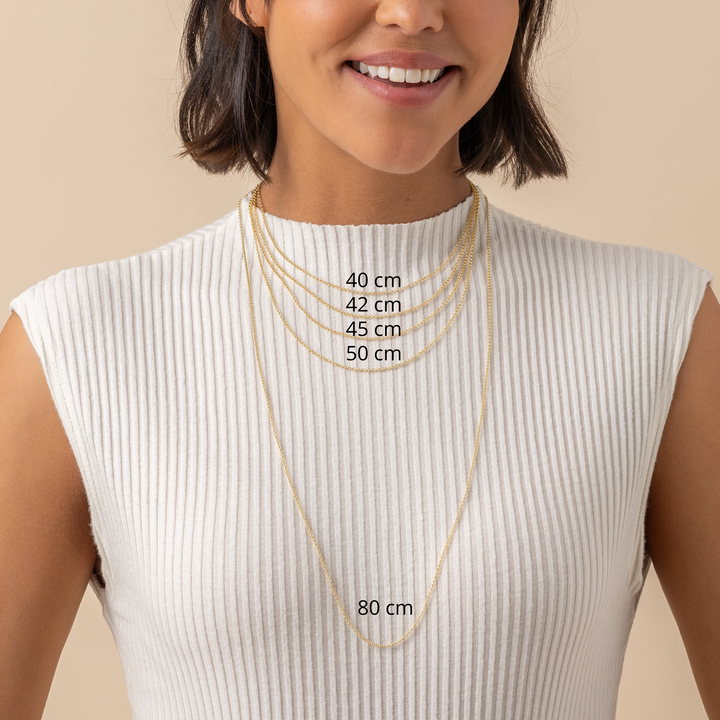
16 mm pendant in 18k gold vermeil over a sterling silver core, nickel-free. 45 cm chain with a 5 cm extender. Ships free worldwide via DHL Express in 1-5 business days, with all import duties prepaid. Comes in a ready-to-gift jewelry box with the 30-day "Love It or Return It" policy.
Same design as the silver lymphocyte?
Yes. Same 16 mm size and same model. Material is the only difference.
Cellular Biology
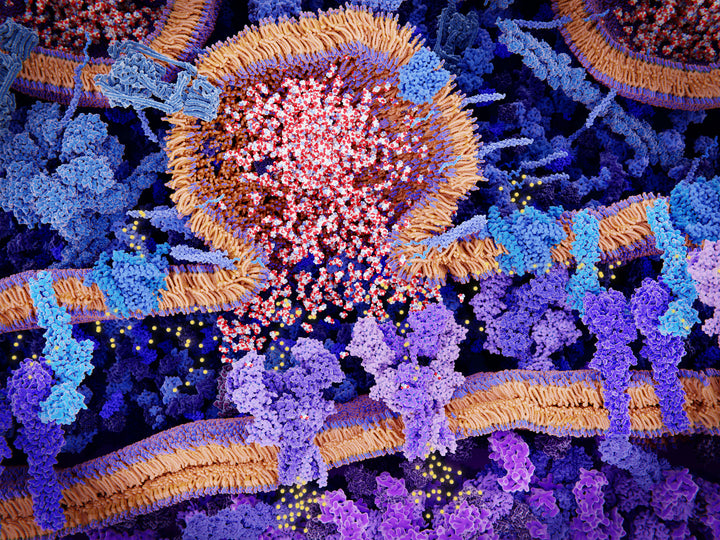
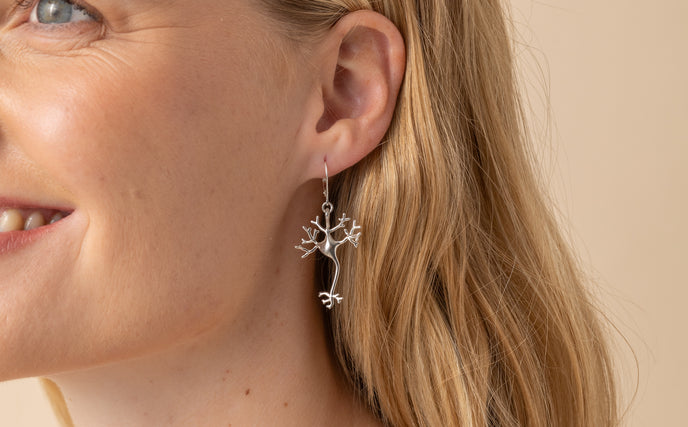
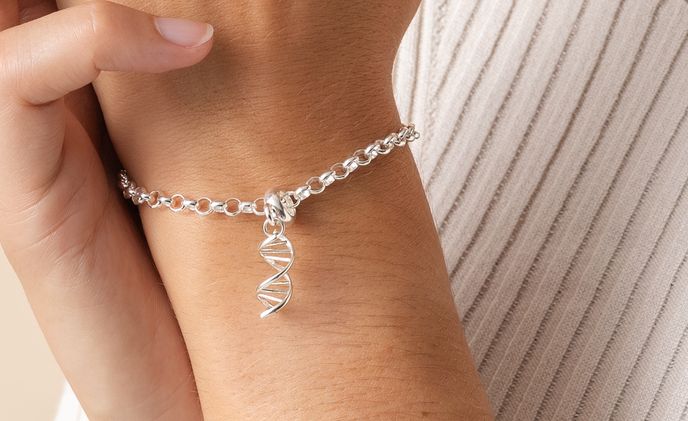
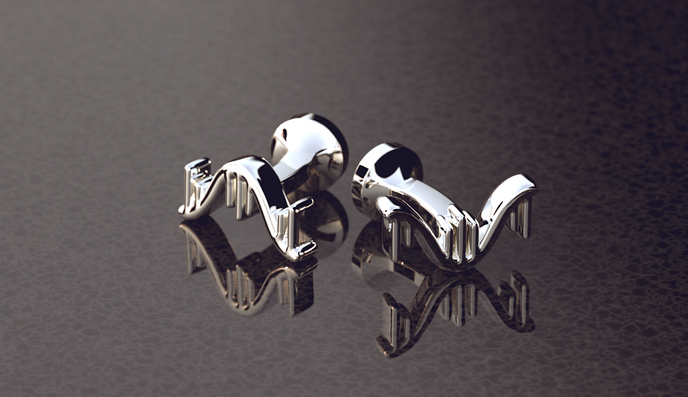
Step into the fascinating world of cellular biology through our unique jewelry designs. These pieces serve as wearable reflections of life's microscopic wonders, capturing the aesthetics of DNA strands, cellular formations, and more. Far from simple adornments, they spark dialogue and honor the captivating complexities found within biological research. Merging scientific accuracy with artistic flair, each creation offers a tactile experience that bridges the gap between scientific inquiry and aesthetic appreciation.
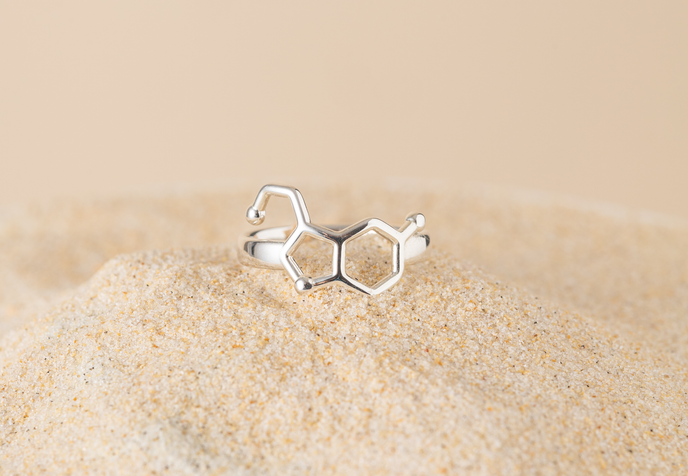
Find your perfect fit: measure an Existing Ring
Finding out your ring size at home is a simple process and can help you shop for jewelry online with confidence.
Necklace length guide