€ 190


Still questions? Contact us
Microtubule necklace | sterling silver
Microtubules are the cell's structural beams and freight lines, built from tubulin dimers polymerising into hollow tubes 25 nanometres across. They organise the mitotic spindle, the axonal transport system, the ciliary axoneme, and most of the directional traffic inside every eukaryotic cell.
The Science of Microtubules
Microtubules are dynamic polymers of alpha-beta tubulin dimers that assemble into protofilaments, which laterally associate into hollow tubes 25 nanometres in diameter. They are nucleated at microtubule-organising centres (centrosomes in animal cells, the spindle pole body in yeast) and grow with their plus ends outward. Dynamic instability (alternating phases of growth and rapid shrinkage) makes microtubules ideal for searching cellular space and capturing kinetochores during mitosis. The motor proteins kinesin and dynein walk along microtubule tracks, carrying organelles, vesicles, and chromosomes. Microtubule biology underpins mitosis (target of taxanes and vinca alkaloids in chemotherapy), neuronal axon function (target of many neurodegenerative pathologies), ciliary motion (cilia and flagella are microtubule structures), and intracellular transport. Tau, MAP2, and other microtubule-associated proteins regulate stability and figure prominently in Alzheimer's disease research.
Who Tends to Wear This
The audience clusters around cytoskeletal biology and mitosis research:
- cell biologists studying mitosis, cell division, or intracellular transport
- neuroscientists working on axonal transport or tauopathies
- cancer biologists working on antimitotic drugs (taxanes, vinca alkaloids)
- structural biologists studying tubulin or motor proteins
- graduate students and postdocs through their first cytoskeleton block
Explore Related Cellular Biology Jewelry
- Mammalian cell necklace | silver
- Nuclear pore necklace | silver
- Membrane necklace | silver
- Ribosomes necklace | silver
FAQ
Why does microtubule biology matter so much for cancer chemotherapy?
Because microtubules drive mitosis, and rapidly dividing cells need them more than quiescent ones. Taxanes (paclitaxel, docetaxel) stabilise microtubules and prevent the dynamic shortening required for chromosome separation. Vinca alkaloids (vincristine, vinblastine) bind to free tubulin and prevent microtubule assembly. Both drug classes arrest cells in mitosis and trigger apoptosis. They are core treatments for breast, ovarian, lung, and haematological cancers, and they work because cancer cells divide more often than the surrounding healthy tissue. Side effects (peripheral neuropathy, alopecia) come from the same mechanism affecting microtubule-dependent processes in healthy cells.
Why do microtubules show up in neurodegenerative disease?
Because neurons rely on long-distance microtubule transport for survival. Axonal transport carries proteins, mitochondria, and synaptic vesicles from the cell body to synapses metres away. Disruption of this transport (whether by tau aggregation in Alzheimer's, alpha-synuclein in Parkinson's, or motor-protein mutations in hereditary neuropathies) leads to synaptic dysfunction and eventual neurodegeneration. Tau pathology is particularly direct: tau normally stabilises microtubules, and when it aggregates into neurofibrillary tangles, microtubules destabilise and axonal transport fails.
What is the size, material, and chain?
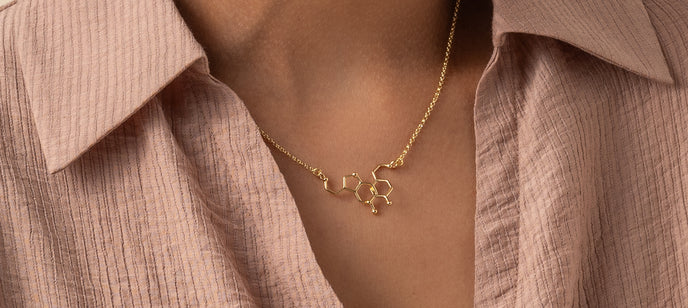
35 mm pendant in 925 sterling silver, nickel-free. 45 cm sterling silver chain with a 5 cm extender. Ships free worldwide via DHL Express in 1-5 business days, with all import duties prepaid. Comes in a ready-to-gift jewelry box with the 30-day “Love It or Return It” policy.
Is there a gold version?
Not currently. The microtubule is silver only. The catalog has gold versions of several other cytoskeletal and cellular pieces but microtubule is single-material for now.
Cellular Biology
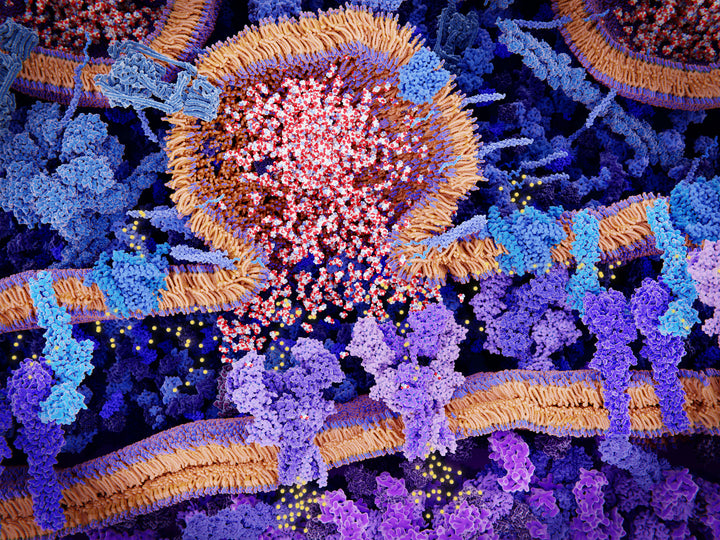
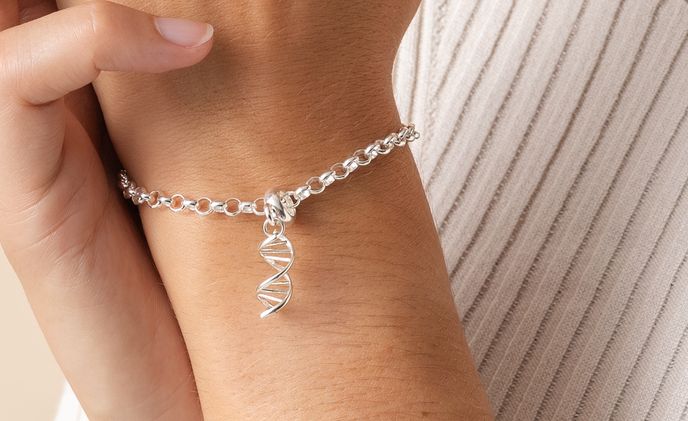
Step into the fascinating world of cellular biology through our unique jewelry designs. These pieces serve as wearable reflections of life's microscopic wonders, capturing the aesthetics of DNA strands, cellular formations, and more. Far from simple adornments, they spark dialogue and honor the captivating complexities found within biological research. Merging scientific accuracy with artistic flair, each creation offers a tactile experience that bridges the gap between scientific inquiry and aesthetic appreciation.

Find your perfect fit: measure an Existing Ring
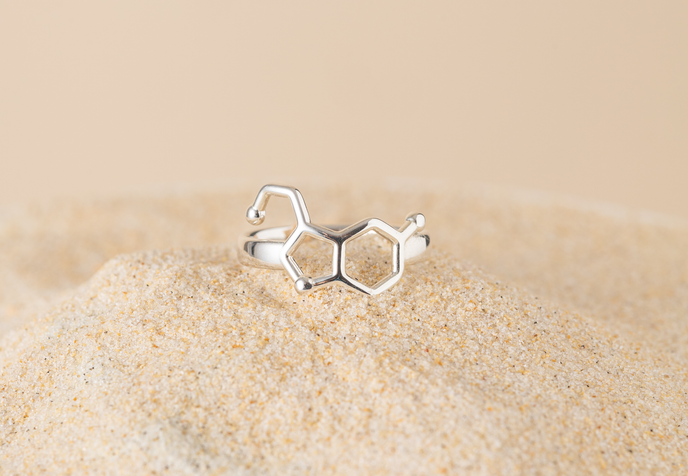
Finding out your ring size at home is a simple process and can help you shop for jewelry online with confidence.
Necklace length guide