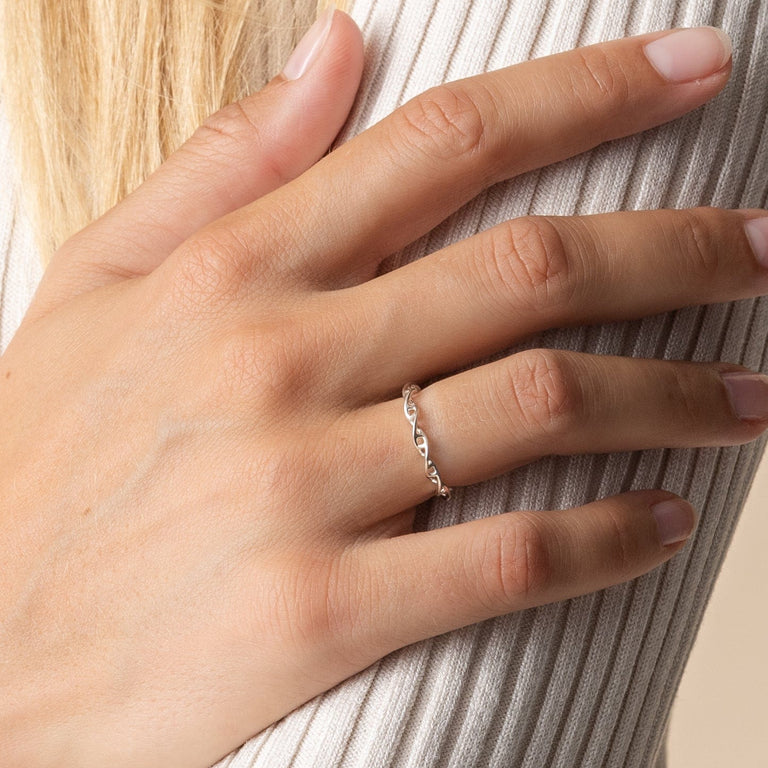
€ 130


Still questions? Contact us
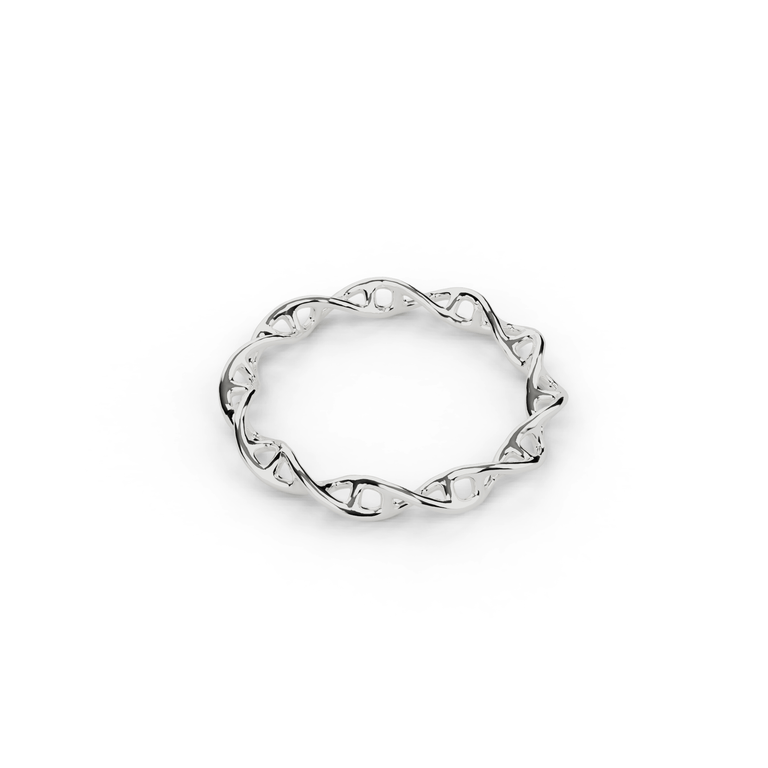
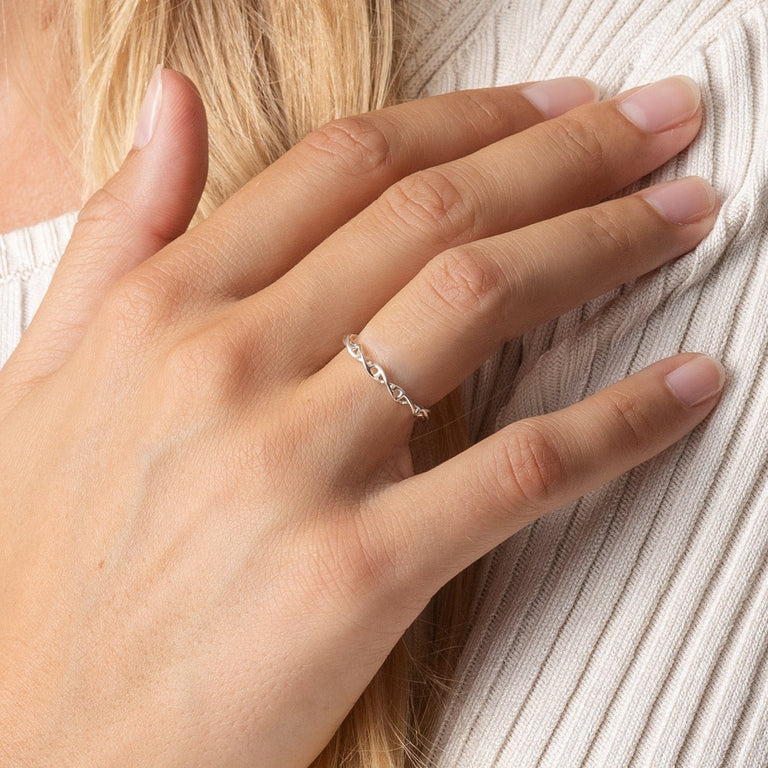
DNA ring | sterling silver
The double helix is the most recognised shape in biology, and the ring form is the quietest way to wear it. It sits closer to bench work than a necklace does. No chain to catch on a glove, no pendant to swing into the fume hood. For someone whose work is shaped, daily, by this molecule.
The Science Behind the Double Helix
The structure was confirmed in 1953 by Watson and Crick at Cambridge, with credit attribution that has only been corrected in the decades since. Rosalind Franklin's X-ray crystallography at King's College London produced Photo 51 in 1952, the image that showed the helix was right-handed with the backbone on the outside. Watson saw the photograph without Franklin's knowledge, shown to him by her colleague Maurice Wilkins. Franklin died in 1958 at age 37, and the Nobel Prize cannot be awarded posthumously. The 1962 prize went to Watson, Crick, and Wilkins. Her contribution is now widely recognised.
A Quiet Symbol For
Most people who buy a DNA ring already know what they're getting. The piece doesn't need to explain itself.
- molecular biologists and geneticists
- biochemistry students at any stage
- researchers who prefer a ring to a necklace
- anyone whose work centres on the molecule
Often given for a graduation, a thesis defence, or a first lab role.
Explore Related Genetics Jewelry
- DNA ring engraved | silver
- DNA ring | 9K solid yellow gold
- crossed DNA ring | silver
- DNA necklace V | silver
- DNA necklace V | gold vermeil
FAQ
Will a working scientist actually wear this?
Yes. The ring is more practical for lab work than a necklace and gets a different reaction. It identifies the field without requiring any explanation, and researchers tend to recognise it from across a room before noticing it's jewelry.
How is the discovery now attributed?
Watson, Crick, and Wilkins received the Nobel in 1962. Rosalind Franklin's role was largely uncredited until well after her death in 1958. Her X-ray work, particularly Photo 51, is now universally recognised as essential to the structural model. Most current accounts treat the discovery as one built on her data without her knowledge.
What sizes does it come in, and what's the material?
Available in US sizes 5 through 9 in 925 polished sterling silver, nickel-free and hypoallergenic. The 30-day “Love It or Return It” policy covers a size exchange if it arrives wrong. We ship worldwide via DHL Express in 1-5 business days with all duties and taxes covered.
Is there a necklace version of the same design?
Yes. The DNA necklace exists in V orientation in sterling silver and 18k gold vermeil. Same molecule, different format. The ring is for daily wear at the bench. The necklace reads from across a room.
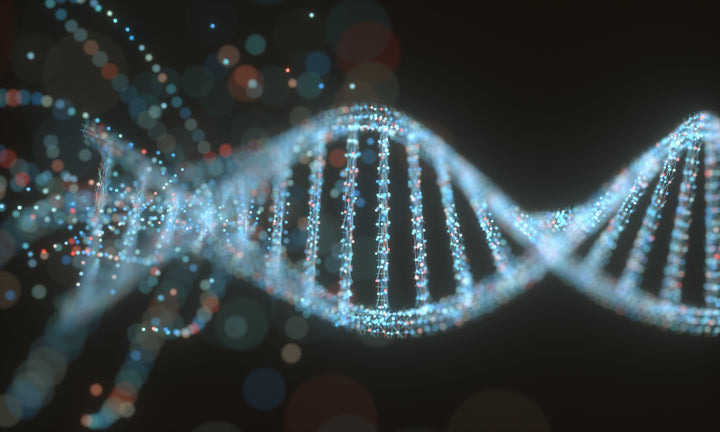
Genetics
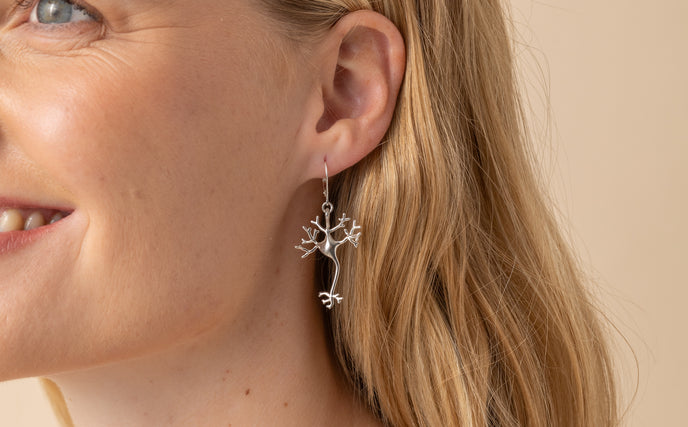
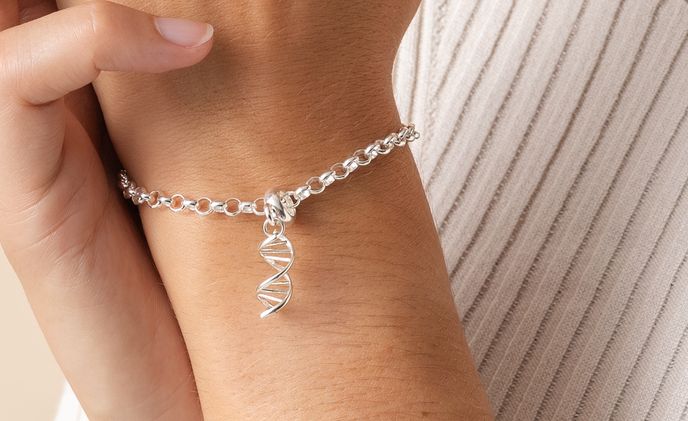
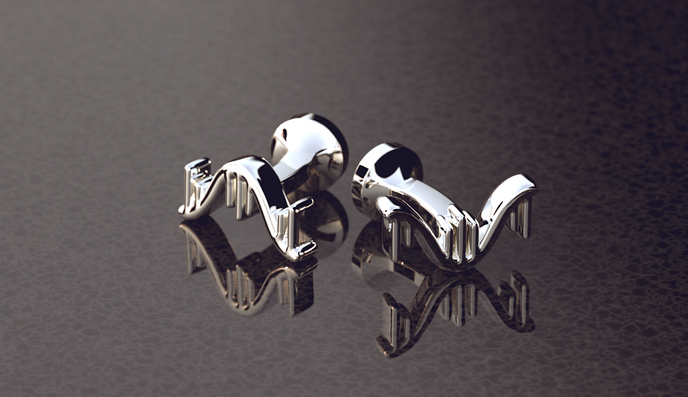
Our genetics-inspired jewelry captures the essence of life's code in striking detail. Crafted to mirror the DNA double helix, each piece is more than an aesthetic marvel—it's a tribute to the complexity of our genetic makeup. Far from ordinary, this collection combines scientific precision with artistic flair, making each item a captivating blend of form and function. It's not just an accessory; it's a meaningful representation of the miracle that is genetics.
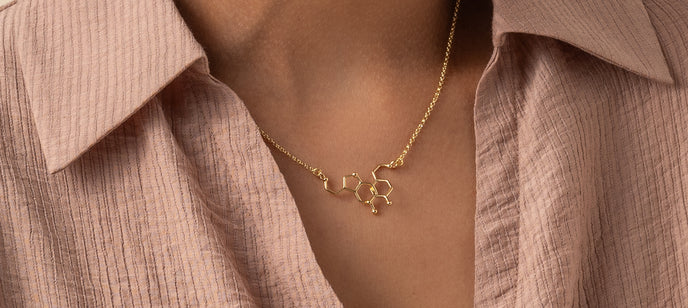
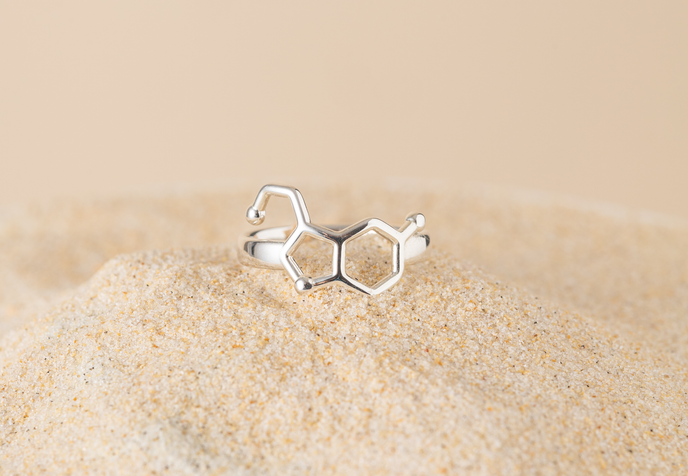
Find your perfect fit
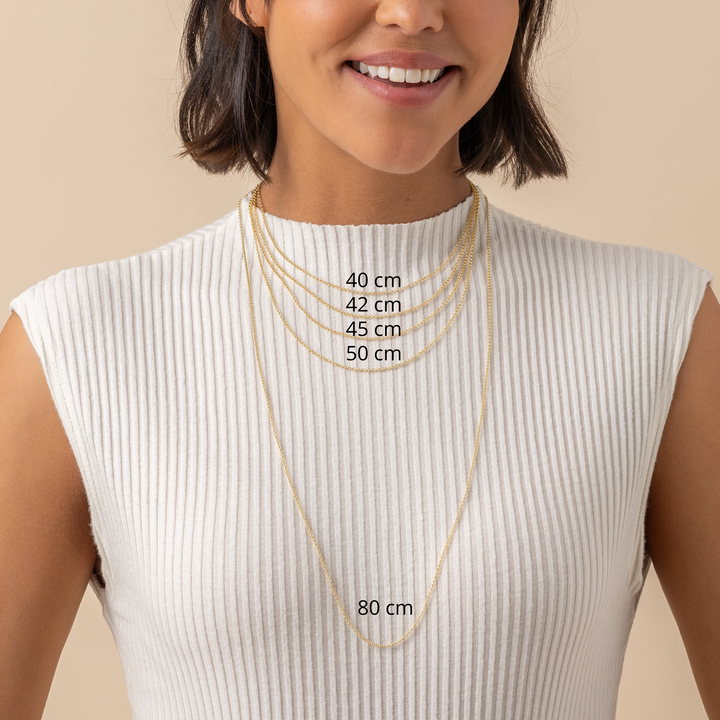
Necklace length guide