€ 145


Still questions? Contact us
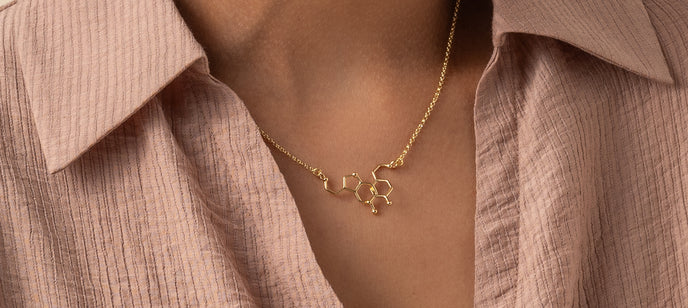
shRNA necklace V | sterling silver
If you have ever designed an shRNA construct, picked a hairpin sequence from a library, or run a knockdown screen and waited two days for the western blot, you already know what this is. The hairpin RNA that lets a single sequence silence a chosen gene with reasonable specificity.
The Science of shRNA
Short hairpin RNAs combine a sense strand, a loop, and an antisense strand designed to base-pair into the hairpin shape. The loop is structural rather than functional. Dicer cleaves the loop and releases a functional siRNA. The antisense strand loads into RISC and guides the complex to a complementary mRNA, which is then degraded or translationally silenced. shRNA is delivered as DNA on a vector, which means stable expression and constitutive silencing in transfected cells. That stability is the reason shRNA libraries replaced siRNA libraries for genome-wide loss-of-function screens during the 2000s, before CRISPR knockout libraries took over many of the same applications.
Who Reaches For This
The audience clusters around RNAi and gene-silencing work:
- molecular biologists running knockdown experiments
- functional genomics researchers using shRNA libraries
- cancer biologists who screen for synthetic-lethal interactions
- RNA biologists who appreciate the structural biology of hairpins
- molecular biology educators teaching gene silencing
Explore Related Cellular Biology Jewelry
- shRNA necklace H | silver
- shRNA necklace H | gold vermeil
- MicroRNA necklace | silver
- tRNA necklace | silver
FAQ
Will a molecular biologist recognise this?
Immediately. The hairpin RNA shape is one of the most recognisable structures in molecular biology, alongside the DNA double helix and the ribosome. Anyone who has run a knockdown experiment, used an shRNA library, or taught gene silencing reads it on sight. It works as a peer-recognition piece for the lab and is specific enough to be a meaningful PhD-defense or postdoc gift.
Why use shRNA when CRISPR exists?
Different tools for different jobs. CRISPR knockouts are clean, permanent, and increasingly the standard for full loss-of-function. shRNA gives a tunable, partial knockdown that can be useful when total loss of a gene is lethal, when transient or titratable silencing is wanted, or when the experiment needs the gene present at a reduced level. Many labs run both depending on the question.
What is the size, material, and chain?
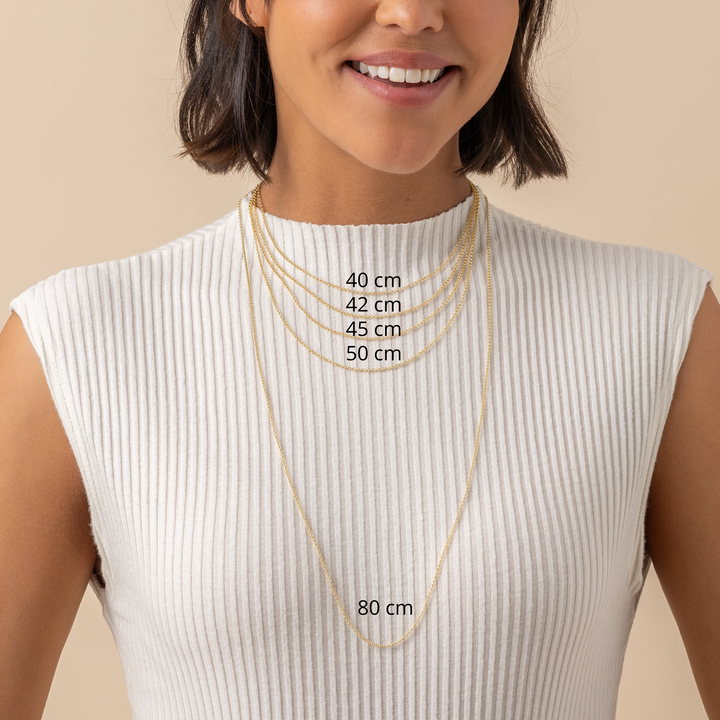
34 mm pendant in 925 sterling silver, nickel-free. 45 cm sterling silver chain with a 5 cm extender. Ships free worldwide via DHL Express in 1-5 business days, with all import duties prepaid. Comes in a ready-to-gift jewelry box with the 30-day “Love It or Return It” policy.
What is the difference between V and H?
Two physical orientations. V (vertical) is taller than wide. H (horizontal) is wider than tall. Both are 34 mm in their longest dimension. Both come in silver. The H is also available in gold vermeil. A V gold version is in the catalog as well and can be found through the molecules collection.
Cellular Biology
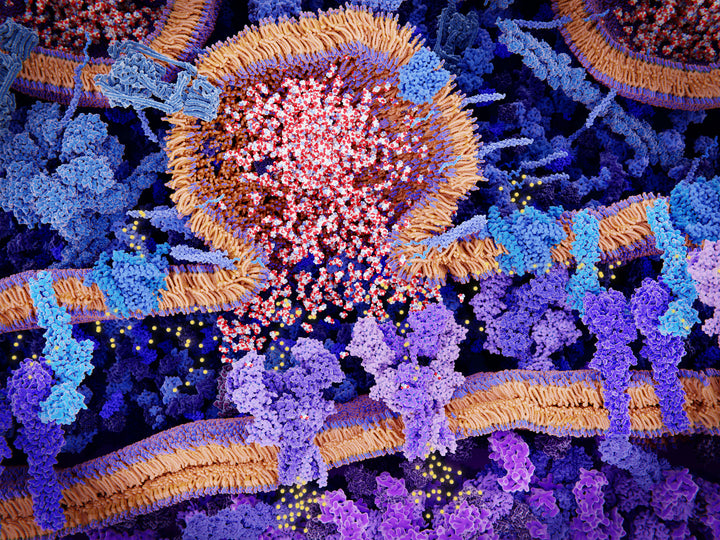
Step into the fascinating world of cellular biology through our unique jewelry designs. These pieces serve as wearable reflections of life's microscopic wonders, capturing the aesthetics of DNA strands, cellular formations, and more. Far from simple adornments, they spark dialogue and honor the captivating complexities found within biological research. Merging scientific accuracy with artistic flair, each creation offers a tactile experience that bridges the gap between scientific inquiry and aesthetic appreciation.
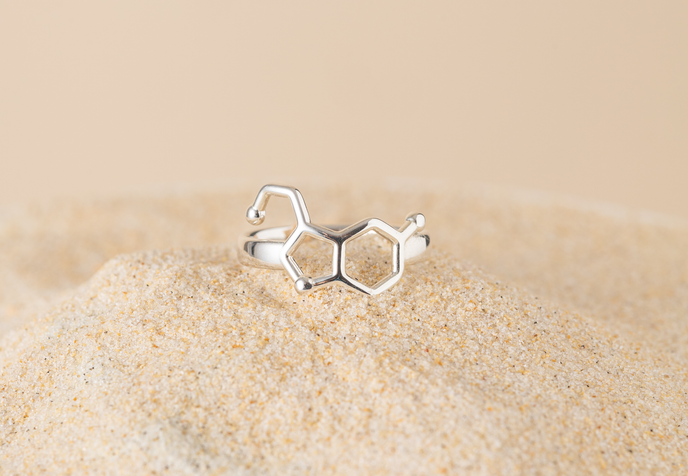
Find your perfect fit: measure an Existing Ring
Finding out your ring size at home is a simple process and can help you shop for jewelry online with confidence.
Necklace length guide