€ 205


Still questions? Contact us
Fetus necklace | sterling silver
Forty weeks of pregnancy translate into the most rapid period of growth in human life. A few centimetres of embryo become a fully formed newborn ready for first breath. Obstetric medicine still does much of its work in this window on instinct and ultrasound, with foetal physiology only partially captured by what monitors can see.
The Anatomy of Foetal Development
The foetal period begins at week 9 of development, after major organ systems are established, and ends at birth. Movement detected by the mother typically appears between weeks 18 and 20 (quickening). Viability outside the uterus, with intensive neonatal support, becomes possible around week 24. Lungs do not produce sufficient surfactant for independent breathing until roughly weeks 34 to 36. Foetal circulation is structurally distinct from postnatal circulation: the foramen ovale and ductus arteriosus shunt blood away from the non-functional lungs, both closing within hours of birth as the lungs expand and pulmonary vascular resistance drops.
The Audience
The audience here is mostly clinical, with a smaller cohort of personal buyers.
- obstetricians, foetal medicine specialists, and neonatologists
- midwives, perinatal nurses, and labour ward staff
- developmental biologists and paediatric researchers
- parents marking a pregnancy, a birth, or a loss
Most often given to a colleague who has spent a career on the labour ward, or to a parent for whom the pregnancy carries a specific weight.
Explore Related Human Anatomy Jewelry
- Fetus necklace | gold vermeil
- Twin fetus necklace | silver
- Embryo necklace | silver
- Uterus necklace H | silver
FAQ
Is this an appropriate gift for an obstetrician or midwife?
It is. Among anatomical pendants, the foetus reads instantly to anyone whose work involves pregnancy. We see it as a finishing-residency present, a thank-you from grateful parents to a labour ward team, and as a quiet personal anchor for clinicians who have worked thousands of deliveries.
What is the most surprising thing about foetal physiology?
The circulatory rerouting. A foetus runs a fundamentally different circulation from a born infant. Blood bypasses the non-functional lungs through two shunts, the foramen ovale and the ductus arteriosus. Both close within hours of the first breath, when pulmonary resistance drops and the lungs become the primary site of gas exchange. The transition is one of the largest physiological changes in human life.
What are the size, material, and chain specs?
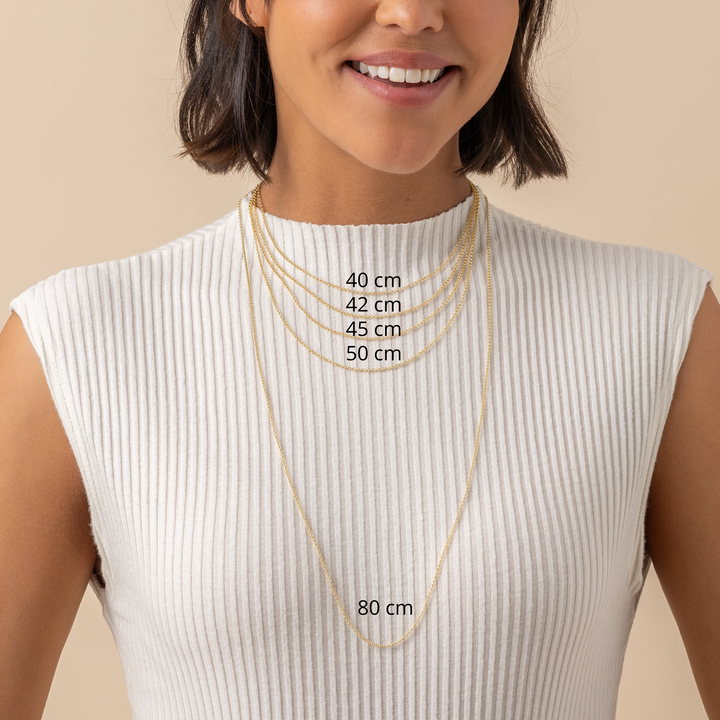
25 mm pendant in 925 polished sterling silver, nickel-free. 45 cm sterling silver chain with a 5 cm extender. Free worldwide DHL Express in 1-5 business days, duties and taxes covered. 30-day “Love It or Return It” policy.
Is there a gold version?
Yes. The gold vermeil counterpart is the same 25 mm size, same design. Sterling silver core with 2.5 micron 18K gold plating. The silver here is solid 925 sterling. The gold reads warmer. The silver reads more clinical. Pick by the recipient's typical metal preference.

Human Anatomy
Anatomical wonders have never been so elegantly articulated. Our anatomical collection embodies the intricate and awe-inspiring structures that make us who we are. From DNA double helices to neuronal networks, our pieces don't merely imitate—they interpret. The collection serves as a tangible tribute to the hidden beauty within us all, elevating the realms of biology and medicine into wearable art. With exquisite attention to detail, each piece is a dialogue between form and function, revealing the enigmatic eloquence of the human body.
Find your perfect fit: measure an Existing Ring
Finding out your ring size at home is a simple process and can help you shop for jewelry online with confidence.
Necklace length guide