€ 185


Still questions? Contact us
Red blood cells necklace S | 18K gold vermeil
Red blood cells are the most numerous cells in the human body, and the ones a haematologist knows best. This small red blood cells necklace in 18K gold vermeil is for the transfusion specialist, lab scientist or doctor who spends her days with blood. Give it to her, or keep it for yourself.
Who It's For
- a haematologist or transfusion specialist, for her birthday
- a medical laboratory scientist who reads blood smears every day
- a colleague retiring from the hospital lab
- someone who already wears the red blood cell studs, to make a set
- yourself, if you like a small piece and gold is what you wear
From a review of the silver version. Valerie W.: “I bought this as a birthday gift for my sister in law who is a transfusion specialist in a university hospital. She was delighted with it!”
Why Blood Settles
Leave a tube of blood standing and the red cells slowly sink. In healthy blood they fall only a short way in an hour, usually less than 20 millimetres. When the blood carries more of certain proteins, such as fibrinogen and antibodies, the cells stick together face to face in stacks called rouleaux, from the French word for a roll, like a roll of coins. A stack sinks faster than a single cell. That is the idea behind the erythrocyte sedimentation rate, a simple test that measures how far the cells fall in one hour. A high value is not a diagnosis on its own, but it often points to inflammation somewhere in the body.
Explore Related Cellular Biology Jewelry
- red blood cells necklace S | silver
- red blood cells necklace L | gold vermeil
- red blood cell studs | gold vermeil
- hemoglobin necklace | silver
FAQ
How big is the pendant, and what chain comes with it?
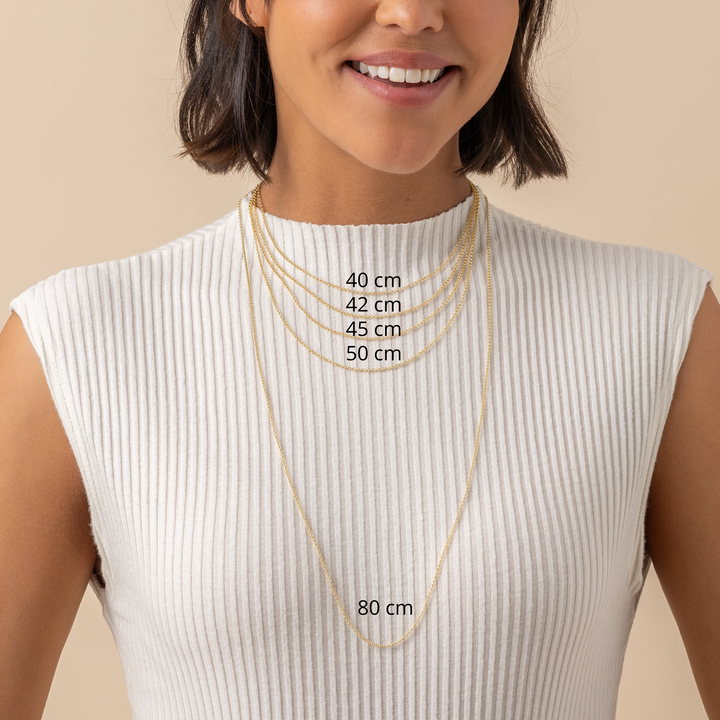
The pendant is 17 mm across (about 0.7 inches), about the size of a US dime, and hangs between two small loops. It comes on a 45 cm (17.7 inch) gold vermeil chain with a lobster clasp and a 5 cm (2 inch) extender. 18K gold vermeil means 2.5 microns of 18K gold over solid sterling silver, nickel-free and hypoallergenic. To keep the gold bright, wipe it with a soft cloth and store it dry in its box.
Is there a silver version, or a larger one?
Yes. This S necklace also comes in sterling silver, at the same 17 mm. Choose the finish she already wears: the design is the same in both. The larger red blood cells necklace L, with a 26 mm pendant, comes in sterling silver and in gold vermeil, and the red blood cell studs come in both finishes too.
Is delivery free, and what if it isn't right?
Yes. DHL Express delivers free in 1-5 business days worldwide, and we pay the import duties and taxes, so nothing is due at the door. It arrives in a ready-to-gift jewelry box and festive envelope. If it isn't right, our 30-day “Love It or Return It” policy applies.
Who discovered blood groups?
Karl Landsteiner, a doctor working in Vienna. In 1900 he mixed red cells and serum taken from himself and his colleagues, and saw that some combinations clumped together while others did not. In 1901 he described three groups, now called A, B and O. A fourth group, AB, was found by two of his colleagues the following year. His work laid the foundation for safe blood transfusion, and it earned him the 1930 Nobel Prize in Physiology or Medicine. World Blood Donor Day, on 14 June, falls on his birthday.
Cellular Biology
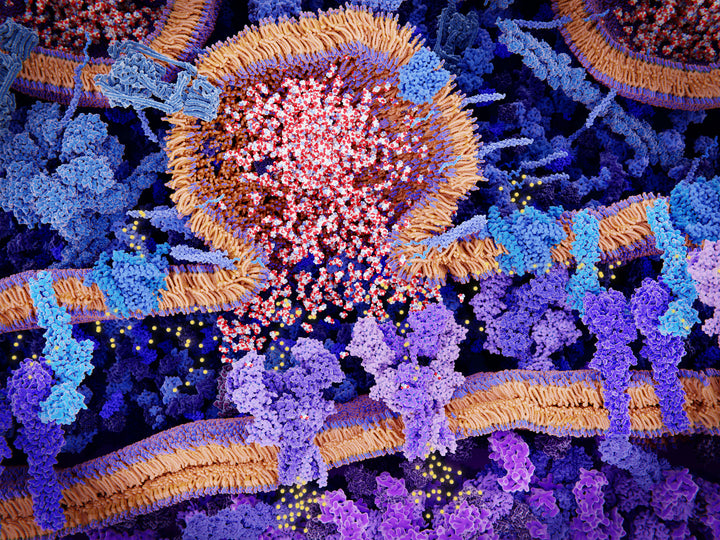
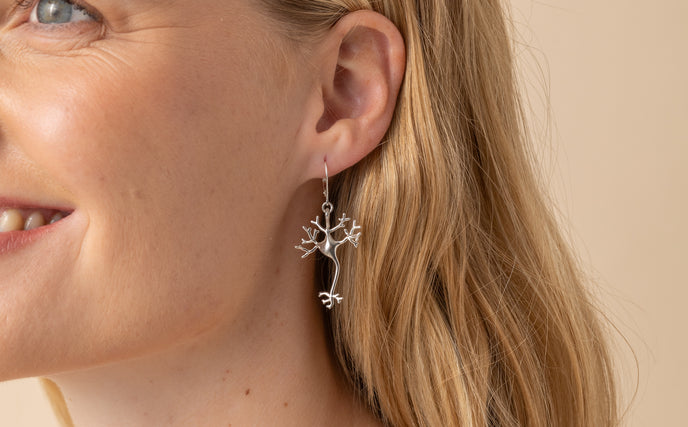
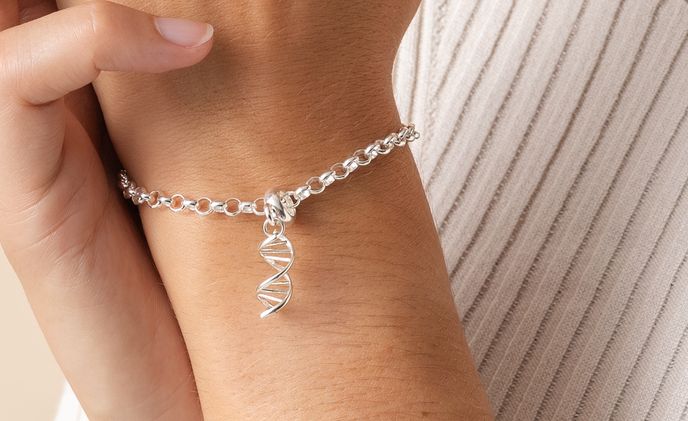
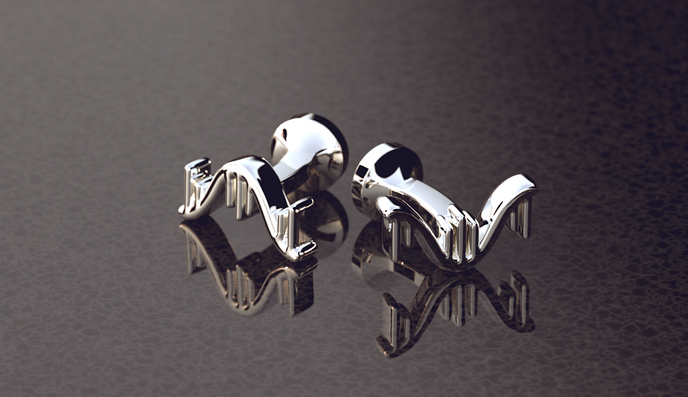
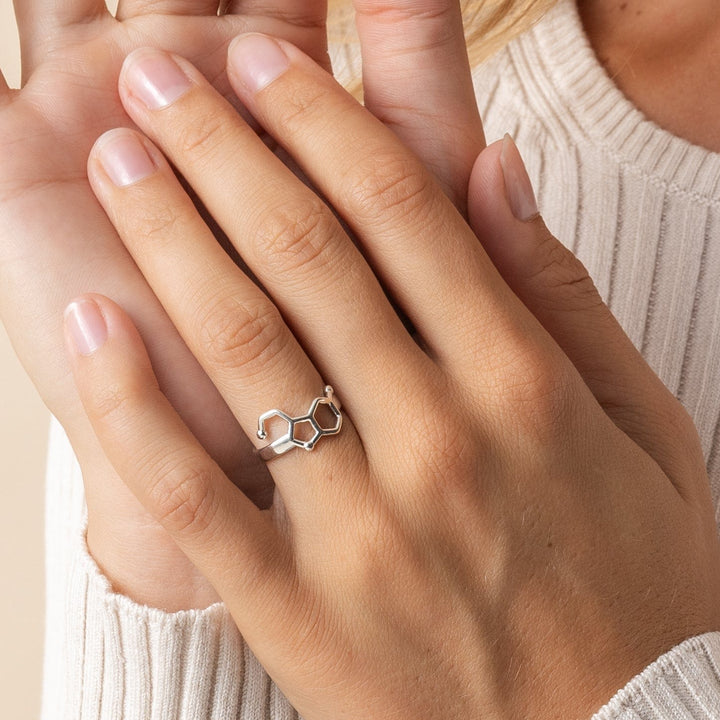
Step into the fascinating world of cellular biology through our unique jewelry designs. These pieces serve as wearable reflections of life's microscopic wonders, capturing the aesthetics of DNA strands, cellular formations, and more. Far from simple adornments, they spark dialogue and honor the captivating complexities found within biological research. Merging scientific accuracy with artistic flair, each creation offers a tactile experience that bridges the gap between scientific inquiry and aesthetic appreciation.
Find your perfect fit
Necklace length guide