€ 140


Still questions? Contact us
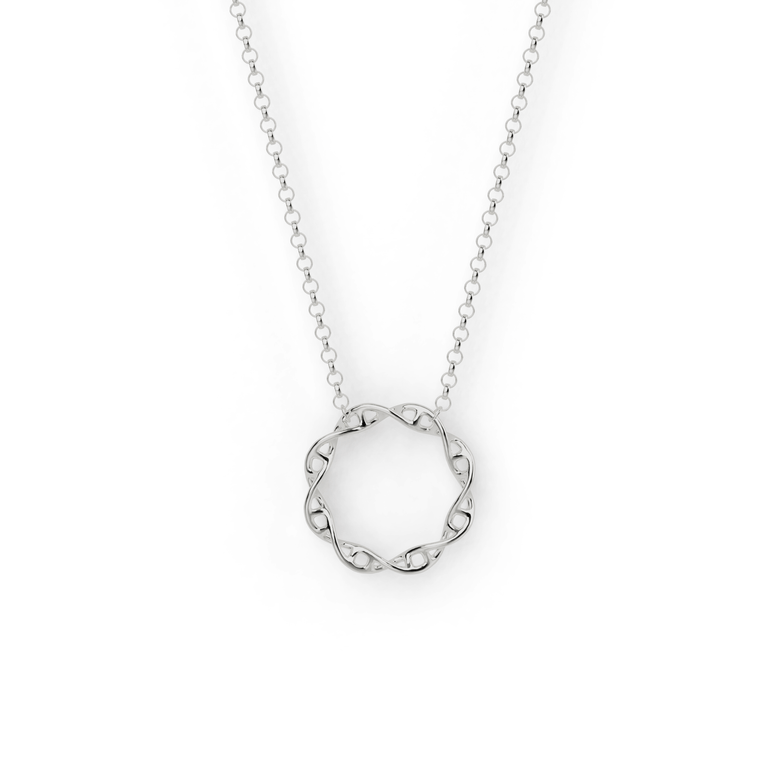
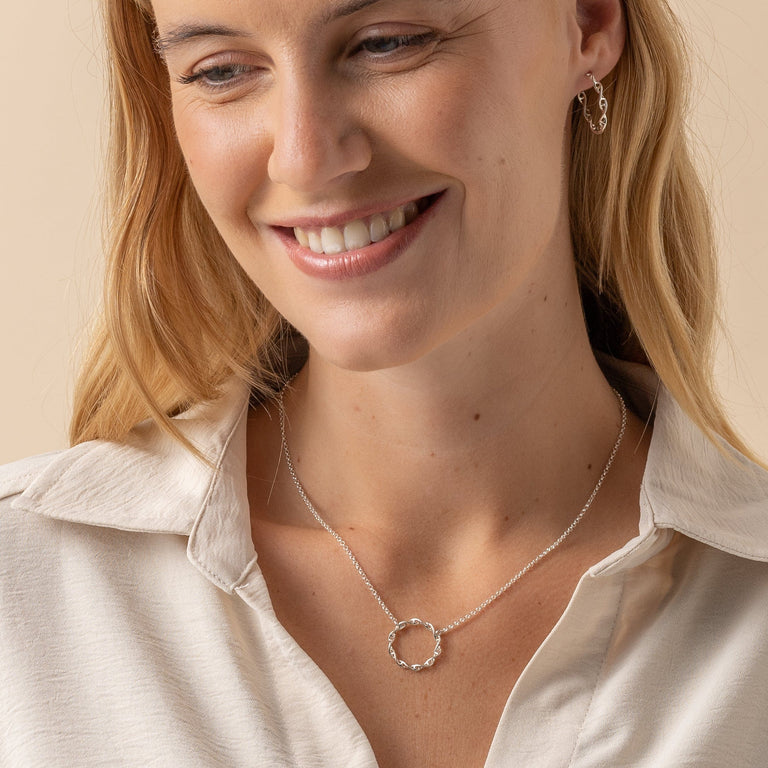
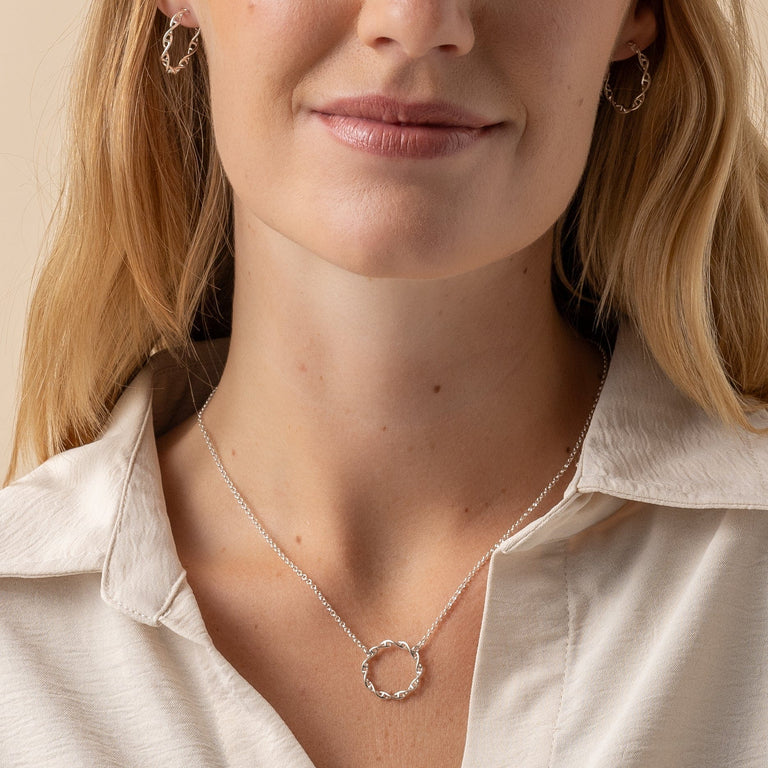
circular DNA necklace | sterling silver
One parent chose this circular DNA necklace for a daughter who had just sat her A-level exams, as a reminder of all the biology she had worked for. It suits any step in a science life, from a first exam to a last day in the lab.
Who It's For
- a daughter after her biology exams, or graduating in genetics
- a lab manager or mentor retiring from a genetics lab
- a wife or partner in microbiology, for Valentine's Day
- a friend who clones genes for a living
- yourself, for a necklace you can wear every day
From reviews of the gold version: Heather C.: “The perfect gift for our manager who is retiring from our genetics lab. She’ll love it!” Joan G., who bought one to keep: “Exactly what I expected, substantial without being too thick.”
Why Some DNA Comes in Loops
Our chromosomes are long strands with two ends. Most bacteria keep their main chromosome as a closed loop instead, so there are no ends to wear down when it is copied. Unfolded, the loop of the gut bacterium E. coli would be about 1.5 mm long, hundreds of times the length of the cell that packs it in. Many bacteria also carry plasmids, small extra loops of DNA that copy themselves and can pass from one bacterium to another. That is one of the main ways genes for antibiotic resistance spread. Those same resistance genes let early cloners pick out the bacteria that had taken up a plasmid, which is how plasmids became the workhorse of genetics labs.
Explore Related Genetics Jewelry
- circular DNA necklace | gold vermeil
- cloning vector necklace | silver
- DNA necklace H | silver
- RNA necklace | silver
FAQ
How big is it, and how does it sit?
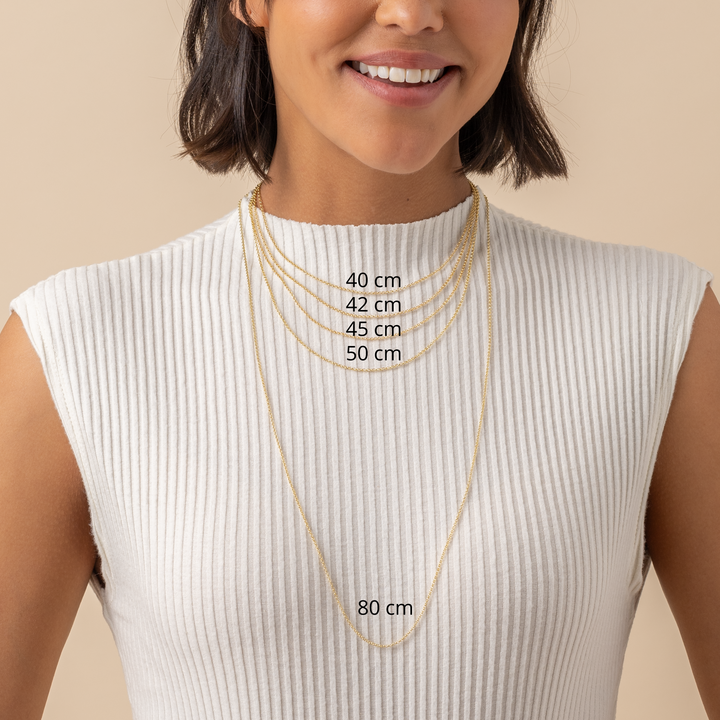
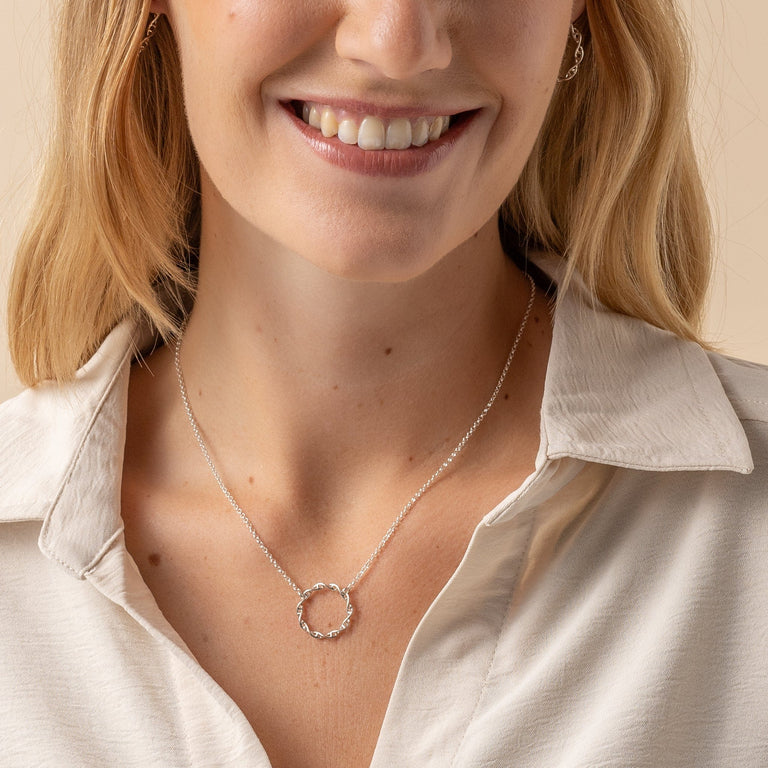
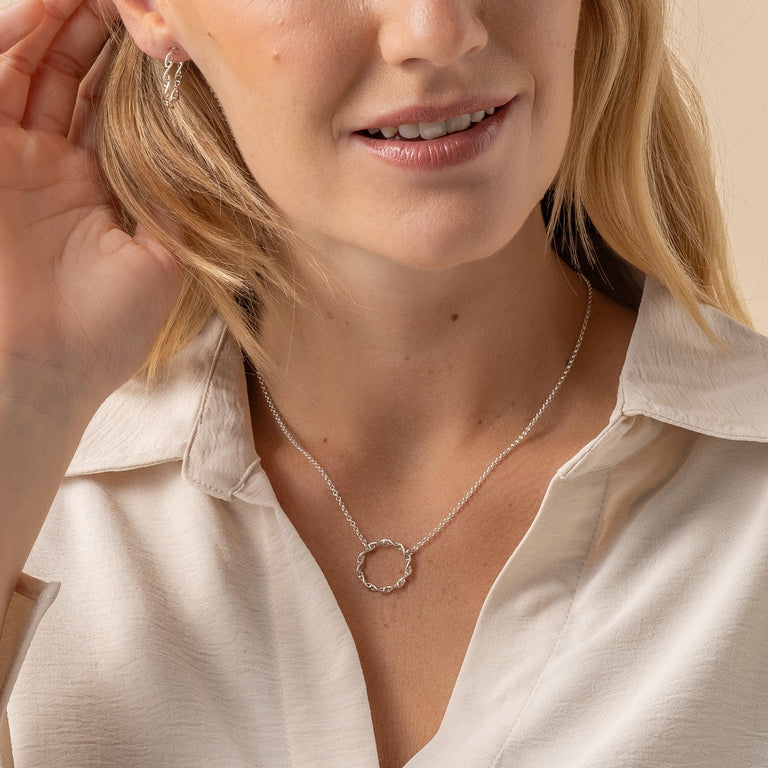
The pendant measures 20 mm (0.8 inches) across, a little smaller than a US nickel and smaller than a 2-euro coin. The chain runs through the ring, so it hangs freely and sits on the upper chest on the 45 cm (17.7 inch) sterling silver chain with a 5 cm (2 inch) extender. This page also sells extra chains of 40, 42, 45 or 50 cm, each with a 5 cm extender, or 80 cm. It is 925 sterling silver, nickel-free and hypoallergenic.
Is there a gold version?
Yes. The same circular DNA necklace comes in gold vermeil, also 20 mm. Choose the finish the recipient already wears: the design is the same in both. For someone who works with plasmids every day, there is also a cloning vector necklace, in sterling silver and in gold vermeil.
Will it arrive in time, and what if it isn't right?
It ships free worldwide with DHL Express and arrives in 1-5 business days. We pay the import duties and taxes, so there is nothing to pay on delivery. It comes in a ready-to-gift jewelry box and festive envelope. If it isn't right, our 30-day “Love It or Return It” policy applies.
How did a walk to a sandwich shop lead to gene cloning?
In November 1972, at a Honolulu plasmid meeting, Stanley Cohen, Herbert Boyer and colleagues went looking for a late snack near Waikiki Beach. By the time they reached a small delicatessen with “Shalom” in the window, Cohen later wrote, the two had agreed to work together. A year later, with Annie Chang and Robert Helling, they reported in PNAS that a gene cut from one plasmid could be joined into another and copied in bacteria. Gene cloning grew from that paper, and by 1978 bacteria were making human insulin.
Genetics
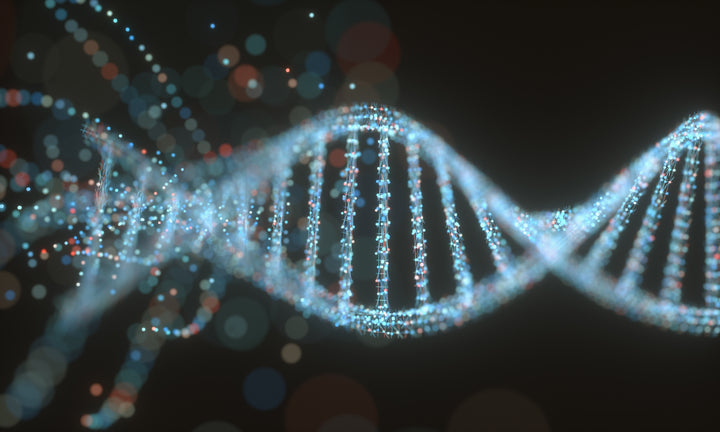
Our genetics-inspired jewelry captures the essence of life's code in striking detail. Crafted to mirror the DNA double helix, each piece is more than an aesthetic marvel—it's a tribute to the complexity of our genetic makeup. Far from ordinary, this collection combines scientific precision with artistic flair, making each item a captivating blend of form and function. It's not just an accessory; it's a meaningful representation of the miracle that is genetics.
Find your perfect fit: measure an Existing Ring
Finding out your ring size at home is a simple process and can help you shop for jewelry online with confidence.
Necklace length guide