€ 195


Still questions? Contact us
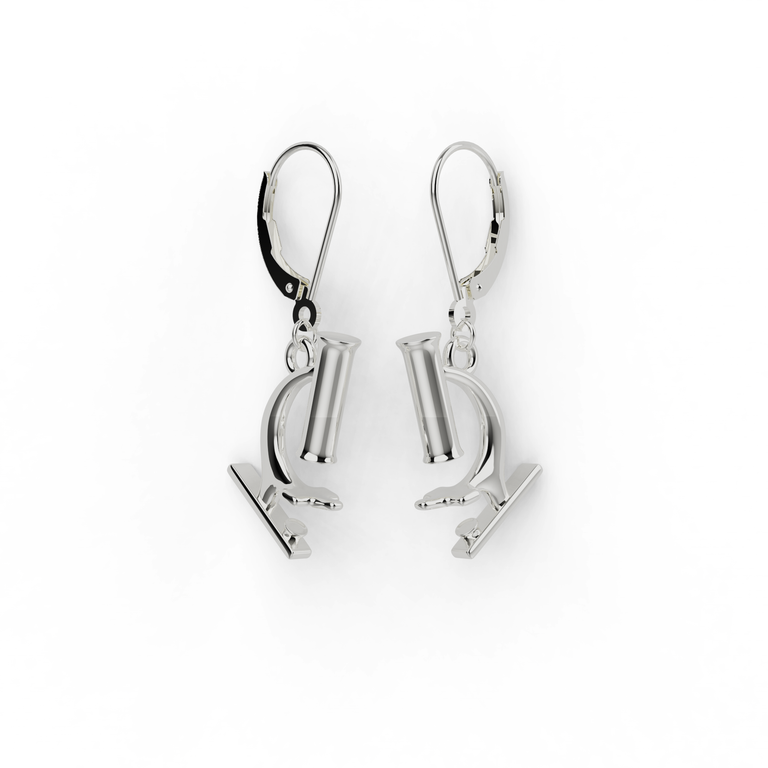
Microscope earrings | sterling silver
The microscope is the instrument that first showed us cells and bacteria, and it is still on the bench in biology labs today. These microscope earrings make a birthday present for a wife who works in science and collects unusual earrings.
Who It's For
- a daughter studying biology, for her birthday
- a sister or a colleague in the lab
- someone who already has the microscope necklace, to make a set
- yourself, if you would rather wear earrings than a chain
Huan H., who gave them as a present: “lovely design, not too big”
How Lenses Lost Their Colour Fringes
Glass bends blue light more than red. In a single lens, each colour focuses at a slightly different distance, so early microscopes showed objects with coloured fringes. The cure was to pair two kinds of glass that spread colour by different amounts, a convex lens of crown glass with a concave one of flint glass, so that their errors cancel. Telescopes had them from the 1750s, microscopes by the 1820s. In 1830 Joseph Jackson Lister, a London wine merchant, showed how to space two such pairs in a microscope objective so that the blur from their curved surfaces cancelled too. Three years earlier, he and the physician Thomas Hodgkin had described red blood cells as discs hollowed on both sides.
Explore Related Lab Jewelry
- microscope necklace | silver
- microscope necklace | gold vermeil
- microscope bracelet | silver
- petri dish earrings | silver
FAQ
How big are they, and how do they fasten?
Each earring measures 18 mm (about 0.7 inches), not counting the hook, about the size of a US dime and noticeably smaller than a 2-euro coin (25.75 mm). They hang from sterling silver leverback hooks, which clip closed behind the earlobe. Our sterling silver is 925, nickel-free and hypoallergenic, with a high-polish finish. If the silver darkens over time, a soft polishing cloth brings it back.
Is there a matching necklace, or a gold version?
The earrings come in sterling silver only. For a matching set, the microscope necklace in sterling silver has the same 18 mm microscope on a 45 cm chain with a 5 cm extender, and there is a silver bracelet with the charm on a connector that also fits Pandora bracelets. For someone who wears gold, the necklace also comes in 18K gold vermeil, as a separate piece.
Will they arrive in time, and what if they aren't right?
DHL Express delivers free in 1-5 business days worldwide, and we pay the import duties and taxes, so nothing is due at the door. They arrive in a ready-to-gift jewelry box and festive envelope. If they aren't right, our 30-day “Love It or Return It” policy applies to unworn earrings.
Who built the first electron microscope?
Ernst Ruska, working with Max Knoll in Berlin. Their first instrument, in 1931, magnified less than 20 times. In 1933 Ruska built one that, for the first time, showed finer detail than a light microscope, because fast electrons have a far shorter wavelength than light. He received half of the 1986 Nobel Prize in Physics for electron optics and for designing the first electron microscope, more than half a century later. The other half went to Gerd Binnig and Heinrich Rohrer, who had built the scanning tunnelling microscope.

Medical & Lab tools
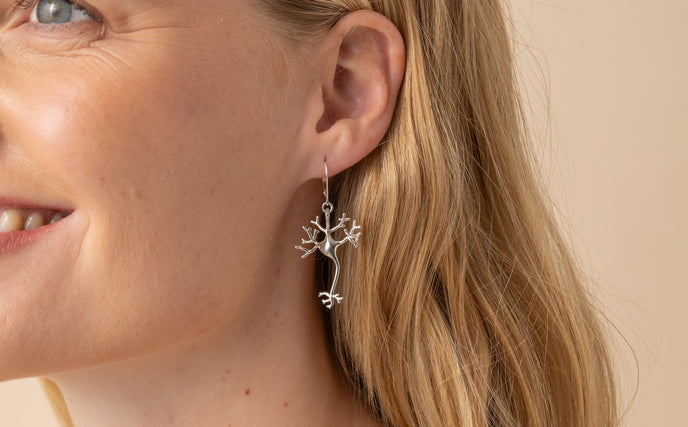
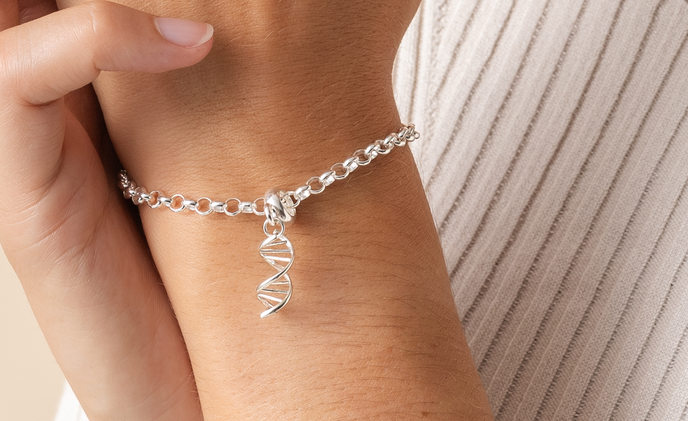
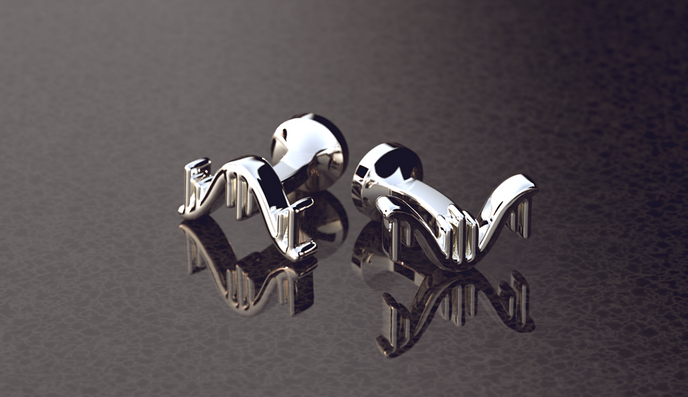
Dive into the captivating world of science-inspired jewelry, where intricate designs meet the essence of medical and laboratory tools. These masterfully crafted pieces act as subtle yet striking tributes to the instruments that have paved the way for scientific discovery. From DNA helices to microscope charms, each piece serves as a conversation starter, a talisman, and a small monument to human ingenuity. They're not just accessories; they're wearable artifacts that tell a story of scientific exploration and advancement.
Find your perfect fit
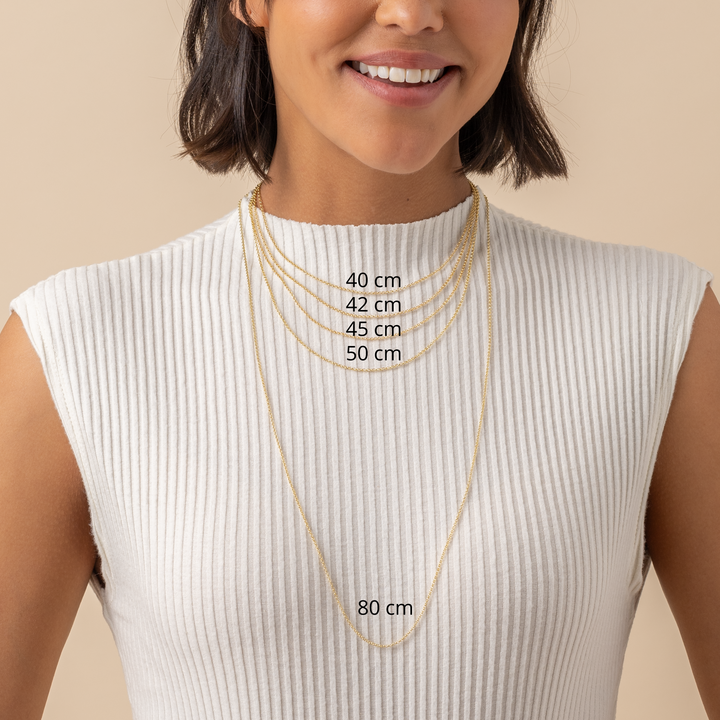
Necklace length guide