

€ 155


Still questions? Contact us
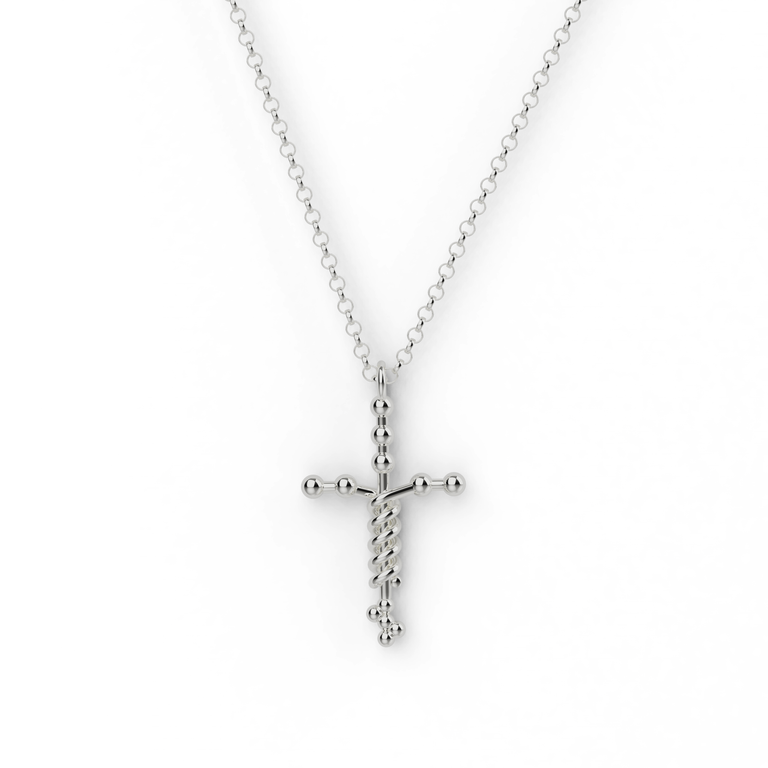
Laminin necklace | sterling silver
A laminin necklace is for the women who work on the material between and beneath cells: cell biologists, tissue engineers, developmental biologists, and the students who first met this protein in a lecture on the extracellular matrix. Give it to a friend starting her PhD, or keep it as a reminder of the subject you love.
Who It's For
- a sister graduating in biology
- a colleague who grows cells on laminin-coated dishes
- a lecturer who teaches cell biology, for the end of term
- yourself, if basement membranes are your subject
Conner H., who gave it as a present: “It was the perfect gift for my sisters graduation!”
The Science of Laminin
Laminin is a large protein built from three chains, called alpha, beta and gamma, wound together into a long arm, then separating into short arms at the top. Under the electron microscope most laminins look like a cross. Mammals make at least 16 different forms from different combinations of chains. In most laminins, the short arms link up into a mesh that forms part of the basement membrane, the thin sheet beneath the skin's outer layer and the linings of organs. The base of the long arm holds on to receptors on the cells above, which is one of the main ways cells stay anchored to that sheet.
Explore Related Cell Biology Jewelry
- laminin necklace | gold vermeil
- collagen necklace | silver
- fibroblast necklace | silver
- membrane necklace | silver
- mitochondrion necklace | silver
FAQ
How big is the pendant, and how does it sit?
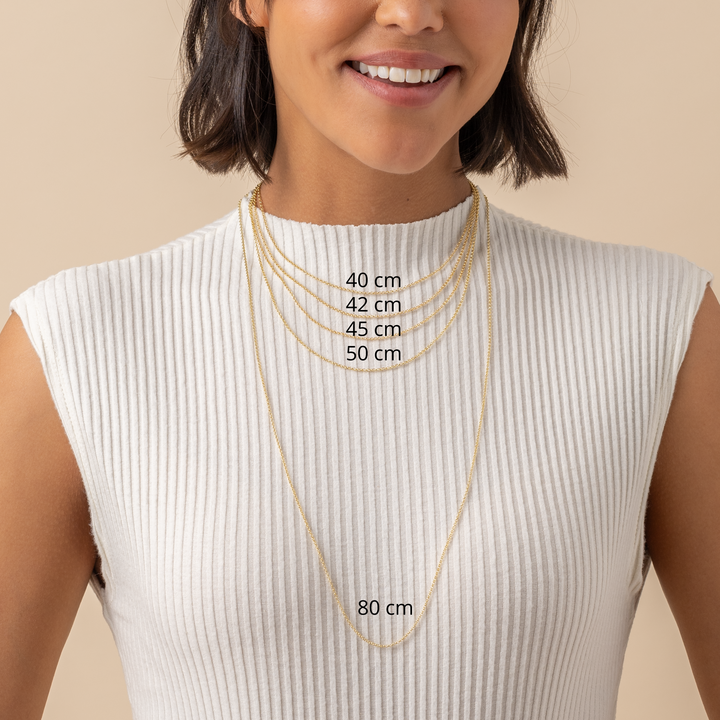
The pendant measures 31 mm (about 1.2 inches), about 5 mm more than the width of a 2-euro coin (25.75 mm). It hangs upright and sits just below the collarbone on a 45 cm (17.7 inch) sterling silver chain with a lobster clasp and a 5 cm (2 inch) extender. For a different length, extra chains of 40, 42, 45 or 50 cm with extender, or 80 cm, are sold on this page. It is 925 sterling silver, nickel-free and hypoallergenic.
Is there a gold version, or other cell biology jewelry?
Yes. The laminin necklace also comes in 18K gold vermeil, at the same 31 mm on a 45 cm gold vermeil chain with a 5 cm extender. Choose the finish the recipient already wears: the design is the same in both. For more of the matrix around cells, there is a collagen necklace with a 35 mm pendant, and a 26 mm fibroblast necklace, for the cell that makes much of that collagen. The collagen necklace also comes in 18K gold vermeil.
Will it arrive in time, and what if it isn't right?
It ships free worldwide with DHL Express and arrives in 1-5 business days. We pay the import duties and taxes, so there is nothing to pay on delivery. It comes in a ready-to-gift jewelry box and festive envelope. If it isn't right, our 30-day “Love It or Return It” policy applies.
Where was laminin first found?
In a mouse tumour. In 1979 Rupert Timpl, George Martin and colleagues isolated a large glycoprotein from a mouse tumour that makes basement membrane, and named it laminin. The same tumour, the Engelbreth-Holm-Swarm sarcoma, later gave labs something else. Hynda Kleinman and George Martin at the US National Institutes of Health turned its basement membrane into a gel, sold as Matrigel. Rich in laminin, it is still used to coat dishes for growing cells, including embryonic stem cells.
Cellular Biology
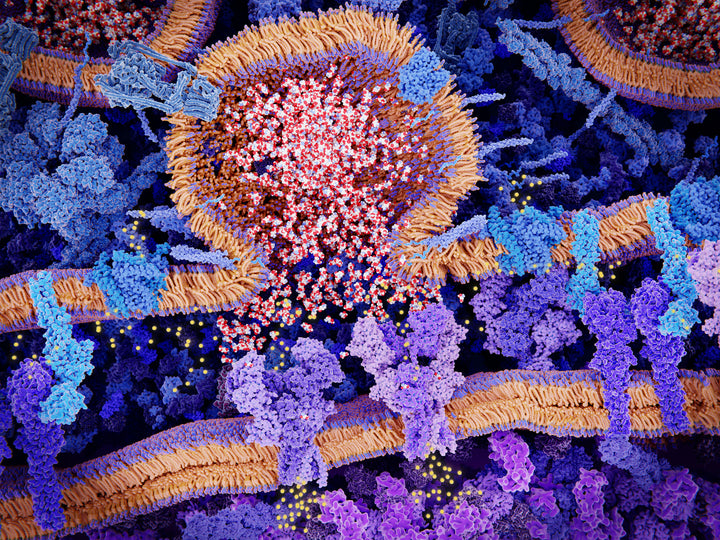
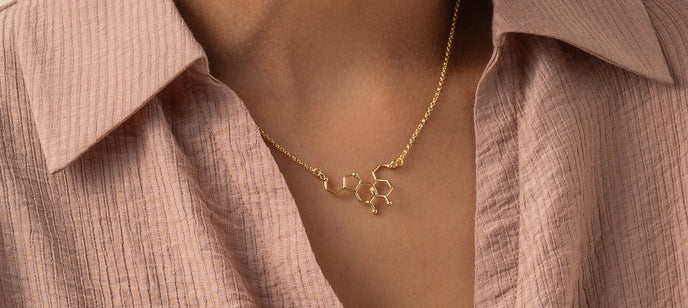
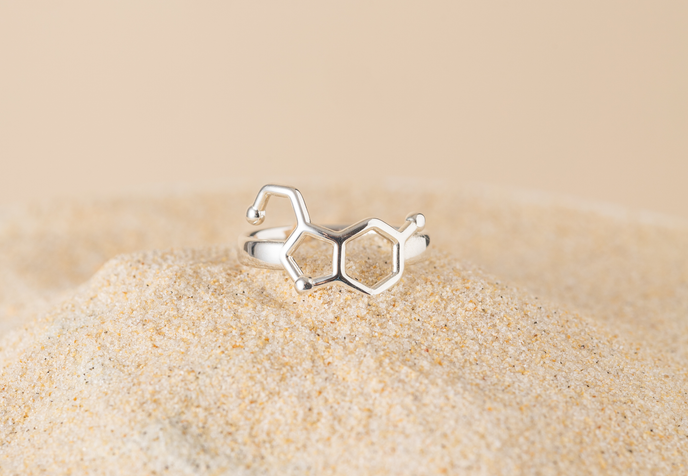
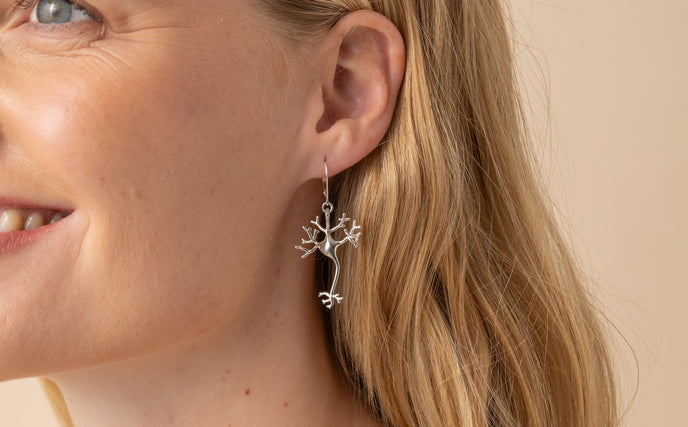
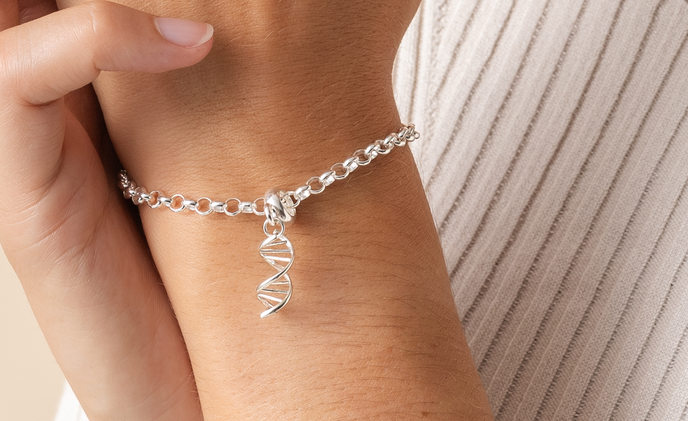
Step into the fascinating world of cellular biology through our unique jewelry designs. These pieces serve as wearable reflections of life's microscopic wonders, capturing the aesthetics of DNA strands, cellular formations, and more. Far from simple adornments, they spark dialogue and honor the captivating complexities found within biological research. Merging scientific accuracy with artistic flair, each creation offers a tactile experience that bridges the gap between scientific inquiry and aesthetic appreciation.
Find your perfect fit: measure an Existing Ring
Finding out your ring size at home is a simple process and can help you shop for jewelry online with confidence.
Necklace length guide