€ 185


Still questions? Contact us
Lymphocyte necklace | sterling silver
Most lymphocytes carry a receptor for a specific target, while neutrophils and macrophages answer the broad signs of infection. That specificity is how the immune system takes aim. A lymphocyte necklace is a gift for the immunologist in your life.
Who It's For
- a daughter or granddaughter who works in immunology
- your wife or partner, if the immune system is her field
- a friend or colleague in an immunology lab
- yourself, if immunology is your own field
How Lymphocytes Get Around
Lymphocytes take their name from lymph, the fluid that drains out of the tissues and back into the blood, and they travel in both. Naive T and B cells keep moving. They leave the blood through specialised vessels in the lymph nodes, spend hours there sampling what the lymph has carried in, then drain out with the lymph and return to the blood to start again. At any moment only about 2 per cent of a person's lymphocytes are in the blood. The rest are in the lymph nodes, spleen, bone marrow, gut and other tissues. Yet in a single day, roughly as many lymphocytes pass through the blood as the whole body holds.
Explore Related Immunology Jewelry
- lymphocyte necklace | gold vermeil
- antibody necklace | silver
- neutrophil necklace | silver
- macrophage necklace | silver
FAQ
How big is the pendant, and how does it sit?
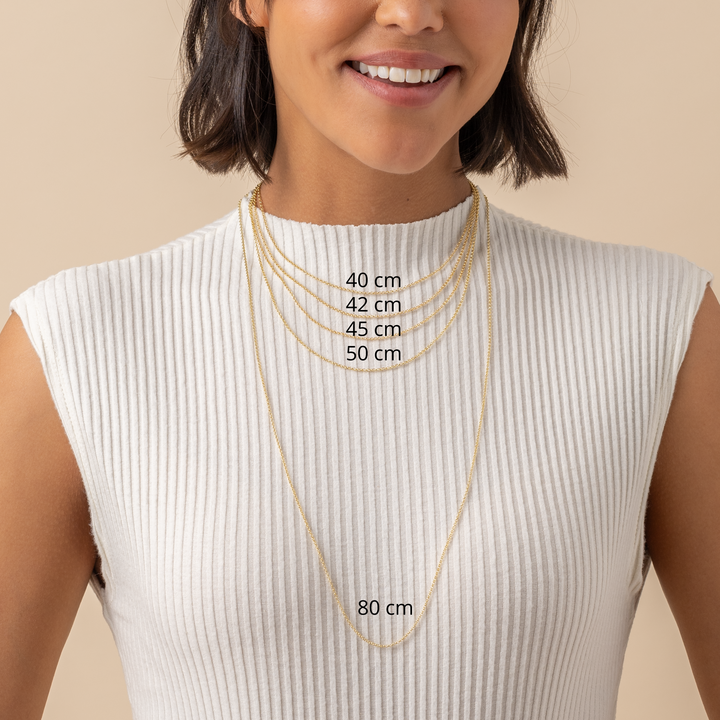
The pendant measures 16 mm (about 0.6 inches), close to a 1-euro-cent coin (16.25 mm) and smaller than a US dime. It hangs from a small loop at its top and sits just below the collarbone. The chain is 45 cm (17.7 inches) long, with a lobster clasp and a 5 cm (2 inch) extender. Our sterling silver is 925, nickel-free and hypoallergenic. If it darkens over time, a soft polishing cloth brings it back.
Is there a gold vermeil version, or other immune cells?
Yes. This necklace also comes in 18K gold vermeil, at the same 16 mm. Choose the finish she already wears: the design is the same in both. Other immune cells in the collection are the neutrophil and monocyte necklaces (15 mm, sterling silver), the eosinophil necklace (16 mm, sterling silver and gold vermeil) and the larger macrophage necklace (27 mm, on an 80 cm chain).
Will it arrive in time, and what if it isn't right?
DHL Express delivers free in 1-5 business days worldwide, and we pay the import duties and taxes, so nothing is due at the door. It arrives in a ready-to-gift jewelry box and festive envelope. If it isn't right, our 30-day “Love It or Return It” policy applies.
Why are they called B cells and T cells?
B is for bursa, T for thymus. Bruce Glick, an Ohio State PhD student, removed the bursa of Fabricius from young chickens. A fellow student, Timothy Chang, used some of Glick's birds to show a class how chickens make antibodies, and those without a bursa failed to. They published in Poultry Science in 1956. In 1961 Jacques Miller showed in newborn mice that the thymus is needed for immunity to develop, and in 1965 Max Cooper and colleagues showed in chickens that the two organs produce separate kinds of lymphocyte.
Cellular Biology
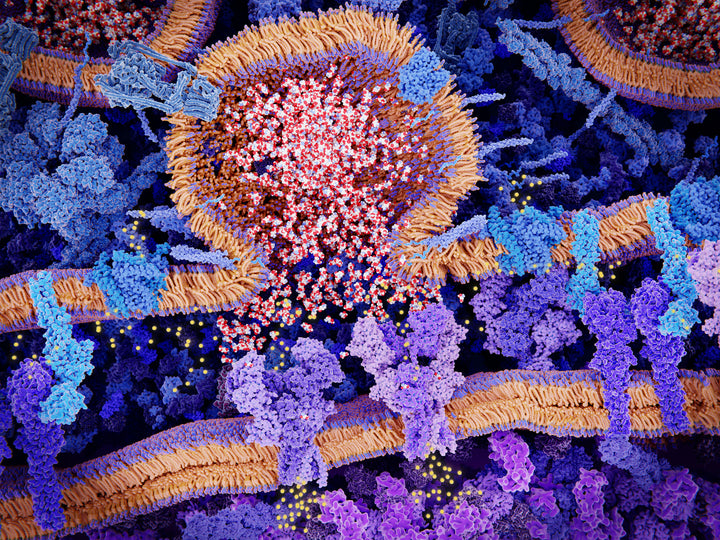
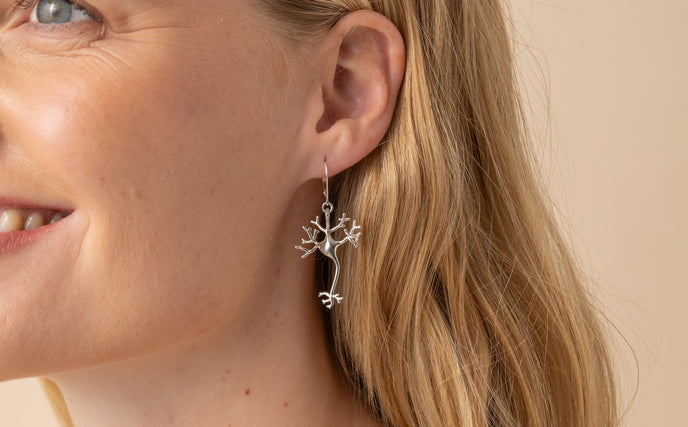
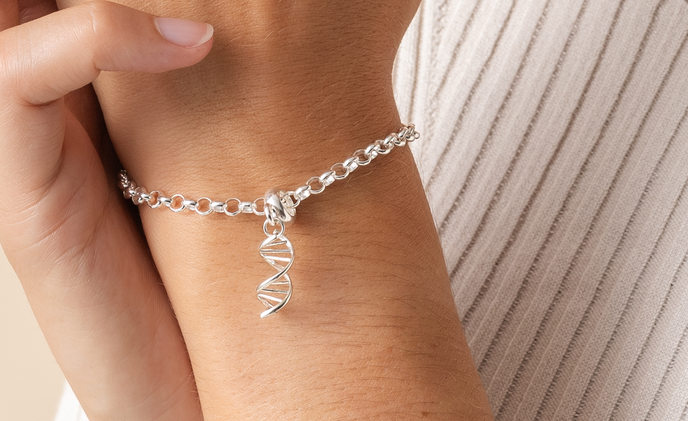
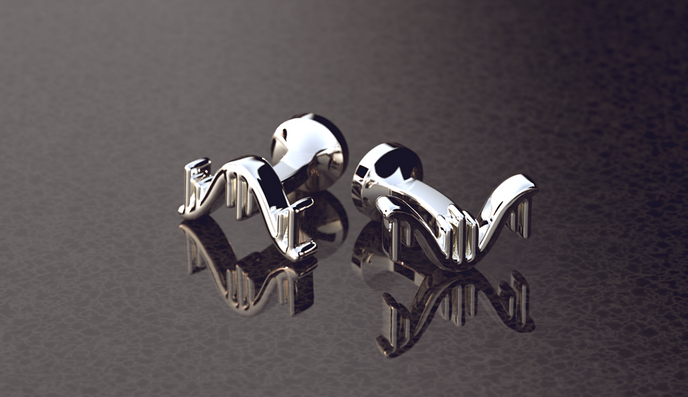
Step into the fascinating world of cellular biology through our unique jewelry designs. These pieces serve as wearable reflections of life's microscopic wonders, capturing the aesthetics of DNA strands, cellular formations, and more. Far from simple adornments, they spark dialogue and honor the captivating complexities found within biological research. Merging scientific accuracy with artistic flair, each creation offers a tactile experience that bridges the gap between scientific inquiry and aesthetic appreciation.
Find your perfect fit: measure an Existing Ring
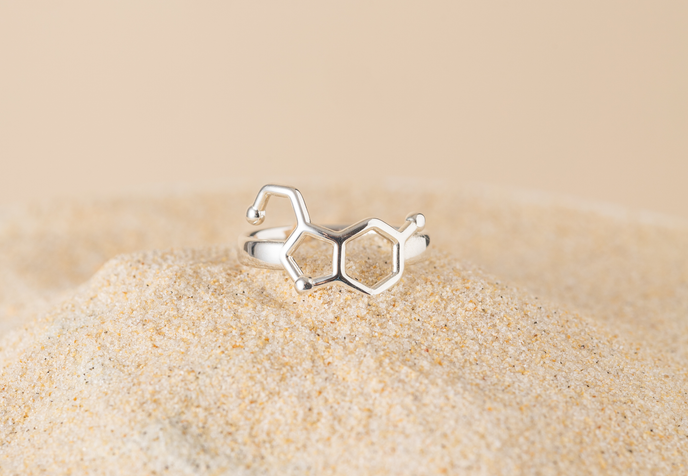
Finding out your ring size at home is a simple process and can help you shop for jewelry online with confidence.
Necklace length guide