

€ 285


Still questions? Contact us
Macrophage necklace | sterling silver
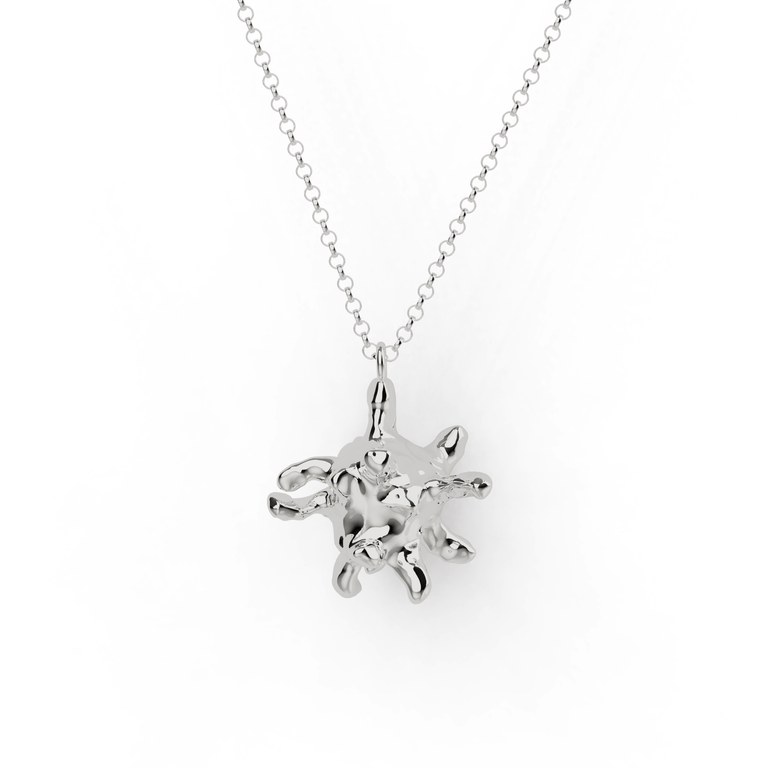
You have watched this cell engulf bacteria under a microscope, and you have watched it stay quiet when the situation calls for tolerance instead. The macrophage is the first responder of the innate immune system, and the cell that polarises between attack and repair depending on what the tissue needs. The pendant captures it mid-extension, with pseudopodia reaching out from the cell body the way you see them in a live-cell imaging dish.
The Science Behind the Macrophage
Macrophages are the resident sentinels of the innate immune system, present in every tissue in the body. Tissue-specific populations (Kupffer cells in the liver, microglia in the brain, alveolar macrophages in the lung, osteoclasts in bone) each adapt to local signals while keeping the same core toolkit: pattern recognition receptors that detect microbial signatures, phagocytic machinery that engulfs pathogens and apoptotic debris, antigen-presenting capability that hands processed peptides to T cells, and a cytokine repertoire that orchestrates the response. The cell polarises along an M1 / M2 axis, with M1 macrophages driving pro-inflammatory antimicrobial responses and M2 macrophages driving tissue repair, anti-inflammatory signalling, and resolution. The same plasticity that makes macrophages effective in normal immunity also makes them clinically consequential when it goes wrong: tumour-associated macrophages (TAMs) are co-opted by solid tumours to promote angiogenesis and immune evasion, foam cells (lipid-laden macrophages) drive atherosclerotic plaque formation, and persistent macrophage-driven inflammation underlies a long list of chronic diseases. The cell is everywhere, and so is its biology.
Who Will Recognise It
- immunologists working on innate immunity, polarisation, or trained immunity
- cancer researchers studying TAMs and tumour microenvironment biology
- cardiovascular researchers working on atherosclerosis, foam cells, and plaque biology
- developmental biologists working with tissue-resident macrophage populations
- pathologists who recognise foam cells, granulomas, and macrophage-driven histology on sight
Explore Related Immunology Jewelry
- Lymphocyte necklace | silver
- Red blood cell necklace | silver
- Bacteriophage necklace | silver
- Antibody necklace | silver
- DNA necklace V | silver
FAQ
Why a macrophage and not a lymphocyte?
Because they do different work. Lymphocytes (B and T cells) drive adaptive immunity: recognising specific antigens, producing antibodies, killing infected cells with target-level precision. Macrophages drive innate immunity: generalist sentinels, present in every tissue, engulfing first and asking later. They also bridge the two systems by presenting antigens to T cells, which is how innate detection becomes adaptive memory. The pendant is for someone whose work sits in the macrophage half of that division.
What does the pendant actually depict?
A macrophage with pseudopodia extended, the way the cell looks during phagocytosis or active migration in a live-cell imaging dish. The cell body is rounded with the typical irregular surface. The projections are the dynamic actin-driven extensions used to engulf particles, sense chemokine gradients, and crawl through tissue. It is the macrophage as it actually behaves, not a textbook circle with a smooth outline.
What size is the pendant and what does it ship with?
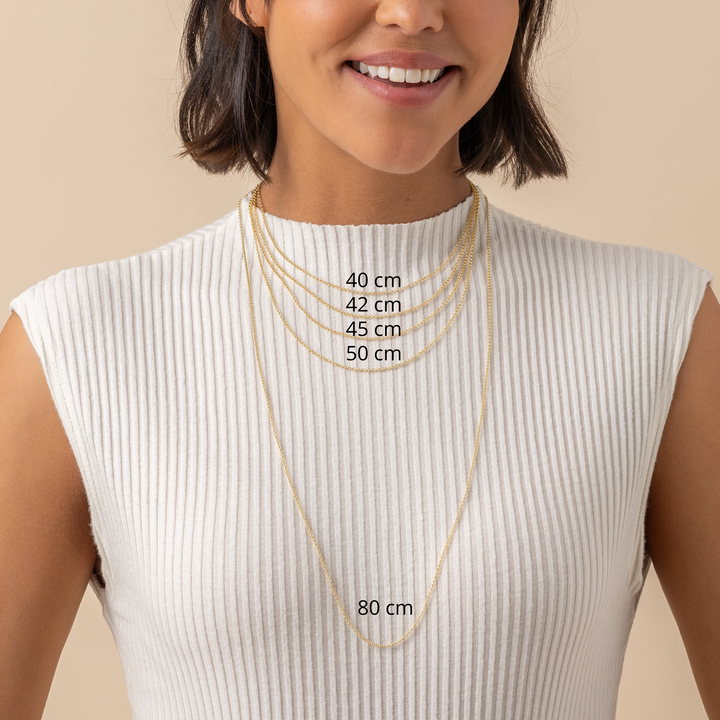
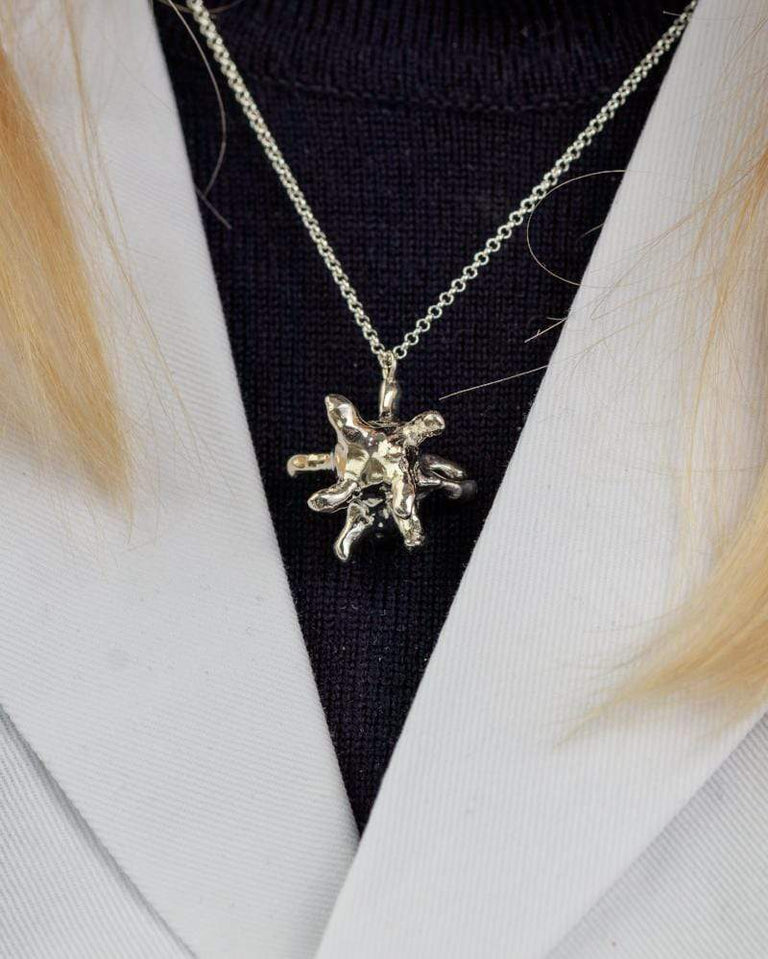
The pendant is 27 mm in sterling silver (925), nickel-free and hypoallergenic, on an 80 cm sterling silver chain (1.8 mm width, lobster clasp). The longer chain lets the cell sit at the sternum, where the pseudopodial detail reads at conversation distance. Free worldwide DHL Express shipping in 1-5 business days, all import duties covered, in a ready-to-gift jewelry box.
Is this an appropriate gift for someone in cancer immunology?
Often a strong choice. Tumour-associated macrophages (TAMs) are one of the central problems in solid-tumour immunology. They typically polarise toward an M2 phenotype that promotes tumour progression, angiogenesis, and immune evasion, and reprogramming TAMs back toward an antitumour M1 state is an active therapeutic frontier. For someone whose research or clinical work touches that biology, the pendant lands as specific rather than generic. A short note that names the work usually makes the connection clear.
Cellular Biology
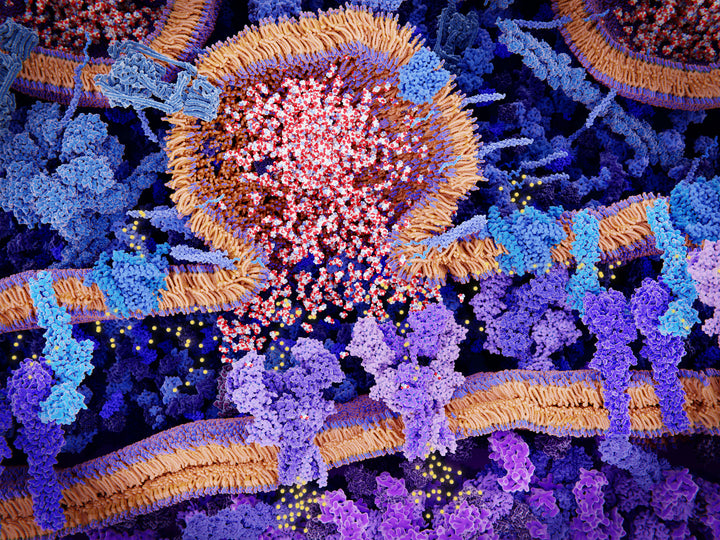
Step into the fascinating world of cellular biology through our unique jewelry designs. These pieces serve as wearable reflections of life's microscopic wonders, capturing the aesthetics of DNA strands, cellular formations, and more. Far from simple adornments, they spark dialogue and honor the captivating complexities found within biological research. Merging scientific accuracy with artistic flair, each creation offers a tactile experience that bridges the gap between scientific inquiry and aesthetic appreciation.
Find your perfect fit: measure an Existing Ring
Finding out your ring size at home is a simple process and can help you shop for jewelry online with confidence.
Necklace length guide