€ 215


Still questions? Contact us
Eosinophil necklace | 18K gold vermeil
Under the microscope, the eosinophil is the white blood cell that glows pink, packed with granules that soak up the red dye eosin. This eosinophil necklace in 18K gold vermeil is for the haematologist, allergist or lab scientist who knows the cell on sight, and for anyone who wants to give her one.
Where Eosinophils Live
Most of the body's eosinophils are not in the blood at all. They are made in the bone marrow, spend less than a day in circulation, then settle in tissues, above all the lining of the gut, where they can live for a week or more. A blood count only catches them in transit. Their growth depends on a signalling molecule called interleukin-5. That dependence became a treatment: mepolizumab, an antibody that blocks interleukin-5, was approved in 2015 for severe eosinophilic asthma and lowers the number of eosinophils in the blood and the airways.
Who It's For
- a haematologist or lab scientist who reads blood smears every day
- an allergist or respiratory doctor who treats eosinophilic asthma
- a medical student or resident finishing her haematology rotation
- someone who already wears the eosinophil necklace in silver and wants the gold
- yourself, if gold is what you wear every day
Explore Related Cellular Biology Jewelry
- eosinophil necklace | silver
- red blood cells necklace S | gold vermeil
- antibody necklace | gold vermeil
- neutrophil necklace | silver
FAQ
How big is the pendant, and what chain comes with it?
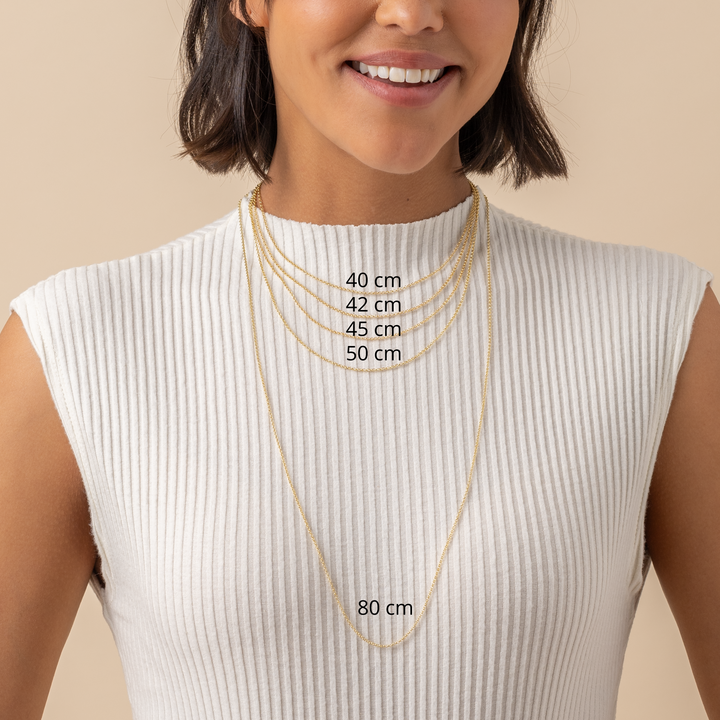
The pendant is 16 mm across (about 0.6 inches), about the size of a 1-cent euro coin and a little smaller than a US dime. It hangs from a single loop on a 45 cm (17.7 inch) gold vermeil chain with a lobster clasp and a 5 cm (2 inch) extender. 18K gold vermeil means 2.5 microns of 18K gold over solid sterling silver, nickel-free and hypoallergenic. To keep the gold bright, wipe it with a soft cloth and store it dry in its box.
Is there a silver version?
Yes. The eosinophil necklace also comes in sterling silver, at the same 16 mm. Choose the finish she already wears: the design is the same in both.
Is delivery free, and what if it isn't right?
Yes. DHL Express delivers free in 1-5 business days worldwide, and we pay the import duties and taxes, so nothing is due at the door. It arrives in a ready-to-gift jewelry box and festive envelope. If it isn't right, our 30-day “Love It or Return It” policy applies.
What are Charcot-Leyden crystals?
Tiny needle-shaped crystals that form where eosinophils gather and break down. Jean-Martin Charcot described them in 1853, and Ernst von Leyden found them in the sputum of people with asthma in 1872. For more than a century they were a curiosity under the microscope. In 1993 they were shown to be made of galectin-10, a protein eosinophils carry in large amounts. In 2019 Bart Lambrecht's team in Ghent reported in Science that the crystals themselves drive airway inflammation and thick mucus in mice, and that antibodies can dissolve them within minutes.
Cellular Biology
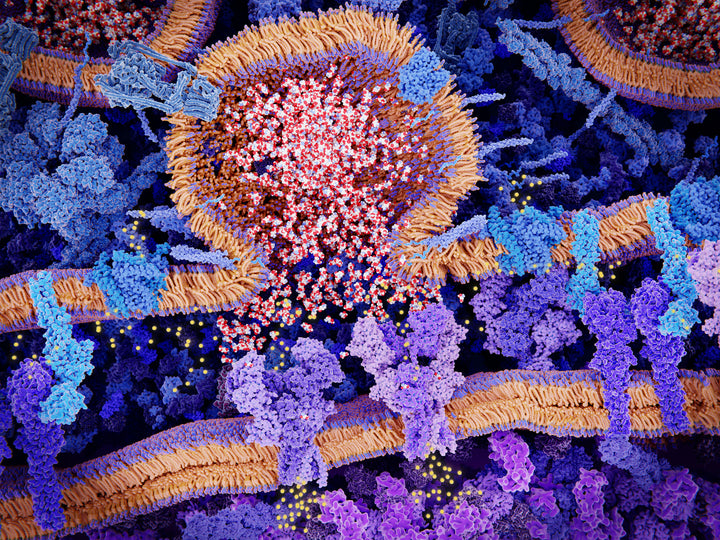
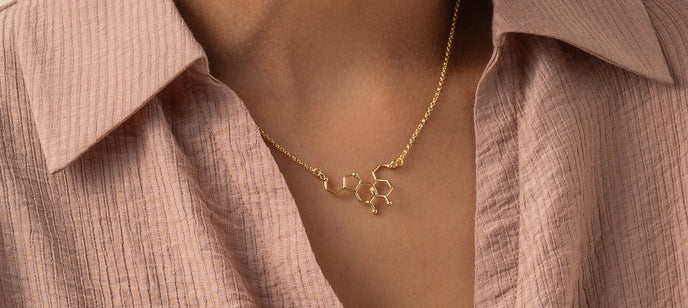
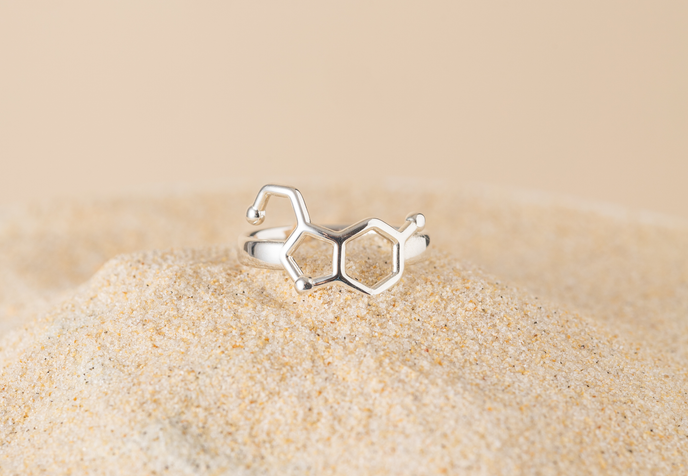
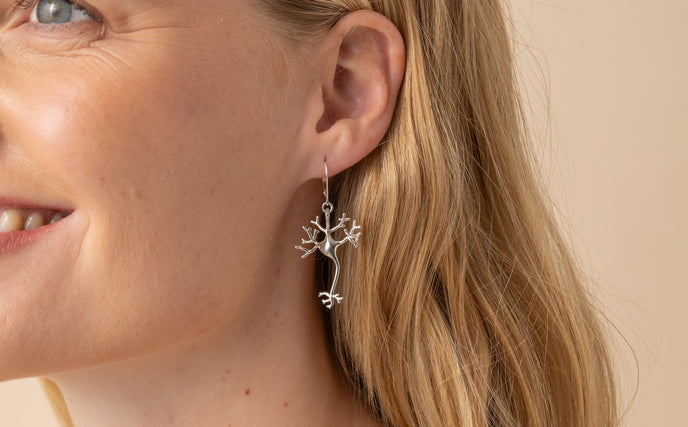
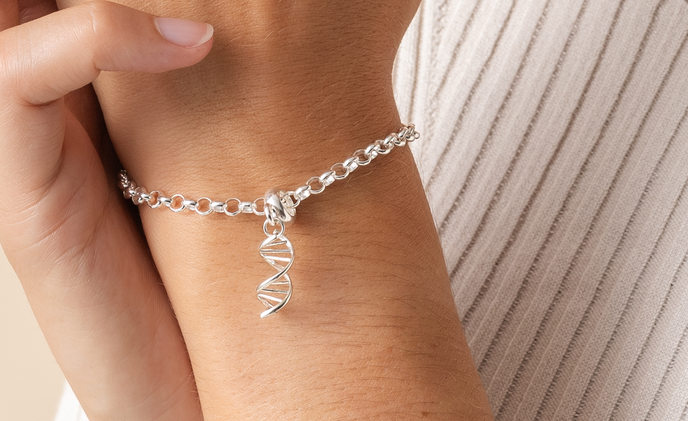
Step into the fascinating world of cellular biology through our unique jewelry designs. These pieces serve as wearable reflections of life's microscopic wonders, capturing the aesthetics of DNA strands, cellular formations, and more. Far from simple adornments, they spark dialogue and honor the captivating complexities found within biological research. Merging scientific accuracy with artistic flair, each creation offers a tactile experience that bridges the gap between scientific inquiry and aesthetic appreciation.
Find your perfect fit
Necklace length guide