

€ 155


Still questions? Contact us
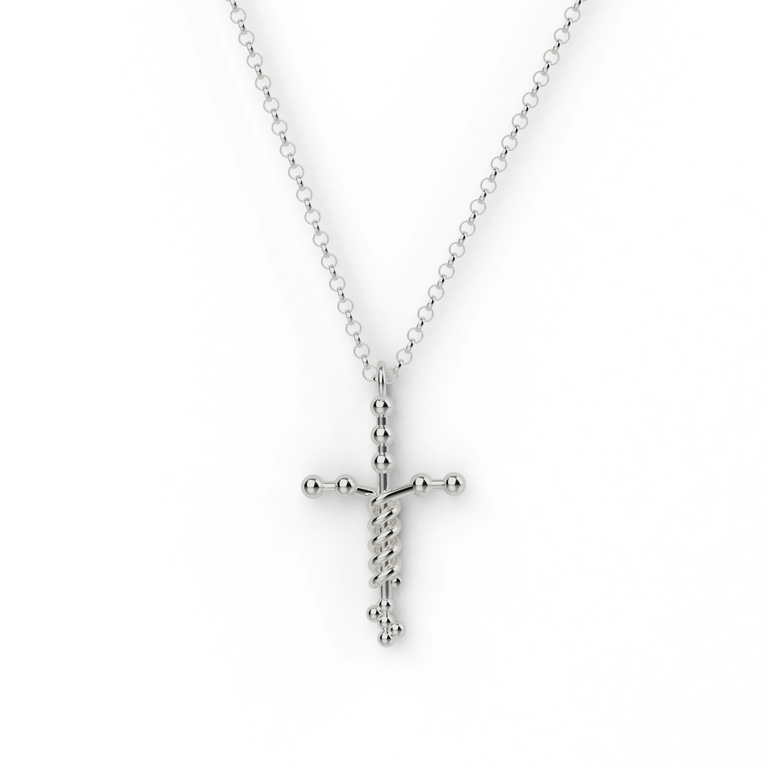
Laminin necklace | sterling silver
If you have drawn laminin in a cell biology seminar, you remember the cross shape immediately. Alpha, beta, and gamma chains meeting at the centre point where basement membranes anchor cells to their scaffold. This protein is literally visible by electron microscopy as the structure it is. No stylisation. Just function.
The Science of Laminin
Laminin is a heterotrimeric glycoprotein composed of alpha, beta, and gamma chains assembled into a characteristic asymmetric cross shape at the chain junction. It is a major component of the basement membrane, the thin layer of extracellular matrix underlying epithelial and endothelial cells and surrounding muscle fibres and peripheral nerves. Laminin mediates cell adhesion, migration, proliferation, and differentiation through interactions with integrin receptors and other cell surface molecules. Over 16 laminin isoforms are encoded in the human genome, each with distinct tissue distribution and function. Mutations in laminin-alpha-2 (LAMA2) cause merosin-deficient congenital muscular dystrophy, a severe genetic disease, proving laminin's structural necessity.
Who Tends to Wear This
- cell biologists and biochemists studying extracellular matrix and tissue architecture
- developmental biologists tracking cell migration and tissue formation
- neuroscientists and muscle biologists working on tissue repair
- medical students who have drawn the cross a hundred times
Explore Related Cellular Biology Jewelry
- Fibroblast necklace | silver
- Membrane necklace | silver
- Nucleosomes necklace | silver
- Mitochondrion necklace | silver
FAQ
Would a tissue engineer recognise this pendant?
Instantly. Laminin is fundamental to tissue engineering and regenerative medicine. For anyone designing scaffolds, growing tissues, or studying cell-matrix interactions, the cross shape is unmistakable. The structure is the point.
Why is laminin's cross shape so functionally important?
Because the geometry defines how cells recognise and bind it. The four arms of the cross create multiple integrin binding sites and allow multivalent cell interactions. The shape is not stylised, it is the actual molecular structure resolved by electron microscopy. Biology does the design work. We just render what evolution built.
What size, material, and chain?
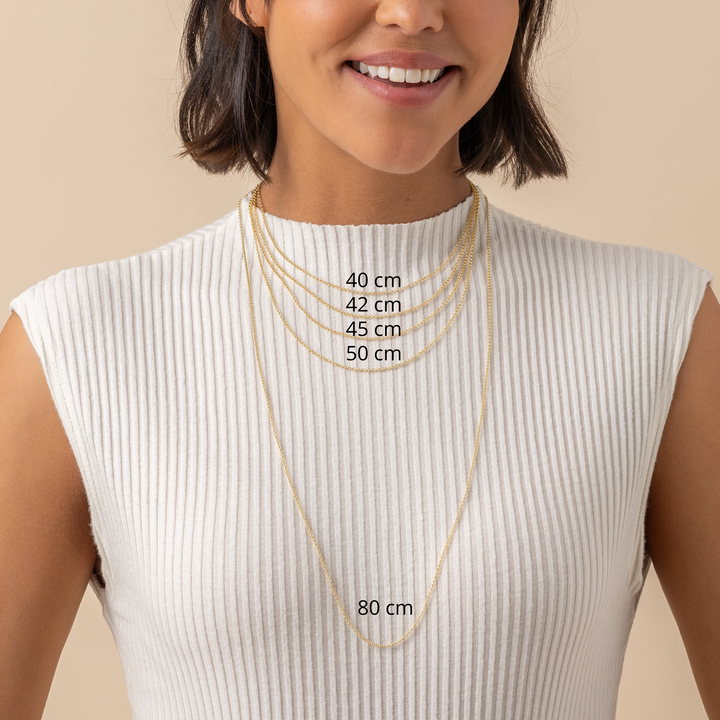
31 mm pendant in 925 polished sterling silver, nickel-free and hypoallergenic. 45 cm sterling silver chain with 5 cm extender. Ships free worldwide via DHL Express in 1-5 business days. Comes ready-to-gift with the 30-day “Love It or Return It” policy.
Is this a gift for someone in developmental biology?
Yes. Laminin is central to embryonic development and tissue morphogenesis. For anyone studying how cells migrate, adhere, and build tissue architecture during development, this pendant carries real meaning.
Cellular Biology
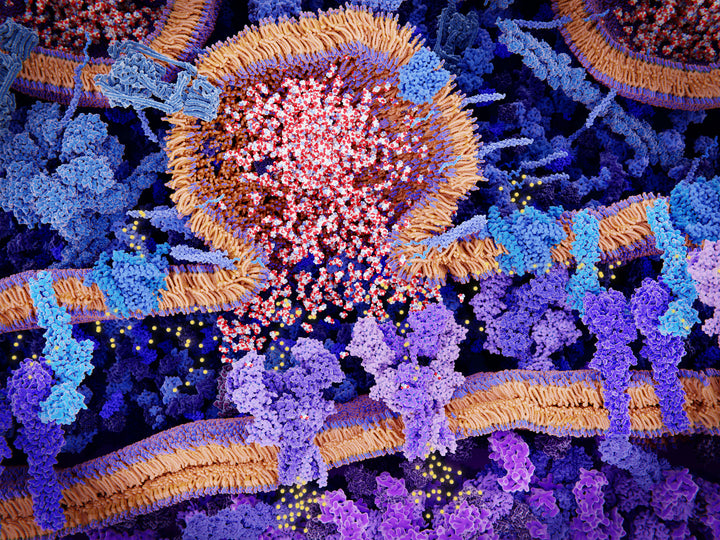
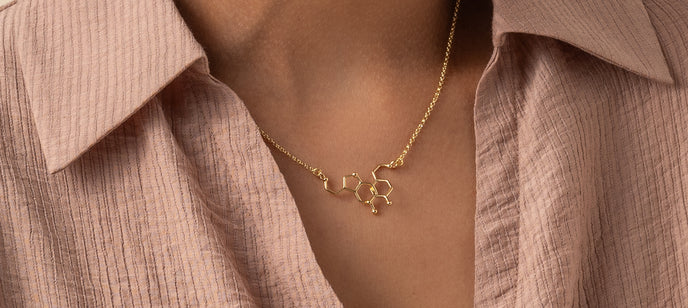
Step into the fascinating world of cellular biology through our unique jewelry designs. These pieces serve as wearable reflections of life's microscopic wonders, capturing the aesthetics of DNA strands, cellular formations, and more. Far from simple adornments, they spark dialogue and honor the captivating complexities found within biological research. Merging scientific accuracy with artistic flair, each creation offers a tactile experience that bridges the gap between scientific inquiry and aesthetic appreciation.
Find your perfect fit: measure an Existing Ring
Finding out your ring size at home is a simple process and can help you shop for jewelry online with confidence.
Necklace length guide