€ 255


Still questions? Contact us
mitochondrion necklace | gold vermeil
You don't have to study mitochondria to want a mitochondrion necklace. Muscle, brain and most other tissues depend on them, so this gold vermeil pendant suits a woman in science whatever her field, as well as the one who does study them.
Who It's For
- a daughter in science, even if her field is far from mitochondria
- a sister finishing her degree
- a friend who lives in another country
- yourself, if you already wear gold
Giuseppe C., on the silver version: “Amazing silver necklace, even better and bigger than it looks in the picture.” And Marilyn K., who ordered the silver version as a Christmas gift: “Person receiving does research on Mitochondria. Looks beautiful.”
How Mitochondria Join and Divide
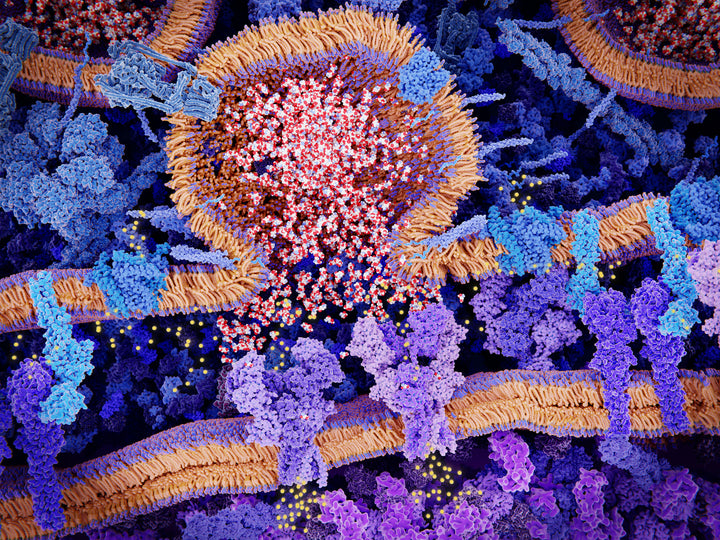
Mitochondria are not fixed in number or shape. In many cells they link into branching networks that keep fusing and splitting apart. In 1915 Margaret and Warren Lewis watched them in chick embryo cells grown in culture and wrote that they “may assume as many as fifteen or twenty shapes in ten minutes”. Today the machinery has names. In mammals, proteins called mitofusins join the outer membranes and OPA1 joins the inner ones. To divide, a protein called Drp1 wraps around a mitochondrion and tightens, often where a tubule of the endoplasmic reticulum touches it. Fusion lets partly damaged mitochondria mix their contents with healthy ones. Fission makes new mitochondria and helps the cell remove damaged ones.
Explore Related Biology Jewelry
- mitochondrion necklace | silver
- mitochondria studs | silver
- mitochondrion necklace | silver & gold vermeil
- ATP necklace | silver
FAQ
How big is the pendant, and how does it sit?
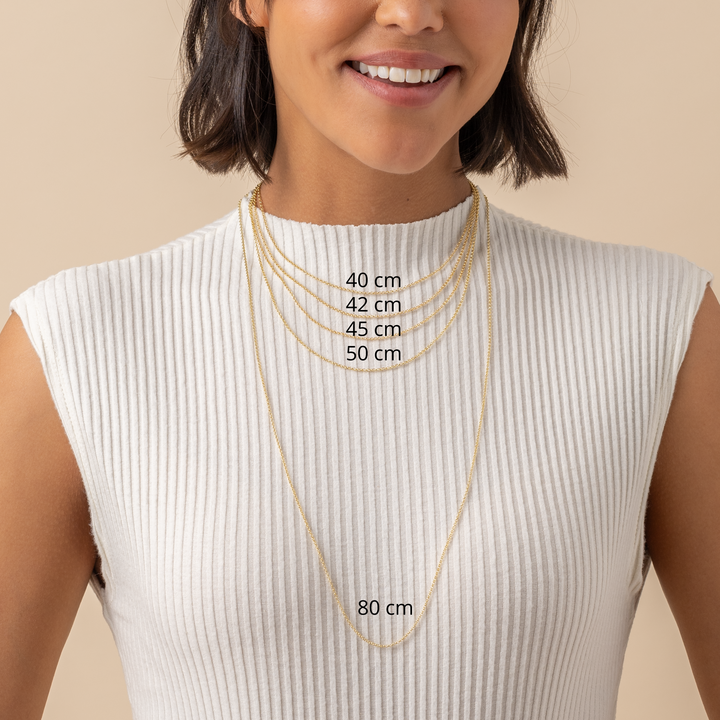
The pendant measures 24 mm (0.94 inches), almost exactly a US quarter and a little smaller than a 2-euro coin. It hangs upright from a small loop on a 45 cm (17.7 inch) gold vermeil chain with a 5 cm (2 inch) extender, and sits below the collarbone. Extra chains for layering are sold on this page: 40, 42, 45 or 50 cm with an extender, or 80 cm. It is gold vermeil, 2.5 microns of 18K gold over solid sterling silver, nickel-free and hypoallergenic. Store it dry.
Is there a silver version, or matching earrings?
Yes. The same 24 mm design comes in sterling silver, on a 45 cm silver chain with a 5 cm extender. Choose the finish the recipient already wears. The design is the same in both finishes. The mitochondria studs (13 mm) come in sterling silver only, so for a matching set, pair them with the silver necklace. A different, 33 mm mitochondrion design pairs silver and gold vermeil in one pendant.
Will it arrive in time, and what if it isn't right?
DHL Express delivers free in 1-5 business days worldwide, and we pay the import duties and taxes, so nothing is due at the door. It arrives in a ready-to-gift jewelry box and festive envelope. If it isn't right, our 30-day “Love It or Return It” policy applies.
Who named the mitochondrion, and what does the word mean?
The German scientist Carl Benda, in 1898. Studying how sperm cells develop, he stained small bodies in the cytoplasm that tended to line up in chains, and proposed calling them mitochondria, from the Greek mitos, thread, and chondros, grain. Others had seen them before him. Albert von Kölliker described them in muscle in the 1850s, and Richard Altmann called them “bioblasts” and argued they were living units of their own. Of all the names they were given, from chondriosomes to sarcosomes, Benda's is the one that stuck.
Cellular Biology
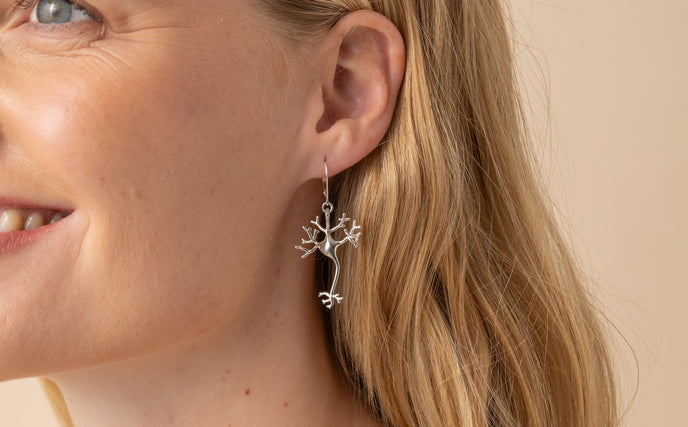
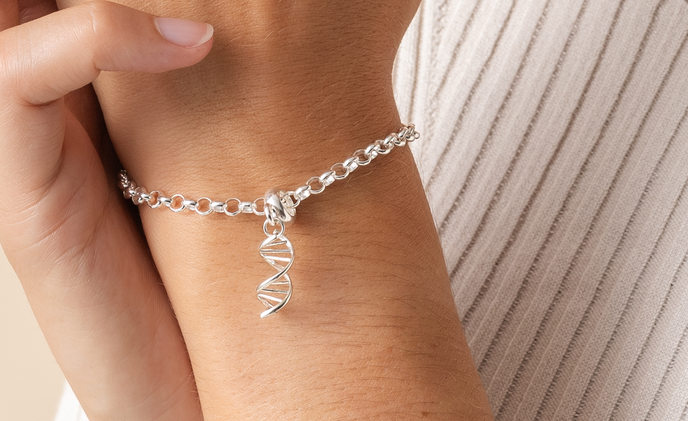
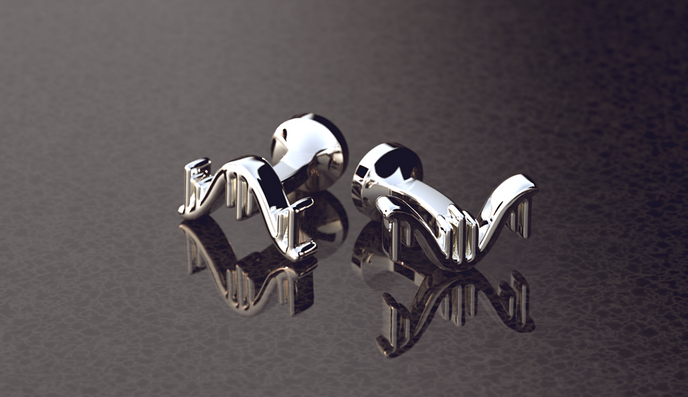
Step into the fascinating world of cellular biology through our unique jewelry designs. These pieces serve as wearable reflections of life's microscopic wonders, capturing the aesthetics of DNA strands, cellular formations, and more. Far from simple adornments, they spark dialogue and honor the captivating complexities found within biological research. Merging scientific accuracy with artistic flair, each creation offers a tactile experience that bridges the gap between scientific inquiry and aesthetic appreciation.
Find your perfect fit: measure an Existing Ring
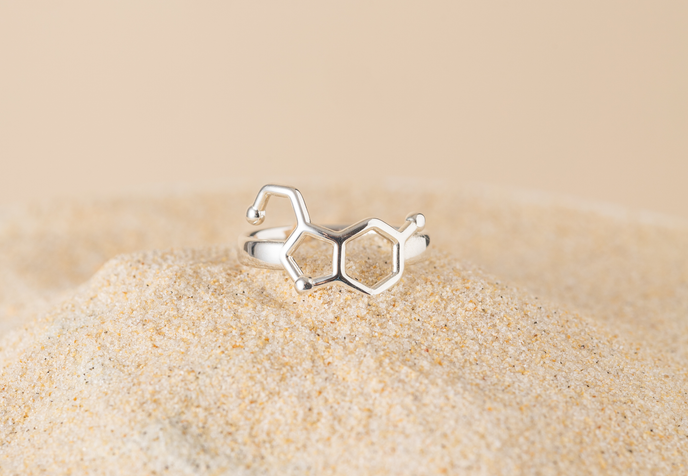
Finding out your ring size at home is a simple process and can help you shop for jewelry online with confidence.
Necklace length guide