€ 155


Still questions? Contact us
Ebola virus necklace | sterling silver
An Ebola virus necklace is a quiet badge for the people who work on the hardest viruses, in the high-containment lab, the clinic or the field. Give it to a virologist finishing her PhD, a friend coming home from outbreak work, or a microbiology student who has found her subject.
Who It's For
- a colleague moving to a new post in infectious diseases
- a friend in epidemiology or public health, for her birthday
- a lecturer who teaches virology, to wear on lecture days
- yourself, if viruses are your working week
The Science of a Thread-Shaped Virus
Ebola virus belongs to the filoviruses, a family named from the Latin filum, thread. Under the electron microscope its particles are long filaments, about 80 nanometres across and close to a thousandth of a millimetre long, roughly twelve times longer than they are wide. Inside is a genome of about 19,000 letters of RNA with seven genes. On the outside, one protein does the work of getting into a cell: the glycoprotein, the only protein that spans the virus's outer membrane. That made it the target. The Ervebo vaccine, approved in the US in 2019, is vesicular stomatitis virus, a livestock virus, engineered to carry the Ebola glycoprotein gene in place of its own.
Explore Related Virus Jewelry
- ebola virus necklace | gold vermeil
- bacteriophage necklace | silver
- coronavirus necklace | silver
- west nile virus necklace | silver
- bacteriophage earrings | silver
FAQ
How big is the pendant, and how does it sit?
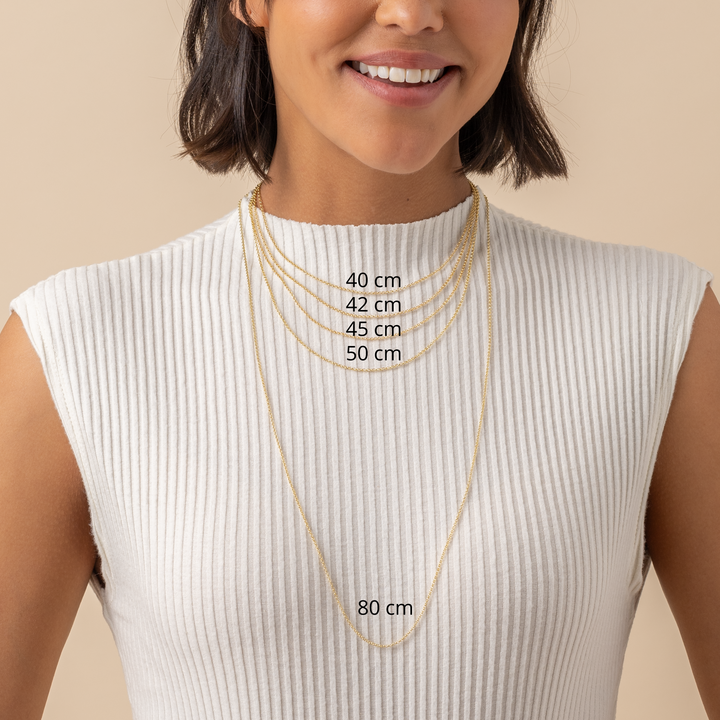
The pendant measures 30 mm (about 1.2 inches), about 4 mm more than the width of a 2-euro coin (25.75 mm). It hangs sideways, attached to the chain at both ends, and sits around the collarbone on a 45 cm (17.7 inch) sterling silver chain with a lobster clasp and a 5 cm (2 inch) extender. Extra chains of 40, 42, 45 or 50 cm with extender, or 80 cm, are sold on this page. It is 925 sterling silver with a high-polish finish, nickel-free and hypoallergenic.
Is there a gold version, or other virus jewelry?
Yes. The Ebola virus necklace also comes in 18K gold vermeil, at the same 30 mm on a 45 cm gold vermeil chain with a 5 cm extender. Choose the finish the recipient already wears: the design is the same in both. Other viruses in the collection come in both sterling silver and 18K gold vermeil: the bacteriophage necklace with a 23 mm pendant, the coronavirus necklace at 16 mm, and the West Nile virus necklace at 25 mm, which comes on an 80 cm chain.
Will it arrive in time, and what if it isn't right?
It ships free worldwide with DHL Express and arrives in 1-5 business days. We pay the import duties and taxes, so there is nothing to pay on delivery. It comes in a ready-to-gift jewelry box and festive envelope. If it isn't right, our 30-day “Love It or Return It” policy applies.
Why is it called Ebola?
After a river. In 1976 an international team investigating an outbreak around Yambuku, in what was then Zaire, needed a name for the new virus. Naming it after the village would have tied Yambuku to the disease, as had happened with Lassa in Nigeria, so they looked for a river instead. Peter Piot, a young Belgian microbiologist on the team, later wrote that they chose it late at night from a map that was not accurate. The Ebola River turned out not to be the closest river to Yambuku.
Cellular Biology
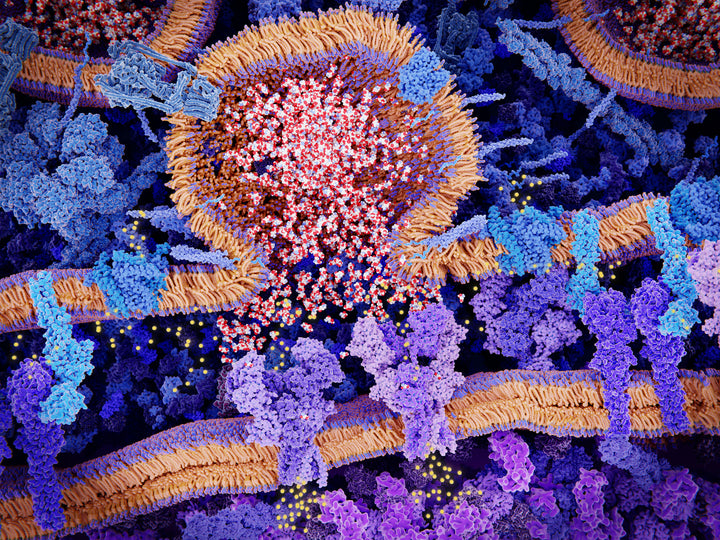
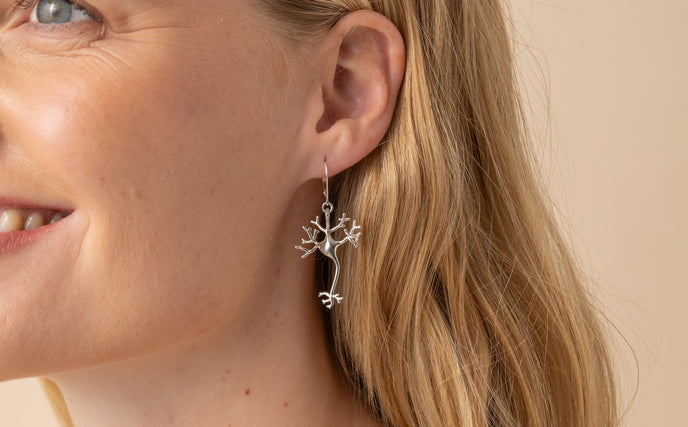
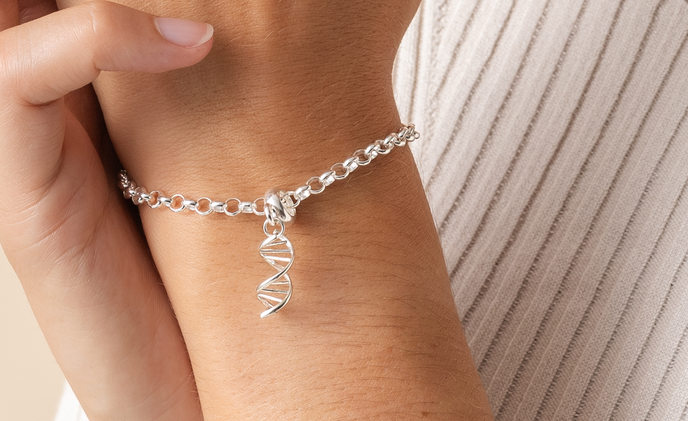
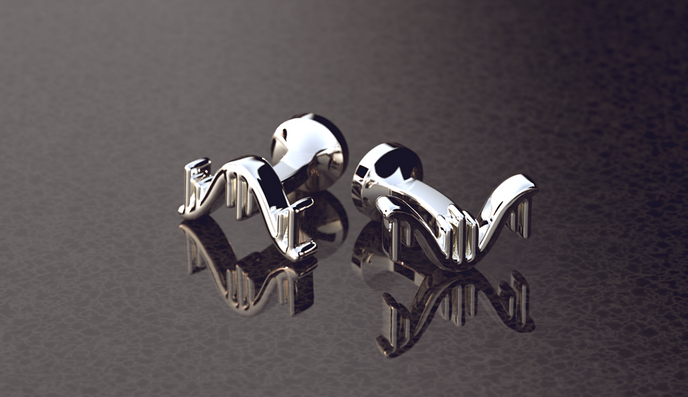
Step into the fascinating world of cellular biology through our unique jewelry designs. These pieces serve as wearable reflections of life's microscopic wonders, capturing the aesthetics of DNA strands, cellular formations, and more. Far from simple adornments, they spark dialogue and honor the captivating complexities found within biological research. Merging scientific accuracy with artistic flair, each creation offers a tactile experience that bridges the gap between scientific inquiry and aesthetic appreciation.
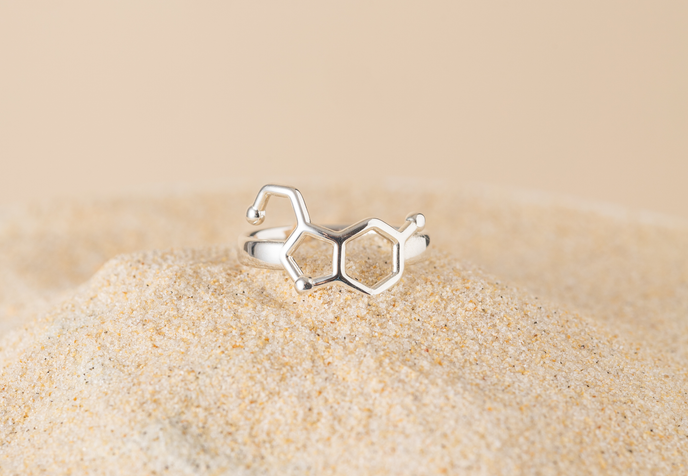
Find your perfect fit: measure an Existing Ring
Finding out your ring size at home is a simple process and can help you shop for jewelry online with confidence.
Necklace length guide